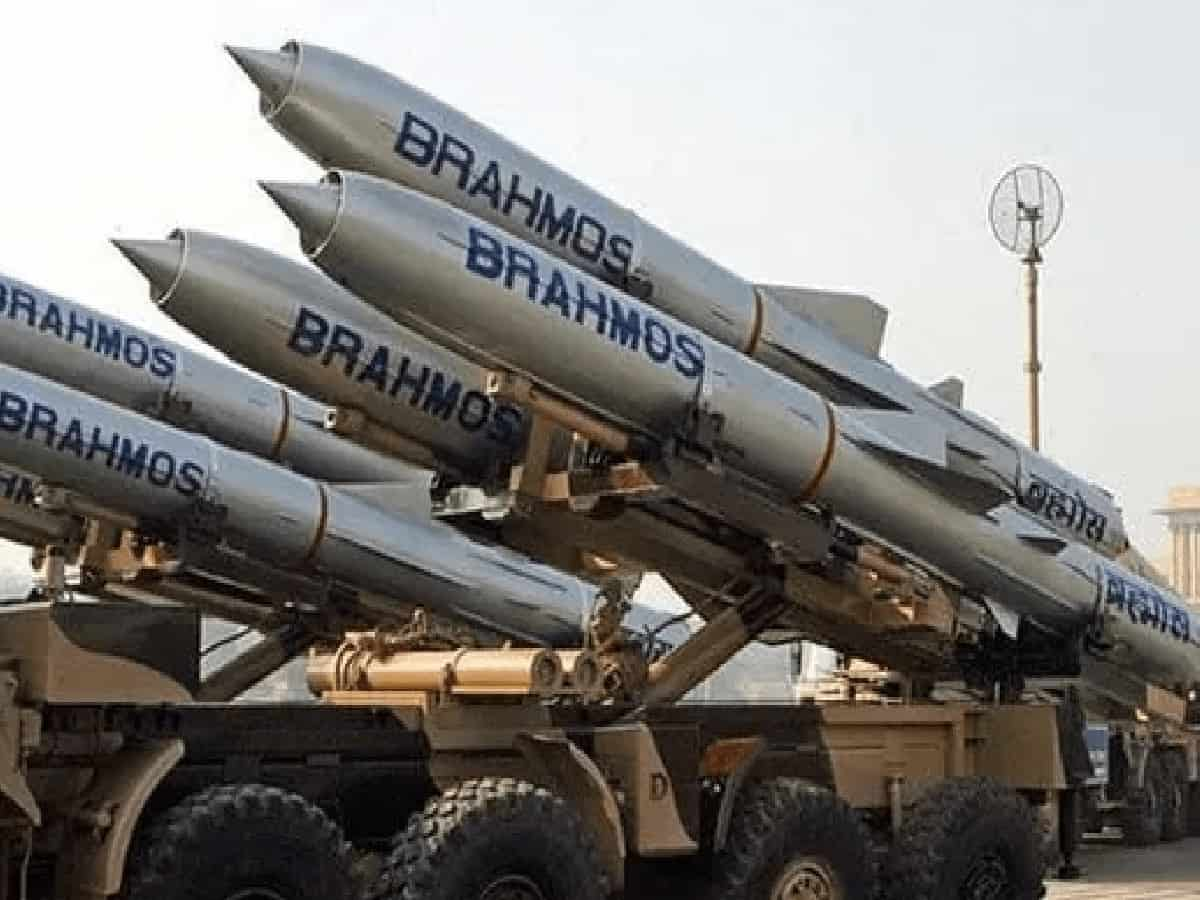
In a decisive leap that underscores New Delhi’s expanding footprint as a primary regional security partner across Southeast Asia, India and the Philippines have reached the final negotiating stages of an ambitious bilateral defense procurement agreement valued between $700 million and $800 million. Under the terms of the emerging contract, Manila is poised to acquire approximately five additional BrahMos supersonic cruise missile batteries, encompassing nearly 60 missiles. The landmark transaction, disclosed by senior defense officials familiar with the discussions, represents more than double the financial outlay of their historic initial pact signed in 2022. As New Delhi wraps up deliveries under that initial $375 million agreement for the Philippine Marine Corps, this follow-on order signals an institutional deepening of military cooperation between the two democracies amid rising geopolitical friction across the Indo-Pacific.
Five Modern Systems: Manila Accelerates Coastal Defense Architecture
The proposed acquisition forms the centerpiece of the Armed Forces of the Philippines’ (AFP) accelerated modernization program, designed to erect an anti-access/area-denial (A2/AD) perimeter along the archipelago’s vulnerable sea lanes. Sources indicate that Manila intends to induct five specialized BrahMos units, deploying their multi-platform firepower to defend critical coastal choke points. Confirming the executive interest behind the negotiation, Philippine Defense Ministry spokesperson Arsenio Andolong noted that President Ferdinand Marcos Jr. has personally prioritized the expansion of the country’s supersonic missile reserves. Indian diplomatic and defense officials have noted that the repeated procurement reflects high operational satisfaction within the Philippine armed services, with Manila regarding New Delhi as an exceptionally reliable, high-technology defense partner that delivers without strategic caveats or diplomatic preconditions.
Defense Secretary Teodoro Presents Custom ‘Wish List’ at Delhi Dialogue
The strategic alignment between New Delhi and Manila was highlighted during the 3rd Delhi Defense Dialogue, where Philippine Defense Secretary Gilberto Teodoro Jr. addressed international delegates and Indian defense planners via videoconference. Emphasizing that the Philippines takes immense pride in having served as the launch customer for India’s indigenous missile export program, Teodoro affirmed that his administration is actively working to multiply its operational BrahMos units. To optimize the heavy weapon systems for the archipelago’s unique geographic landscape, Teodoro revealed that Manila has submitted a detailed “wish list” of technical modifications to Indian authorities. These custom engineering adaptations are aimed at enhancing mobility across narrow provincial bridge networks, rural island roads, and inter-island roll-on/roll-off (RoRo) transport logistics, ensuring that missile batteries can be rapidly dispersed during high-intensity contingencies.
Standoff in the South China Sea: Deterrence Along Disputed Maritime Corridors
The timing of this large-scale procurement is directly tied to the escalating security climate in the South China Sea, where Chinese Coast Guard vessels and maritime militia fleets have repeatedly clashed with Philippine supply missions near contested features such as Second Thomas Shoal and Sabina Shoal. Operating at speeds approaching Mach 3—nearly three times the speed of sound—the BrahMos missile combines low-altitude sea-skimming trajectories, pinpoint radar guidance, and devastating kinetic energy, making interception virtually impossible for conventional shipborne air defenses. By stationing shore-based BrahMos batteries along northern Luzon and western Palawan facing the West Philippine Sea, the Philippine military creates an effective asymmetric shield, giving its armed forces the capability to hold hostile naval surface combatants at risk hundreds of kilometers off its coastline.
Combat-Tested Pedigree Drives Surging Global Demand for BrahMos
Jointly developed by the Defense Research and Development Organization (DRDO) of India and Russia’s NPO Mashinostroyeniya under the BrahMos Aerospace joint venture, the weapon system has evolved into one of the world’s most versatile precision-strike instruments, deployable from mobile land launchers, naval warships, submarines, and modified Sukhoi Su-30MKI fighter jets. International interest in the platform surged dramatically after the missile proved its operational efficacy and lethality under real-world battlefield conditions. Recognizing its tactical versatility, several countries across the Global South have initiated structured procurement dialogues with New Delhi. Following initial export declarations with Indonesia and technical cooperation pacts with Vietnam, Indian trade delegations are presently engaged in advanced defense export talks with partner nations including the United Arab Emirates, Thailand, South Africa, and Brazil.
Historic High: India’s Defense Exports Surge Past ₹38,400 Crore
The $800 million deal with the Philippines marks another crowning milestone in India’s drive toward defense indigenization and manufacturing sovereignty under the “Make in India” initiative. Driven by competitive pricing, simplified government-to-government (G2G) clearance channels, and high engineering reliability, India’s annual defense exports surged to an all-time high of ₹384.24 billion ($4.11 billion) in the fiscal year ending March, representing a massive 62 percent year-on-year jump. As New Delhi transitions from a legacy arms importer into a premier global defense supplier, the deepening missile partnership with Manila illustrates a strategic convergence where Indian technological capabilities directly bolster maritime stability, freedom of navigation, and rules-based order across the wider Indo-Pacific region.