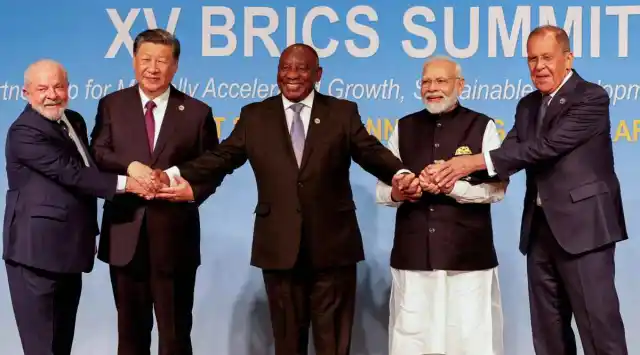
NEW DELHI:
Undia has called upon BRICS countries to remove trade barriers and deepen economic cooperation, with Prime Minister Narendra Modi pitching greater investment, business partnerships and digital cooperation among member nations.
Addressing the BRICS Business Forum on Friday, Modi said the grouping should identify and remove its top 10 trade barriers and turn its growing economic strength into concrete opportunities for businesses.
He proposed that BRICS countries help at least 100 startups expand into other member markets every year and work towards creating 1,000 new business partnerships annually.
Modi also stressed the importance of freedom of navigation, secure sea lanes and the safety of seafarers, particularly at a time when geopolitical conflicts and disruptions in vital maritime routes are affecting global trade, energy supplies and supply chains.
Iranian President Masoud Pezeshkian strongly pitched the use of local currencies for trade among BRICS members. He argued that the international financial system was vulnerable to political shocks because of its dependence on a limited number of major currencies.
Pezeshkian called for mechanisms to manage currency risks and enable reciprocal settlements, saying greater use of national currencies could make intra-BRICS trade less vulnerable to political and financial disruptions.
He also highlighted Iran’s geographical position, energy resources and transport links, pitching the country as a potential bridge for BRICS energy, food and transportation supply chains.
Modi, meanwhile, offered India’s digital public infrastructure as a platform for deeper cooperation within BRICS. He highlighted the large-scale deployment of UPI and said innovators from BRICS nations could use India’s experience to develop digital solutions suited to their respective markets.
Pezeshkian also called for greater integration of trade infrastructure, including digitised customs procedures, reduced regulatory barriers and stronger cross-border markets.
The discussions come against the backdrop of wars and geopolitical tensions that have disrupted global trade and raised concerns over energy supplies, shipping routes and supply chains.