
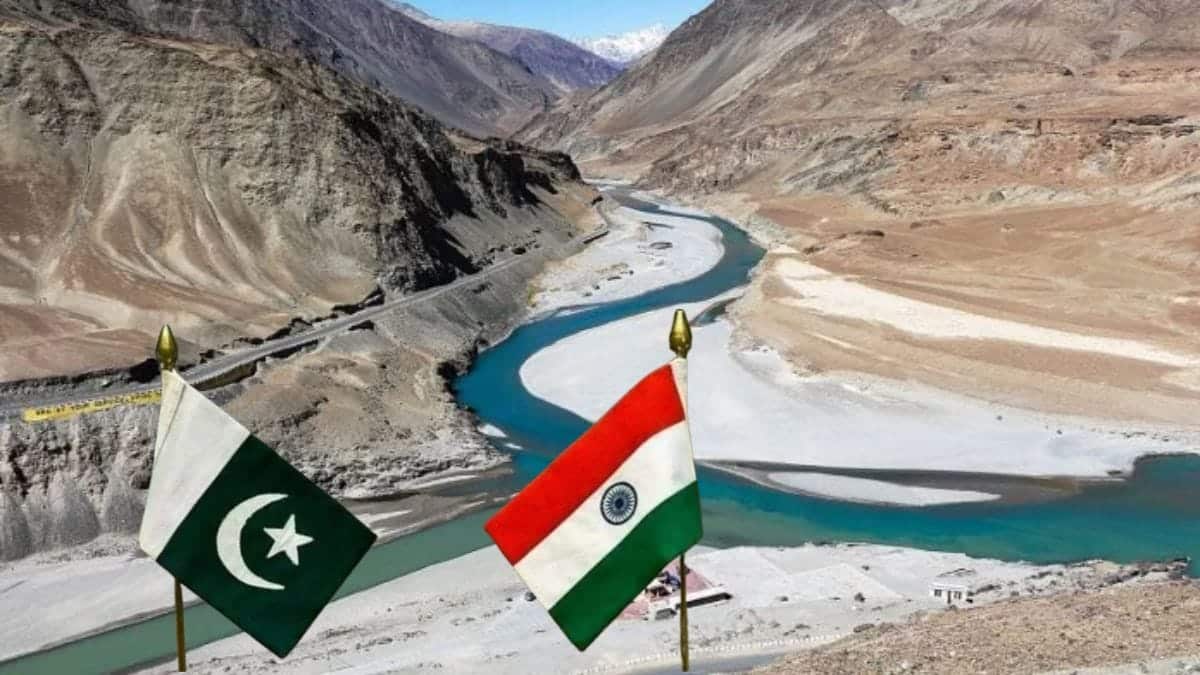
India Reiterates Stand on Indus Waters Treaty After Pakistan’s Warning: ‘Position Remains Consistent’

India on Friday reaffirmed its position on the Indus Waters Treaty (IWT), stating that the agreement remains in abeyance due to Pakistan’s continued support for cross-border terrorism.
The response came after senior Pakistani leaders issued fresh warnings over the suspension of the decades-old water-sharing pact.
Speaking during a media briefing, Ministry of External Affairs (MEA) spokesperson Randhir Jaiswal said India’s stance has remained unchanged.
“India’s position on the Indus Water Treaty is consistent. The IWT stands in abeyance in response to Pakistan’s continued sponsorship of cross-border terrorism. Pakistan must credibly and irrevocably abjure its support for cross-border terrorism,” Jaiswal said.
MEA Responds to Pakistan’s Remarks
The MEA’s statement follows comments by Pakistan’s Climate Change Minister Musadik Malikwho criticised India’s suspension of the treaty.
According to reports, Malik alleged that India was attempting to control the flow of water to Pakistan and warned that Islamabad would strongly respond to any such move.
Earlier this week, Pakistan’s Foreign Minister Ishaq Dar also cautioned that any attempt to deny Pakistan its share of water under the treaty could amount to the “weaponization of water” and have serious implications for regional peace and security.
Why the Treaty Is in Abeyance
India suspended the implementation of the Indus Waters Treaty following the Pahalgam terror attack.
New Delhi has maintained that meaningful cooperation under the treaty cannot continue while cross-border terrorism persists. The government has repeatedly linked the future of the agreement to Pakistan taking credible and irreversible steps against terrorism.
About the Indus Waters Treaty
Signed in 1960 with the mediation of the World Bankthe Indus Waters Treaty governs the sharing of water from the Indus river system between India and Pakistan.
For decades, it has been regarded as one of the few agreements that continued to function despite periods of political and military tensions between the two neighbours.
Comments are closed.