India Wants Its Own Smartphone Brand
India could have a competitive homegrown mobile phone brand by the middle of 2027, marking a major shift in the country’s electronics manufacturing ambitions.
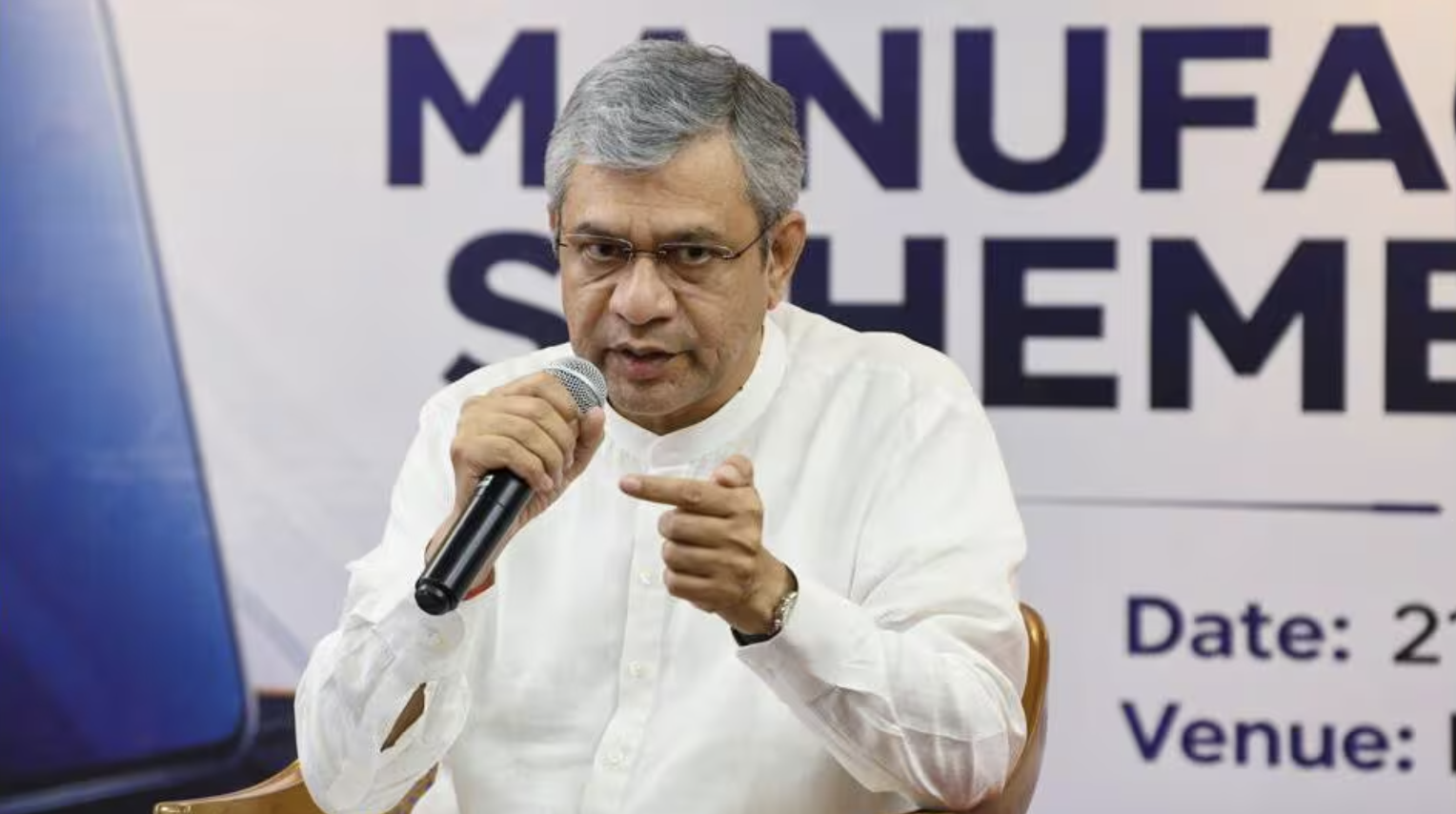
Union Electronics and IT Minister Ashwini Vaishnaw has said that three Indian companies are currently in discussions with the government and are competing for the opportunity to build a strong domestic smartphone brand.
The names of the companies have not been disclosed yet.
The government wants India to move beyond simply manufacturing smartphones for foreign brands and create Indian companies capable of designing, developing, manufacturing and selling phones under their own brands.
₹62,500 Crore Scheme At The Centre
The push is being supported by the newly notified Mobile Phone Manufacturing Scheme, which carries a massive ₹62,500 crore financial outlay.
The five-year programme covers the period from FY2026-27 to FY2030-31.
The objective is not merely to increase the number of phones manufactured in India.
The government wants to increase domestic value addition, strengthen the electronics supply chain and encourage Indian companies to develop globally competitive mobile products.
Three Indian Companies Are Interested
According to Vaishnaw, three Indian players are currently in discussions with the Ministry of Electronics and Information Technology regarding participation in the new scheme.
The government has not revealed their names.
The fact that multiple Indian companies are already considering the opportunity suggests that the country’s smartphone ecosystem may be entering a new phase.
For years, India has become a major manufacturing base for global smartphone companies, but the brands dominating the market have largely originated outside the country.
India Already Makes Millions Of Smartphones
India’s smartphone manufacturing industry has expanded dramatically over the past decade.
Global companies have increasingly shifted production to India, while the country has become an important export hub for mobile devices.
However, manufacturing a smartphone for an international company is very different from building an Indian smartphone brand.
A brand needs its own product strategy, research and development, software experience, distribution network, marketing and customer-support infrastructure.
The new government initiative is intended to encourage that transition.
From Assembly To Actual Product Development
One of the biggest goals is to move India’s electronics industry beyond assembly.
A smartphone contains hundreds of components and technologies, including displays, processors, camera modules, batteries, memory, sensors and connectivity components.
The government wants more of this ecosystem to develop within India.
Higher domestic value addition could reduce dependence on imported components while creating opportunities for Indian companies to develop intellectual property and engineering capabilities.
Indian Brands Have Tried Before
India has had homegrown smartphone companies in the past.
Brands such as Lava, Micromax, Karbonn and others once had a much stronger presence in the domestic market.
However, they struggled to keep pace with international competitors as smartphones became increasingly sophisticated and competition intensified.
The new effort comes at a very different time.
India now has a far larger electronics manufacturing ecosystem, improved component availability and a much bigger technology talent pool.
The Government Wants Global Brands, Not Just Indian Phones
The ambition is also much bigger than creating another budget smartphone brand.
Vaishnaw has previously indicated that Indian companies should aim to build mobile brands capable of competing globally.
That means the target market could eventually extend beyond India.
A successful Indian smartphone company would need to compete with established brands across multiple markets, something that would require significant investment in technology, design, software and branding.
Why 2027 Is Important
The government’s timeline suggests that it expects the first meaningful results from the new scheme relatively quickly.
A homegrown brand could potentially emerge by mid-2027, giving Indian manufacturers a new platform from which to build their businesses.
However, creating a globally competitive smartphone company in less than a year would be an enormous challenge.
The announcement therefore appears to represent the beginning of a much longer journey rather than an indication that India will suddenly have a new smartphone giant next year.
Design And R&D Will Be Crucial
Manufacturing capacity alone will not be enough.
Indian companies will need to invest in research and development, industrial design, software and user experience.
The new scheme provides additional incentives for Indian brands that undertake design and R&D activities in India.
This could encourage companies to develop their own technology rather than simply assembling products designed elsewhere.
The Smartphone Market Is Extremely Competitive
India’s smartphone market is already crowded.
Chinese brands, Samsung, Apple and other international manufacturers have established strong customer bases.
Consumers have become increasingly demanding about camera quality, processors, displays, battery life, software updates and artificial intelligence features.
A new Indian brand will therefore have to offer something compelling.
Price alone may not be enough.
AI Could Give Indian Brands A New Opportunity
Artificial intelligence could provide an opportunity for new entrants.
Modern smartphones are increasingly being differentiated through AI-powered cameras, voice assistants, productivity features, translation, image editing and on-device processing.
An Indian smartphone company could potentially build products specifically around Indian languages, local applications and domestic consumer requirements.
This could provide a way to differentiate itself from global competitors.
India’s Electronics Ecosystem Is Growing
The government believes the foundation for a domestic mobile brand is now much stronger than it was several years ago.
India has attracted large investments in electronics manufacturing and component production.
The semiconductor ecosystem is also expanding.
The country is attempting to develop capabilities across chip manufacturing, assembly and packaging, displays, components and device manufacturing.
A stronger local ecosystem should make it easier for Indian companies to develop their own products.
Exports Could Be A Major Opportunity
India’s smartphone manufacturing expansion has already increased the country’s role in global electronics exports.
A successful Indian-owned brand could take that one step further.
Instead of simply exporting phones manufactured in India for foreign companies, India could eventually export products designed and branded by Indian companies.
That would create additional value through intellectual property, product development, branding and distribution.
It Could Create Thousands Of Jobs
A successful domestic smartphone industry would also have implications beyond the devices themselves.
It could generate employment in research, engineering, manufacturing, software development, industrial design, logistics, retail and after-sales services.
A larger domestic ecosystem could also create opportunities for smaller Indian component suppliers and technology companies.
The government is therefore viewing the initiative as part of a much broader electronics manufacturing strategy.
The Biggest Challenge Will Be Scale
Building a smartphone is one challenge.
Building a smartphone brand is another.
Building one capable of competing globally is much harder.
Companies need enormous scale to negotiate component prices, invest in marketing and support software development.
They also need strong distribution and after-sales networks.
This is where established global players have a major advantage.
Indian Companies Will Need Long-Term Capital
Smartphone businesses require substantial upfront investment.
Product development, inventory, manufacturing capacity, advertising and distribution can consume large amounts of capital before a company becomes profitable.
Indian companies entering the market will therefore need investors willing to support them over several years.
Government incentives can reduce some of the financial burden, but they cannot replace strong business execution.
Can India Build Its Own Samsung Or Apple?
That is the larger question behind the government’s initiative.
India does not necessarily need to replicate Apple or Samsung.
It could develop its own model based on competitive pricing, local software, specialised products or emerging markets.
But if an Indian company eventually develops a strong global smartphone brand, it would represent a major transformation in the country’s electronics industry.
It would show that India can move from being a manufacturing destination to becoming a technology-product creator.
A New Phase For India’s Mobile Industry
The proposed homegrown brand is part of India’s broader effort to become more self-reliant in electronics.
The country has already demonstrated that it can manufacture smartphones at enormous scale.
The next challenge is creating companies that own the product, technology and brand.
With three Indian companies reportedly considering participation and a ₹62,500 crore manufacturing scheme now in place, the government believes the ecosystem is ready for that next step.
The Real Test Will Begin After The Launch
Launching an Indian smartphone brand will be an achievement.
Making consumers choose it over established global brands will be considerably harder.
The company that eventually emerges will have to deliver competitive hardware, reliable software, attractive pricing and strong customer service.
If it succeeds, however, the impact could extend far beyond smartphones.
It could demonstrate that India is capable of building globally competitive consumer technology companies from the ground up.
India Wants To Stop Being Just The Factory
For years, India’s smartphone story has largely been about how many devices can be manufactured within the country.
The government’s latest push changes the question.
It is now asking: Can India create the brands that sell those devices to the world?
If the current plan succeeds, the first answer could arrive by mid-2027.
Summary
India could have a competitive homegrown mobile phone brand by mid-2027, according to Electronics and IT Minister Ashwini Vaishnaw. Three Indian companies are reportedly in discussions with the government under the new ₹62,500 crore Mobile Phone Manufacturing Scheme. The initiative aims to move India beyond smartphone assembly towards domestic product development, intellectual property, design and research. The government wants Indian companies to eventually compete globally rather than simply manufacture devices for international brands. While India already has a large electronics manufacturing ecosystem, building a successful smartphone brand will require significant investment, strong technology, competitive products, software capabilities and long-term execution.
Image Source