
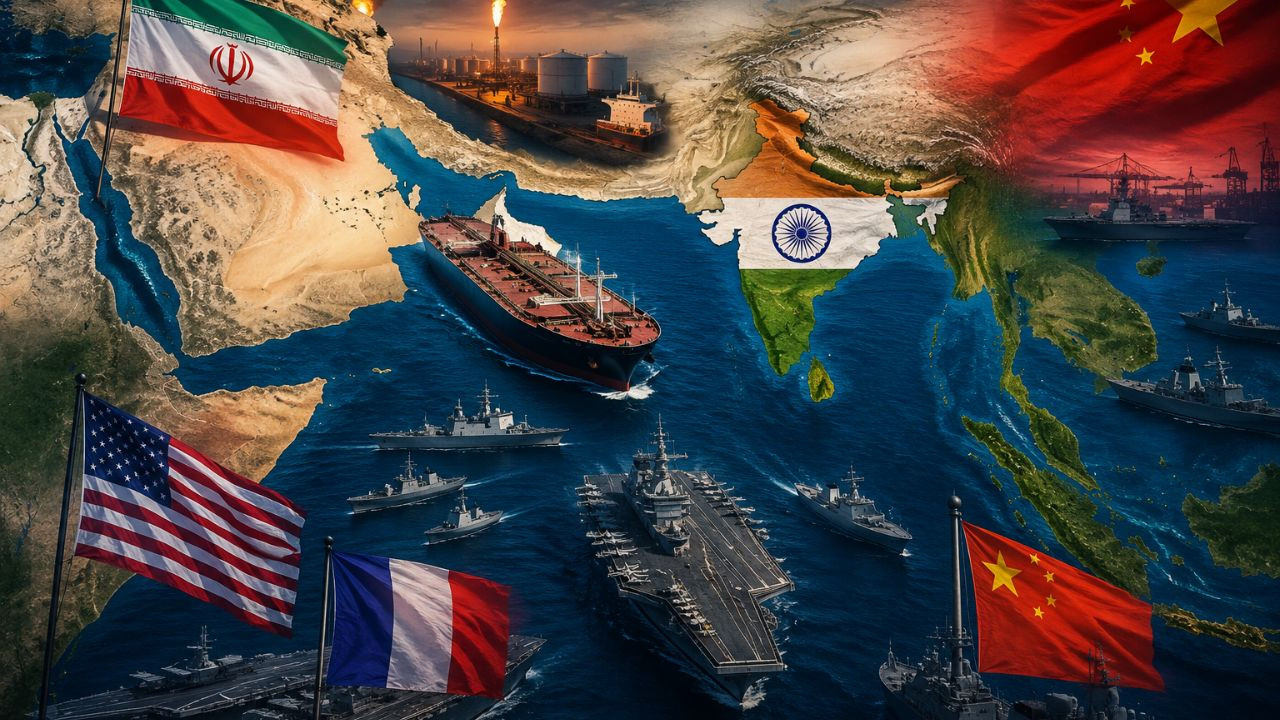
India-US-France together can increase Dragon’s problems! China’s biggest weakness revealed

New Delhi: The Indian Ocean is no longer just a trade route between the world’s biggest powers, but is also becoming the biggest arena for strategic competition. For a long time, China felt that its biggest maritime weakness was the Strait of Malacca, but now a new international report has changed the picture. According to the report, the real threat to China is not Malacca, but the Strait of Hormuz near Iran, thousands of kilometers away from it. This is where China’s biggest challenge to energy security begins.
This has been revealed in a new report by London-based security organization International Institute for Strategic Studies (IISS). This report has come out just before the big security conference Shangri-La Dialogue to be held in Singapore. The report has been named “Asia-Pacific Regional Security Assessment”.
Why is China’s oil dependence so important?
China is among the largest economies of the world. Its factories, industries, transport and energy system largely depend on oil. China imports a large part of its needs from Gulf countries. This oil reaches China through sea ships and its biggest strategic concern lies on this route. Ships carrying oil first pass through the Strait of Hormuz located between Iran and Oman. After this they enter the Indian Ocean and proceed near the Indian maritime zone and reach the Strait of Malacca. From there these ships reach China via East Asia.
Not Malacca, now Hormuz becomes real concern
Till now the world’s strategic experts believed that China’s weakest link was the Strait of Malacca. This route is very narrow and is considered very important for China’s trade. If this route ever gets closed, China’s energy supply could be severely affected. For this reason the term “Malacca Dilemma” remained much discussed. But the new report of IISS has changed this thinking. The report says that if tension increases in the Strait of Hormuz or this route is disrupted, then oil will not be able to reach the Indian Ocean. In such a situation, the question of oil reaching Malacca will end.
Increasing military activity in Hormuz
An important naval exercise that took place this year has also been mentioned in the report. China, Russia and Iran together conducted a joint exercise named “Maritime Security Belt 2026”. This exercise was held in Hormuz area. After some time, tension increased between Iran, America and Israel. The impact of this conflict was also visible on the movement of ships and oil supply. From this it became clear that Hormuz has become one of the most sensitive maritime areas in the world.
Four big powers in the Indian Ocean
According to the report, currently four big players are active in the Indian Ocean – India, France, America and China. India considers this entire region as its strategic priority. In the last few years, India has increased naval exercises and strengthened defense cooperation with many countries. India is trying to make itself a reliable security partner of the Indian Ocean region. France also has a strong presence in this area. It has military bases in Africa and Reunion Island, due to which its hold in the Western Indian Ocean remains strong.
America’s biggest strength is its military base on Diego Garcia Island. From here it keeps an eye on the activities of the Indian Ocean and maintains strategic balance with its allied countries. Whereas China is currently considered a new player in this field. Although its navy has strengthened rapidly, its influence in the Indian Ocean is still not considered as strong as that of other countries.
How is China increasing its hold?
China has understood that at present it cannot directly challenge powers like America, India and France. Therefore, it is adopting the strategy of strengthening relations with other countries. China is investing in port, road and infrastructure projects in countries around the Indian Ocean. It is also trying to increase its presence through arms sales and joint military exercises.

Comments are closed.