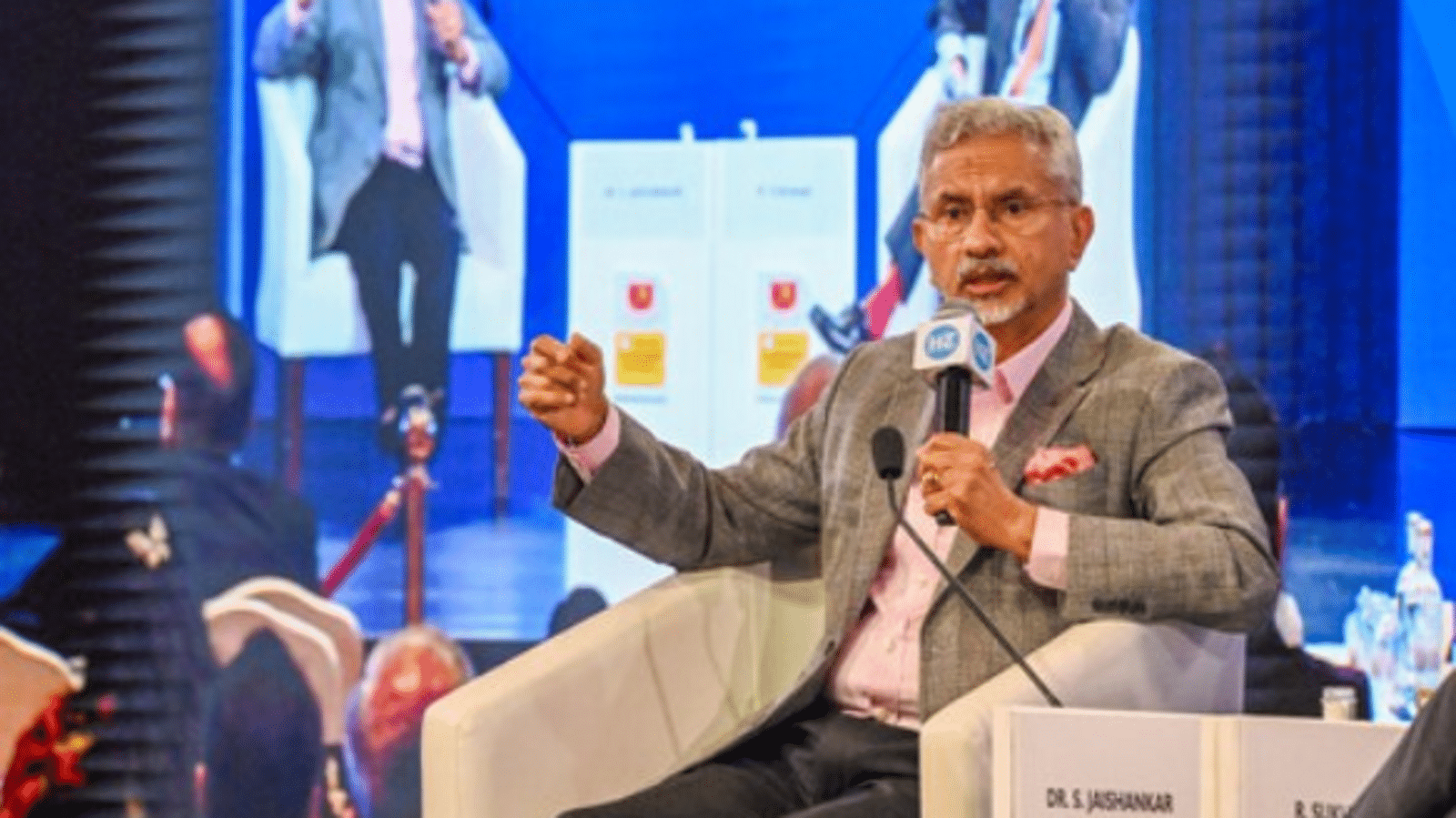
External Affairs Minister S. Jaishankar said on Saturday, November 14, 2026, that negotiations for a bilateral India-US trade agreement have reached “almost the finishing line,” noting that the bulk of outstanding issues have been resolved and that the remaining concerns lie largely on the American side.
Speaking in a conversation with Hindustan Times Editor-in-Chief R. Sukumar at the Hindustan Times Leadership Summit (HTLS) 2026, Jaishankar declined to set a firm deadline for signing the pact, emphasizing that New Delhi is conducting a meticulous tariff-line-by-tariff-line review to secure an outcome that is mutually beneficial, balanced, and gives Indian exporters a competitive edge over comparable economies.
Tariff Negotiations & Impact of US Midterm Shifts
Launched last year after the Trump administration initially imposed 50 per cent tariffs on Indian exports, the trade talks gained momentum earlier this year following an understanding to slash duties to 18 per cent—even as judicial rulings invalidating portions of President Donald Trump’s tariff measures complicated the process.
Jaishankar stressed that trade agreements affect jobs and livelihoods and cannot be rushed, explaining that most remaining adjustments stem from shifts on Washington’s end rather than New Delhi’s. Analysts have widely watched for a potential breakthrough ahead of next month’s G20 Summit in Miami (December 14–15).
Addressing the recent US midterm elections in which the Democrats won control of both the House of Representatives and the Senate, Jaishankar acknowledged that the political shift would “change many things,” while noting that core pillars of the India-US partnership—such as defence, security, and technology cooperation—enjoy broad bipartisan consensus in Washington.
”It’s certainly our hope and our anticipation that we are at the last stretch. That’s not a secret… There is the last stretch of issues and in many cases, these concerns are not so much at our end because the changes have been more at the American end than our end.”
— S. Jaishankar, External Affairs Minister, at HTLS 2026
China Border Readiness & Tech ‘Leap-Frogging’
Turning to India-China relations, Jaishankar said that the Line of Actual Control (LAC) has become “more alive” since the June 2020 Galwan Valley clash, requiring sustained troop deployments backed by an aggressive push in border infrastructure—including new roads, bridges, tunnels, and airfields. On the economic and technology front, he noted that while India “missed the bus” on manufacturing and semiconductors in the 1980s and 1990s, New Delhi cannot rely on incremental catch-up and must “leap-frog” in emerging domains such as artificial intelligence, building on its rapid digital transformation over the past decade.