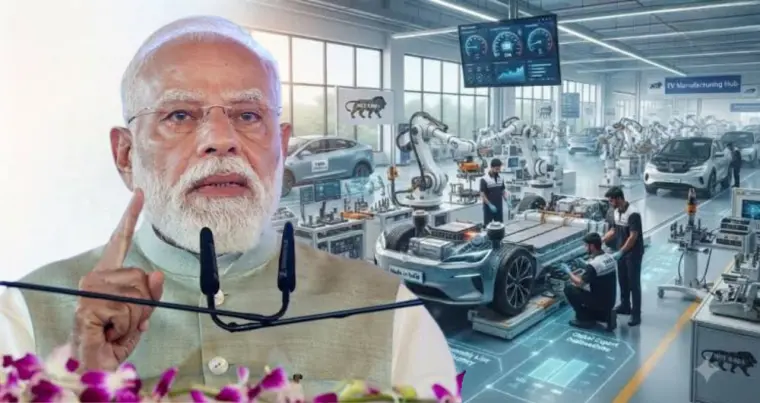
India's automobile sector is set to expand rapidly in the coming years. The increasing demand for vehicles in the country, rapidly developing highway network, better infrastructure and increasing emphasis on electric vehicles are giving a new direction to the auto industry.
Indian Auto Industry: India's automobile sector is going through major changes in the coming years. Growing vehicle demand, strengthening road network, modern logistics, electric mobility and expansion in manufacturing capacity have created new opportunities for the country's auto sector. On the occasion of the 66th annual conference, Prime Minister Narendra Modi, while talking about the prospects of the Indian automobile industry, said that on the basis of technology, innovation and modern manufacturing, India can further strengthen its position as a global automobile hub.
India's mobility sector is changing rapidly
Prime Minister Modi said in his message that India's mobility sector is changing rapidly. With the expansion of the country's economy, the need for movement of people and goods is also continuously increasing. This is having a direct impact on the demand for cars, two-wheelers and commercial vehicles. Over the years, connectivity has improved with the expansion of highways, expressways and other transport infrastructure in the country.
This is not only making travel easier for passengers, but is also increasing the capacity to transport goods from one area to another. This growing infrastructure is creating new opportunities for auto companies in the domestic market as well as for production and supply chain expansion.
Better connectivity can reduce logistics costs.
Strong road and logistics network is important for the automobile industry. Better connectivity can reduce the time taken to move vehicles, auto parts and raw materials. This can make the supply chain more efficient and also impact transportation costs. Automobile companies in India do not want to be limited to meeting only domestic demand.
Competitive production costs, quality and technical capability will play an important role in increasing the share of Indian made vehicles and components in the global market.
Increasing emphasis on electric vehicles
Electric mobility is also becoming increasingly important in the Indian auto sector. The government's efforts to promote charging infrastructure and clean mobility focus on developing an ecosystem for electric vehicles. In the coming times, demand for battery technology, charging systems and other smart mobility solutions may increase with electric cars and two-wheelers. Apart from auto companies, this can also create new business opportunities for component manufacturers and technology companies.
Support to manufacturing through PLI and Make in India
The Prime Minister also mentioned initiatives like Production Linked Incentive (PLI) and Make in India. The objective of these schemes is to promote production capacity and local manufacturing in the country. Increasing domestic production in the automobile and auto component industry can help strengthen India's supply chain.
Apart from this, the government is also working towards reducing outdated and unnecessary rules and compliances to make doing business easier. Improving the business environment aims to make investment and production more convenient for companies.
Free Trade Agreements will increase export opportunities
Free Trade Agreements (FTA) being made with various countries and regions of India can also be important for the auto sector. These agreements increase the possibility of Indian companies getting better access to some foreign markets. If Indian vehicle and auto component manufacturers meet global quality standards, technology and competitive prices, their role in the export sector can become stronger.