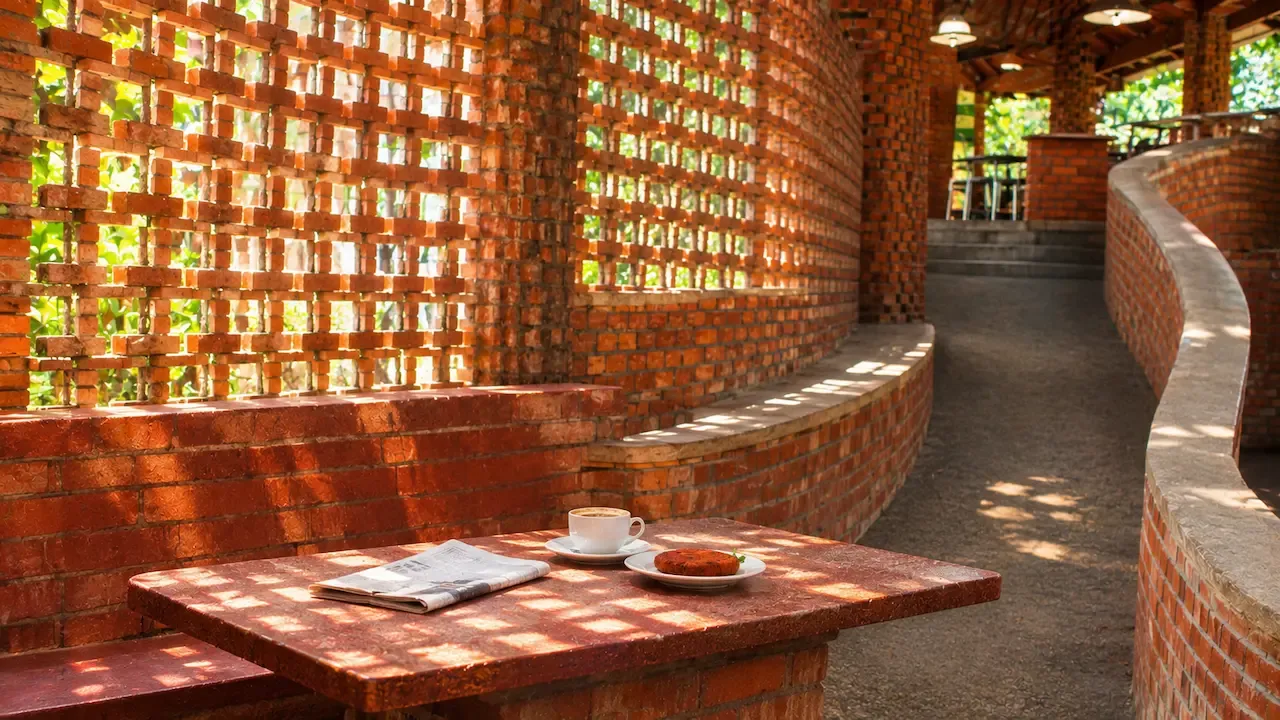
Indian Coffee House: It is a sultry November morning. The morning rush has almost stopped. An elderly Indian walks up a winding path into the coffee house's famous red brick building. This building is located in Thampanoor, Thiruvananthapuram and was built by famous architect Laurie Baker. The elders sit there on an empty bench made of bricks. There is a brick table in front. They open the newspaper and start reading. The sunlight filtering through the latticed walls is falling on the newspaper. Then an employee dressed in white clothes and a green striped turban walks in front of him with coffee and a red-brown cutlet.
This scene seems like a scene from an old movie, but it is a bit strange in today's times. The world around us is changing rapidly, while the building and style of the coffee house seem to have remained the same as in the old times. In the last few years, coffee chains, new-age cafes and various types of restaurants from all over the world have opened in Kerala and other states of the country. But Indian Coffee House seems to have lagged behind in keeping pace with the times. Still, the memories of the bygone era, the long conversations held in the coffee house, the special aroma of coffee and the different dishes made from beetroot are still keeping the Indian coffee house alive. With the help of these it is maintaining its place. But now it is no longer people's first choice for eating out like before.
Started in the 1900s
Indian Coffee House is still running with its glorious old identity. Coffee houses started in the country in the 1900s. The purpose of people there was definitely to drink coffee, but the real color was set in the conversation. The Coffee Board opened the first India coffee house in Mumbai during the British Raj in the 1930s. The aim was to get Indians into the habit of drinking coffee, so that the increasing coffee production could be utilized. Soon coffee houses started opening in other big cities of the country also.
A hangout for people associated with the art world.
These coffee houses gradually became major centers of exchange of ideas and social activity. Writers, leaders, filmmakers, agitators, students, people from labor organizations and all kinds of people started gathering here. Every coffee house became a special haunt of its city. However, till a few decades ago, mostly men used to come here. The presence of women increased in recent years. But in the 1950s the Coffee Board closed down many coffee houses. Employees were also fired citing losses.
Beetroot dishes are always there
Communist leader A.K. Gopalan united the employees who lost their jobs. They organized protests and formed the Indian Coffee Board Workers' Cooperative Society. His idea was that the coffee house could be run by the employees themselves. Soon this co-operative organization took over the coffee houses from the Coffee Board. Beetroot has been an important part of the coffee house's cuisine since its inception. It was cheap and contained many nutrients. Be it cutlets, sauce or masala dosa, beetroot has been used in some form or the other.
Need new people and new place too
The Corona epidemic proved to be a big blow for the coffee house cooperatives. President of Thrissur Cooperative Society S.S. According to Anil Kumar, during the last nine years in the southern region, 13 coffee houses had to be closed due to various reasons including lack of staff. He explains, “Due to the Corona pandemic and problems related to recruitment of employees, the number of our coffee houses reduced from 58 to 45. Now there are also plans to open some new branches. We also want to open some coffee houses on the highways, which will remain open till late night. People's food preferences have also changed. We are not able to include some new and favorite dishes in our menu because we are not able to find employees who can make them. But our real strength is still the old and favourites. There are dishes like omelettes and beetroot dishes.”
FAQ
For what purpose was Indian Coffee House started?
During the British Raj in the 1930s, the Coffee Board opened the first India Coffee House in Mumbai, with the aim of inculcating the habit of drinking coffee among Indians to utilize the growing coffee production.
How was Indian Coffee Board Workers Cooperative Society formed?
After the Coffee Board closed down many coffee houses and laid off employees in the 1950s, communist leader A.K. Gopalan organized the employees and formed a co-operative society to run them.
Why is beetroot considered special in the food of Indian Coffee House?
Beetroot was cheap and rich in nutrients, hence it has been used in dishes like cutlets, sauces and masala dosa since the beginning.
Why did the number of branches decrease in the last few years?
Due to challenges like Corona pandemic and staff shortage, the number of branches in the southern region declined from 58 to 45 in the last nine years.