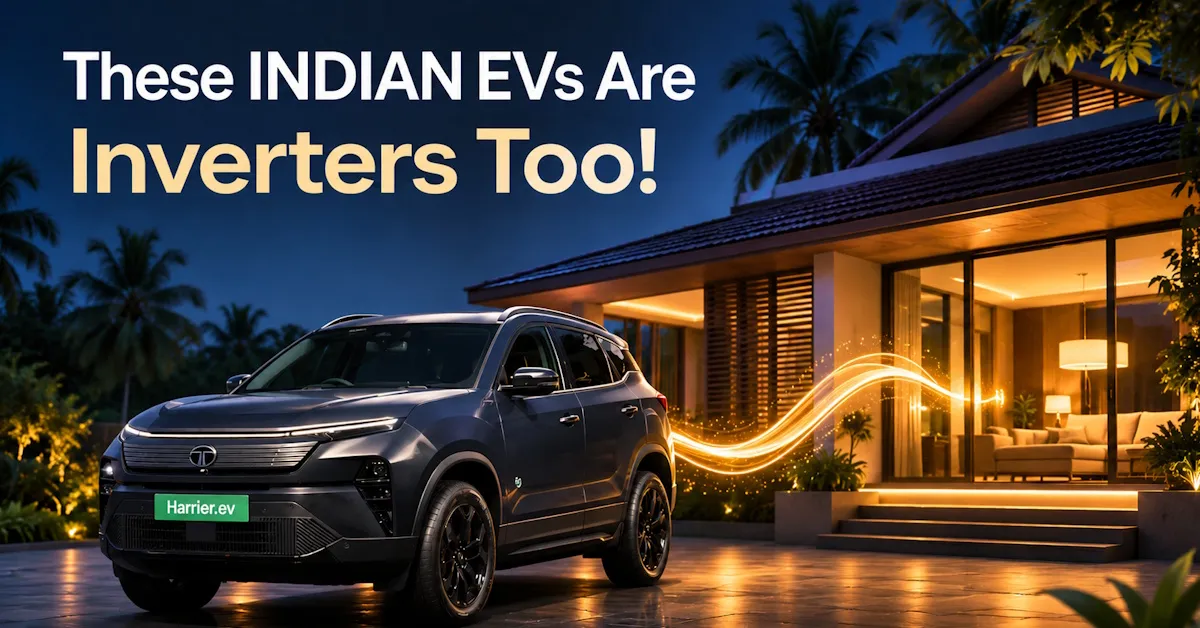
Of late, electric cars have found a rather unexpected use case for themselves. Some of them can be used to run household appliances ( in essence, power a home) in case of power outages. The technology that enables this is called vehicle-to-load (V2L) charging. Using this, one can power lights, fans, laptops, and even refrigerators using a compatible EV. Depending on the EV’s battery size, this technology can keep essential appliances running from several hours to a couple of days. Here are 9 EVs that are already on sale in India, offering this feature.
Select higher-spec variants of the Nexon comes with vehicle-to-load (V2L) and Vehicle-to-Vehicle (V2V) charging. These variants (Empowered Plus and Empowered Plus A) come with a 45kWh battery pack. The Empowered Plus costs Rs 16.99 lakhex-showroom whereas the Empowered Plus A is priced at Rs 17.69 lakh, ex-showroom.
The Nexon EV is available with two battery options- 30KWh and 45KWh. The V2L feature is only available with the larger. It can run equipment such as refrigerators, lights, fans, Wi-Fi routers and laptops. If electricity consumption is kept low, the battery could potentially support these for a couple of days. The setup can also power compatible outdoor equipment like camping appliances and induction cooktops. Running high-power appliances will reduce the available backup time considerably.
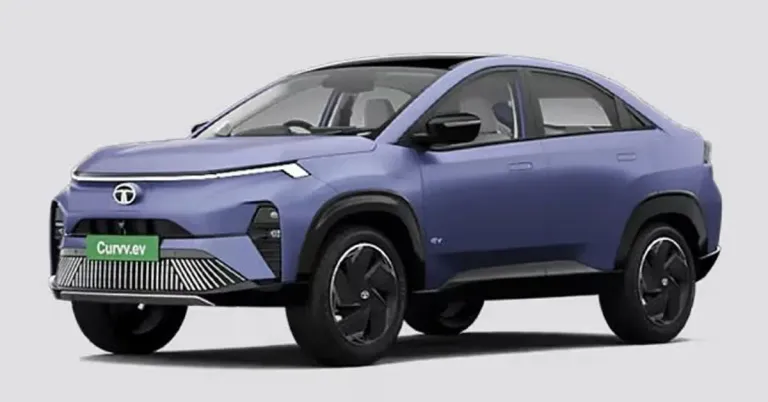
The Curvv EV used to come with two battery options- 45kWh and 55kWh. The manufacturer recently streamlined the lineup and took the smaller off the list. The electric coupe is now only available with the 55kWh unit. It comes with V2L functionality. The Accomplished X 55, Empowered X 55 and Empowered X 55 Dark variants get this feature. Ex-showroom prices range from Rs 17.19 lakh to Rs 19.69 lakh.
The 55kWh battery gives the Curvv EV a substantial energy reserve. It can power appliances like refrigerators, fans, lights and electronic devices for a longer period of time. Depending on the combined load, it could potentially support basic household electricity requirements for up to two to three days. Running high-power equipment such as air conditioners will drain the battery much faster.
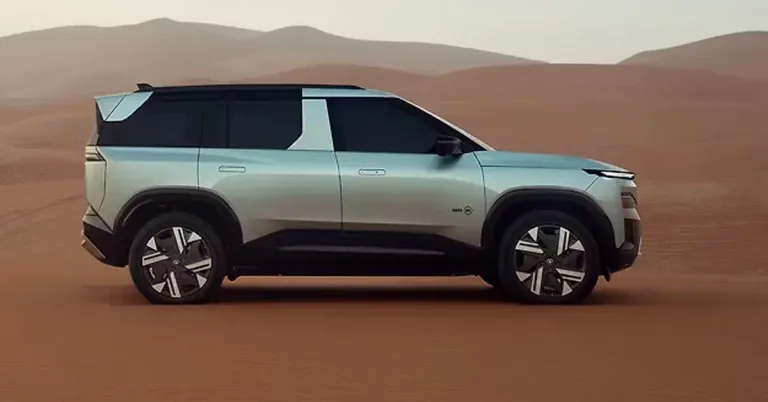
Bi-directional charging or V2L function is baked into the Siera.EV’s Acti.EV+ platform. All trims except the base-spec Pure come with the feature. Both the 63kWh and 75kWh battery packs have it. This means the price band in this case, is a wider Rs 20.99 lakh to Rs 26.48 lakhex-showroom. The V2L system in this case, can potentially power several household appliances simultaneously during extended power outages.
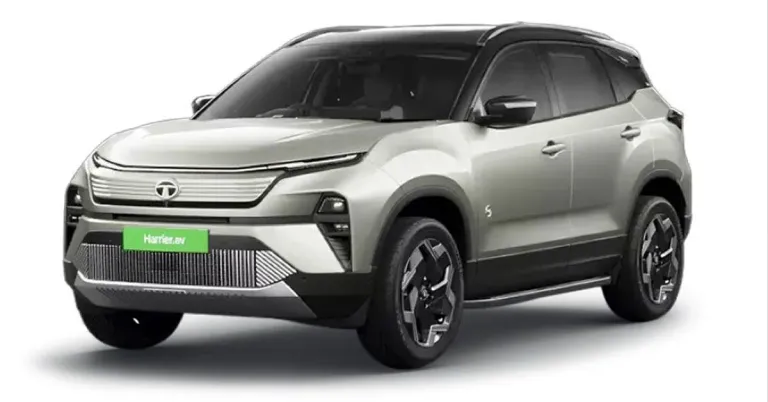
All variants of the Harrier.EV offer the V2L feature. The electric SUV can be had with two battery options- 65kWh and 75kWh. It is priced in the range of Rs 21.69 lakh to Rs 28.99 lakhex-showroom. The larger battery pack can provide generous energy reserve during power failures and outages. It can run appliances like refrigerators, fans, LED lights, laptops and other household electronics for long spans of time. It may also support high-power equipment such as air conditioners for shorter periods. For this, their electricity requirements will have to be within the EV’s V2L output limit.
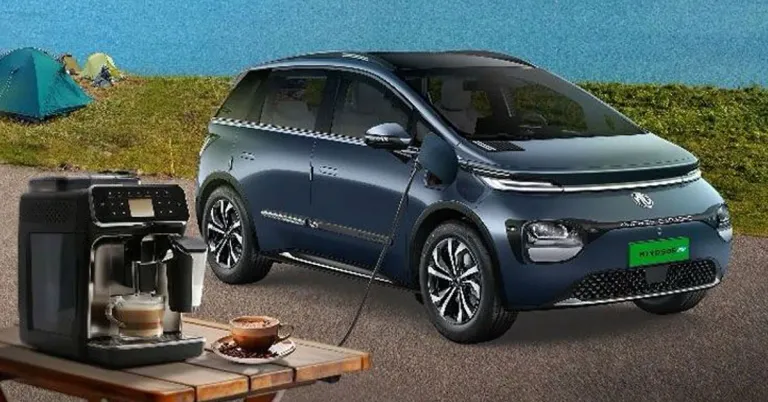
The long-range version of MG Windsor, which is called the Windsor Pro, offers the V2L feature on the range-topping Essence Pro trim. This trim is priced at Rs 19.15 lakh. Its V2L setup outputs 3.0 kVA / 3.0 kW of power through an external adapter. This means you can power appliances like laptops, induction cooktop, or a campsite lighting.
The Windsor Pro can serve as an emergency source of power when needed. The larger 52.9 kWh battery pack makes it useful for outdoor power requirements.
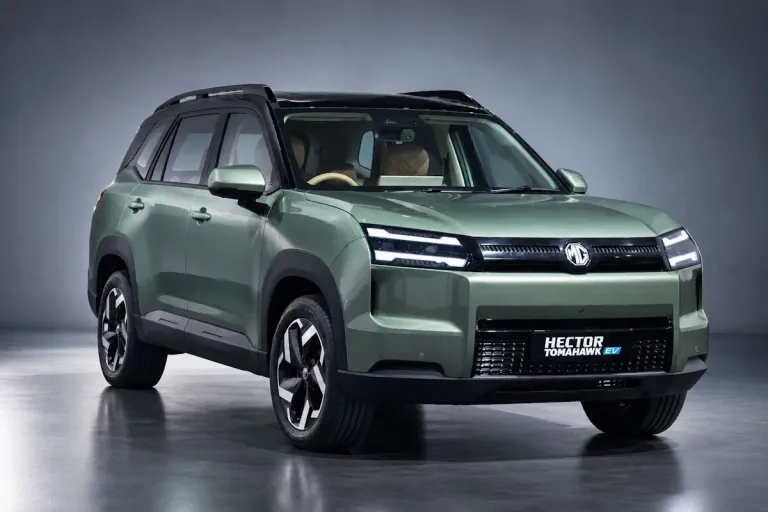
The Tomahawk EV has Vehicle To Home (V2H) charging as one of its key talking points. This electric SUV is claimed to be capable of powering an entire home. It uses a 69.2 kWh lithium iron phosphate (LFP) battery pack. V2H is offered alongside regular V2L and V2V functions, and is exclusive to the range-topping Essence variants- these can be had as a seven seater and a six seater.
Unlike basic V2L systems, V2H is designed to integrate with a home’s electrical infrastructure. It uses a properly installed home charger grid to reverse-power the circuit.
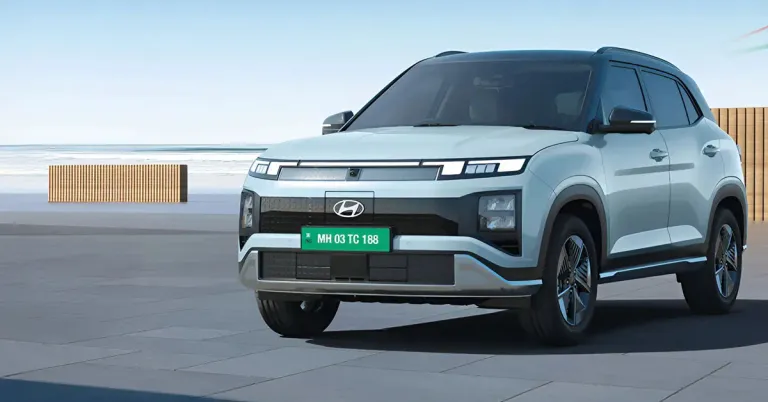
The Creta Electric is Hyundai’s only mass-market EV on sale in India. V2L is offered on the mid and top trims. The 42kWh Premium trim starts at Rs 20 lakh, ex-showroom. The range-topping Excellence LR with 51.4 kWh battery and V2L support costs around Rs 25.22 lakh.
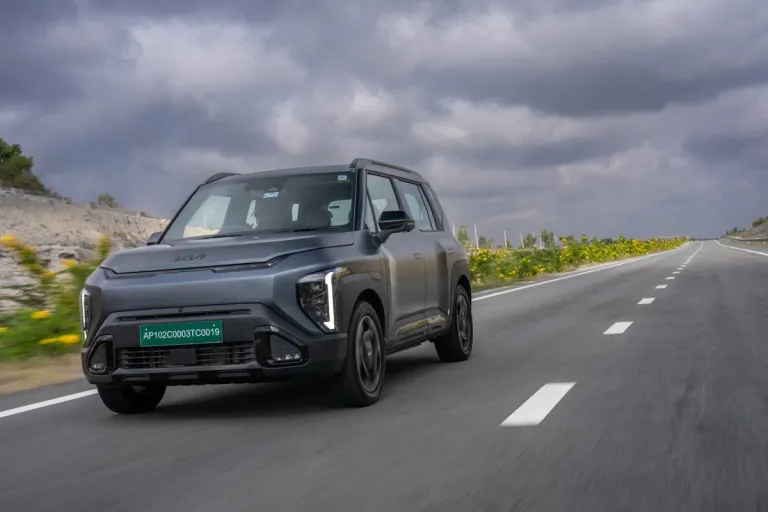
The Syros EV uses the same EV architecture and battery packs as the Creta Electric. It offers V2L only on the top-spec X-Line ER variant. V2L, in this case, is internal. So it remains unclear if it can power an entire home. This variant comes with a 51.4 kWh battery pack and is priced at Rs 20 lakh, ex-showroom.
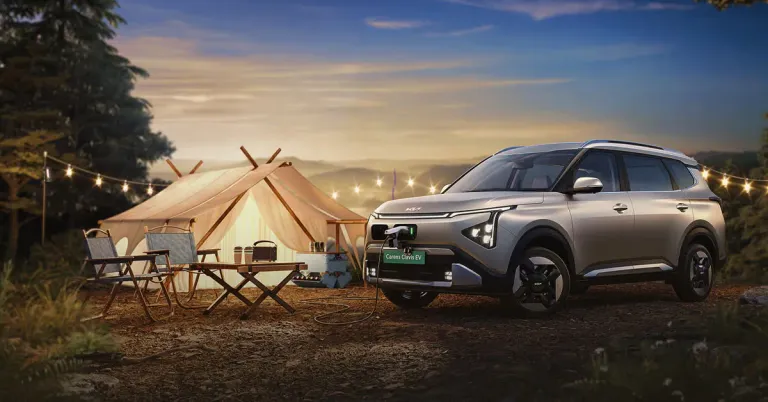
Kia’s second mass-market EV, the Carens Clavis EV, offers V2L on HTX Plus ER, GTX Plus ER, and X-Line ER trims. These come with the 51.4kWh battery alone. They start at Rs 24.54 lakh, ex-showroom and go up to Rs 25 lakh, ex-showroom. Higher variants offer both internal and external V2L functions. Kia had particularly highlighted the V2V and V2L features of the Clavis EV at the time of its launch.
Vehicle-to-Load, commonly known as V2L, allows an electric car to supply electricity to external appliances using energy stored in its battery. Normally, an EV’s battery provides electricity to the electric motor. With V2L, some of that stored energy can also be used to power other electrical equipment or even an entire household.
The system converts direct current (DC) electricity from the battery into alternating current (AC), which is then supplied to the connected appliances. Owners can connect compatible devices through a dedicated V2L outlet or adapter.
However, V2L should not be confused with Vehicle-to-Home (V2H). V2L generally supplies electricity directly to individual appliances, while V2H allows a compatible electric vehicle to supply power to a home’s electrical circuits through a specially designed installation. People usually power their homes and run multiple electronic devices using conventional V2L setups by connecting it to an inverter. We have seen such examples in the past.
Battery capacity also does not determine how many appliances can run simultaneously. For example, an EV with a 75 kWh battery may store enough energy to operate essential equipment for several days, but its V2L system may have a much lower maximum power output. This limits the number and type of appliances that can be connected at once.
The actual backup duration also depends on how much charge is available, how much energy the appliances consume and the electricity lost during DC-AC conversion. For EV owners living in areas with frequent power cuts, V2L can be a genuinely useful feature.