
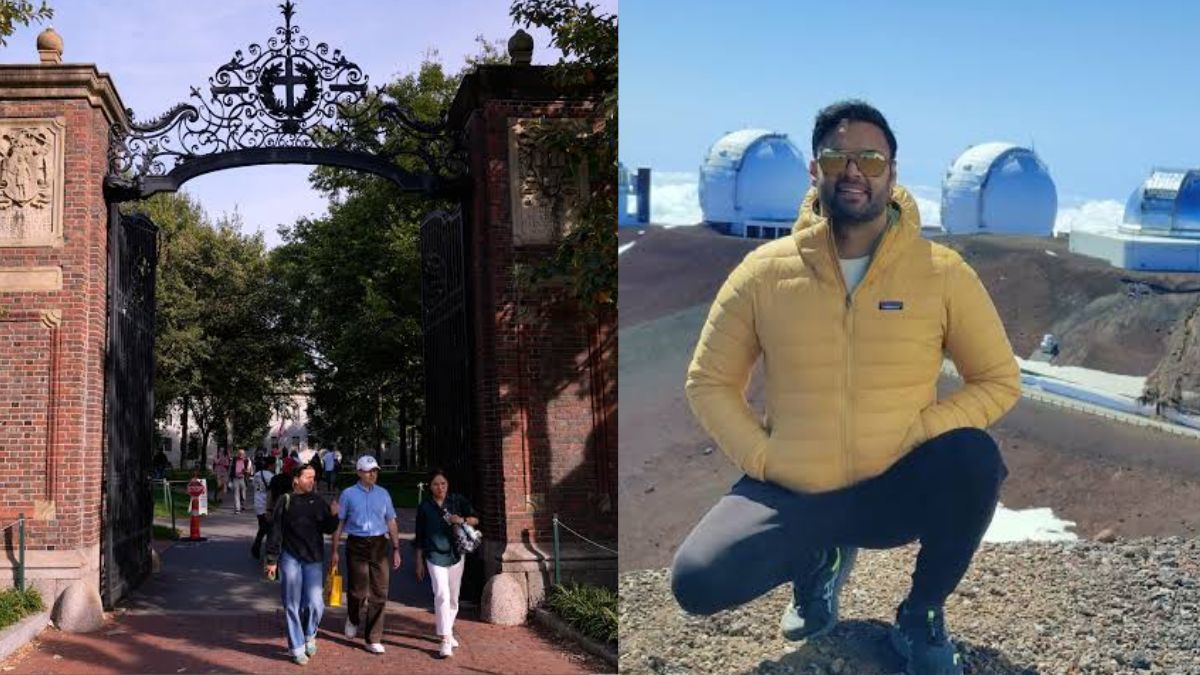

Indian astrophysicist Dr. Devesh Nandal, a postdoctoral researcher at the Center for Astrophysics | Harvard & Smithsonian, has been appointed to the Unidentified Anomalous Phenomena (UAP) Science Advisory Council, an expert panel established by Harvard professor Avi Loeb to provide scientific analysis of unexplained aerial and anomalous observations.
According to information released by the council, the advisory body was constituted at the request of stakeholders within the US Executive Branch, including the White House, the Office of the Director of National Intelligence (ODNI), the Pentagon’s All-domain Anomaly Resolution Office (AARO), the Federal Bureau of Investigation (FBI) and other members of the US intelligence community.
The council’s primary role is to advise a broader UAP governance framework by applying established scientific principles to investigate unexplained aerial observations. Unlike speculative discussions surrounding unidentified flying objects (UFOs), the panel has been tasked with evaluating available evidence through rigorous scientific methodologies, including observational data analysis, numerical modelling, instrumentation and theoretical interpretation. Its work will be limited to unclassified information that can be openly discussed and subjected to scientific scrutiny.
Dr. Nandal, who hails from Hisar, Haryana, has been selected for his expertise in astrophysics, numerical simulations, theoretical modelling and stellar evolution. His research focuses on interpreting complex astrophysical data and developing computational models, skills expected to contribute to distinguishing natural or scientifically explainable phenomena from observations that remain genuinely unexplained.
Professor Avi Loeb, who chairs the initiative, has consistently advocated for applying conventional scientific methods to investigate anomalous aerial observations rather than relying on speculation. The advisory council is expected to support evidence-based research while promoting transparency in the study of UAP-related data.
The appointment marks a significant international recognition for Dr. Nandal and highlights the growing contribution of Indian researchers to advanced scientific initiatives at leading global institutions. It also reflects increasing interest within the scientific community in studying unidentified aerial phenomena through objective research and interdisciplinary collaboration.
The council’s findings are expected to contribute to ongoing discussions within scientific and policy circles regarding unexplained aerial observations while maintaining a strict commitment to empirical evidence and publicly accessible research.

Comments are closed.