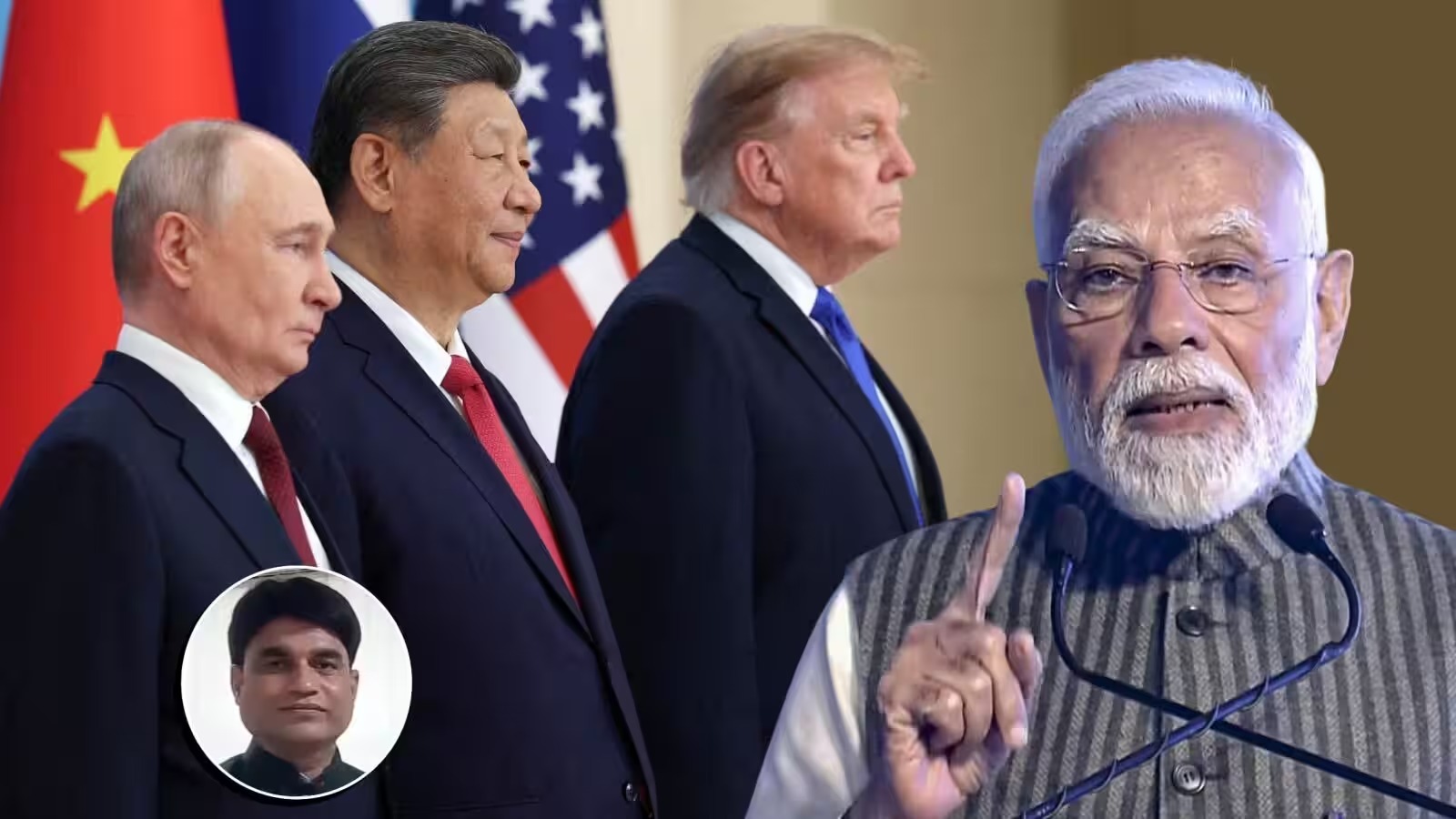
International politics these days is going through a phase of rapid changes and old alliances are being rewritten. On one hand, the pressure of America's trade and strategic policies is being felt on various partner countries, while on the other hand, the increasing economic, military and diplomatic proximity between Russia and China has sparked a new debate about the global balance of power. In such a situation, the question is arising again and again whether India is becoming diplomatically isolated in this changing environment or whether New Delhi has prepared an alternative strategy i.e. Plan B. Foreign affairs experts believe that today's complex geopolitics cannot be seen through the prism of any one pole. India's policy has long been based on the principle of strategic autonomy and multi-alignment, aimed at taking decisions in accordance with its national interests, energy security, trade and regional stability, rather than being completely beholden to any single power. US Pressure and Trade-Strategic Challenges Whenever the US tightens its trade terms, tariffs or strategic priorities on the global stage, it also impacts countries for which US markets and technology partnerships are important. This equation becomes more sensitive in the context of India because the scope of defence, technology, investment and diaspora relations with the US is wide, while on the other hand, India does not seem to be in favor of accepting every demand unconditionally due to its independent foreign policy and energy and defense needs. According to experts, the biggest challenge for India is to safeguard its exports, supply chain and investment flows amid pressure politics. As tensions rise between major powers, small and medium countries as well as emerging economies have to be extra careful in striking a diplomatic balance, so that the brunt of conflict on one front is not borne by others. Russia-China proximity and the question of regional balance Deepening cooperation between Russia and China has emerged as an important factor in the international system. China has become a major economic and technological partner for Russia, while the importance of Russian energy and strategic support for China has increased. The impact of this proximity is being felt from Eurasia to the Indo-Pacific and South Asia. This situation presents a double challenge for India. On one hand, India has historical defense and energy relations with Russia, while on the other hand, there is competition and tension with China over borders and influence along the Line of Actual Control (LAC) and the Indian Ocean region. If the Russia-China alliance deepens so much that it goes against India's security or regional interests, India will have to make its diplomatic options and partnerships more agile and multidimensional. Is India falling alone or is Plan B ready? A large section of diplomatic analysts believe that calling India a lonely country does not completely reflect the ground reality. In today's world, India maintains active engagement on bilateral and multilateral forums with the European Union, Japan, Australia, Britain, Middle East countries and many nations of the Global South. Participation in Quad, BRICS and various regional organizations shows that India is keeping its options open. As far as Plan B is concerned, experts see it as a flexible and multi-layered strategy rather than a single secret document. This includes exploring new trading partners, promoting domestic manufacturing and self-reliance, diversifying energy sources, and strengthening defense and maritime cooperation with neighbors and Indo-Pacific partners. For citizens and businessmen in Lucknow, Delhi or any Indian city, this global movement is important in the sense that the impact of global supply chains, energy prices and foreign policy decisions ultimately reaches the domestic economy and markets as well. Way Forward: Balance, Dialogue and Strategic Preparation The possibility of global politics becoming more polarized or fragmented in the times to come cannot be ruled out. India's success in such an environment will depend on how it protects its security and economic interests while keeping the lines of communication open. Adding new partnerships while avoiding excessive dependence on any one country or group is considered to be the most practical strategy in today's era. Overall, the pressure of American policies and the proximity of Russia and China have certainly posed a new diplomatic test for India, but efforts to adapt to the changing situation and maintain multilateral balance are also continuing. It will be important to see how India shapes new equations to serve its strategic interests in the coming months.