
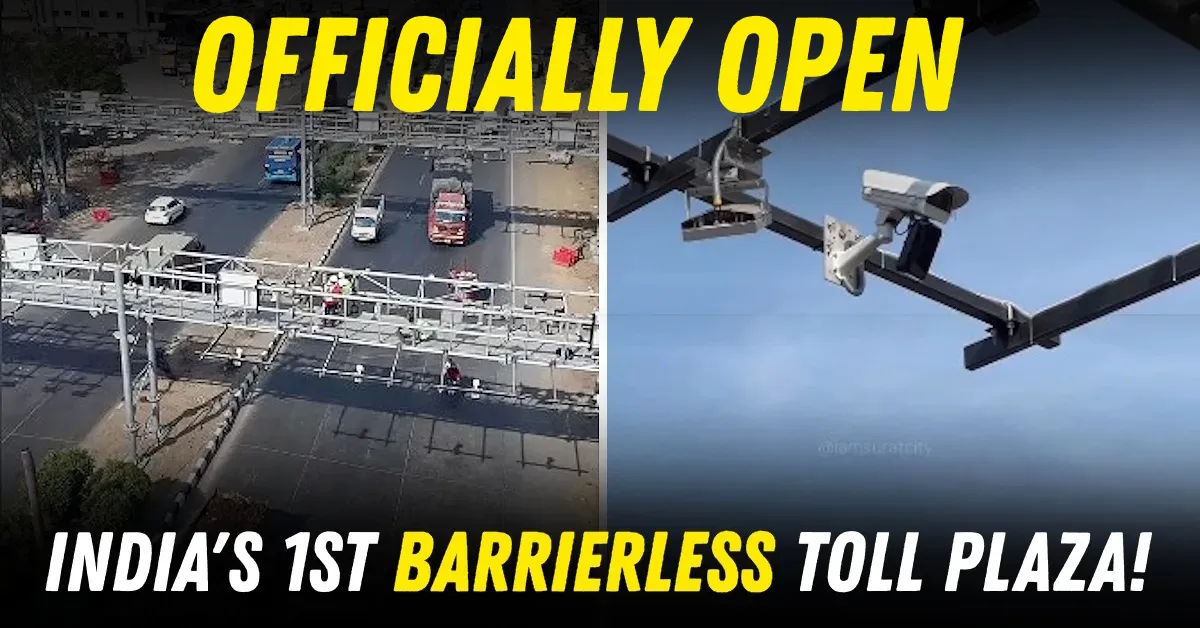

Videos of people getting stuck at toll plazas on highways and commuters arguing with toll booth employees are a common sight on the internet. Authorities have been working on resolving this issue for a very long time, and it looks like they might finally have a solution. Recently, we came across a system where tolls were being collected from vehicles without any physical barriers. The trials are over, and India’s first barrier-free toll collection system has now officially gone live in Gujarat.
The barrier-free toll collection system has been set up at Choryasi toll plaza at Kamrej on the Surat–Bharuch stretch of NH48. The new barrier-free toll collection system has been implemented by Indian Highways Management Company Ltd. under NHAI’s oversight. ICICI Bank is acting as the acquiring banking partner in this new system. The system was set up earlier this year, and trial runs for the same were conducted.
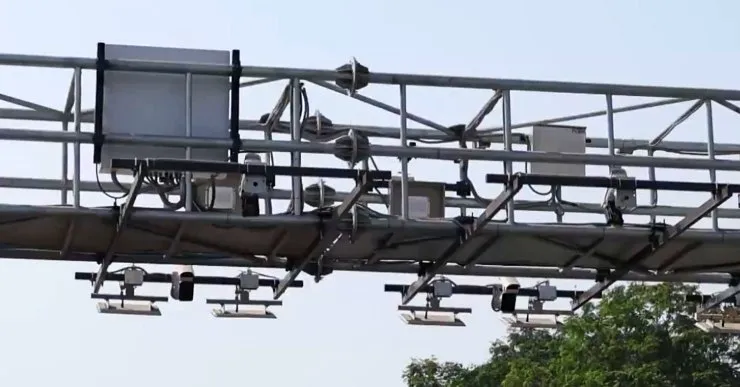
It looks like the tests and trials are finally over, and the system has gone live for the public. Choryasi toll plaza is the first in the country to get this multi-lane free-flow toll system. As seen in the video, there is no toll booth or collection center. There is an overhead metal structure that holds cameras, sensors, and RFID readers. These readers can read FASTags even if a vehicle is driving at a speed of 150 km/h.
When a vehicle passes through this road and goes under this structure, the sensors and readers fetch the vehicle’s details, and the toll amount is deducted instantly. The system also includes high-speed FASTag RFID readers, ANPR cameras, lane status indicators, and overhead gantries.
All this happens very quickly, which means one doesn’t have to slow down or stop at the toll plaza and wait for the amount to get deducted. This is a good initiative, as it will help reduce congestion and save time for road users.
If a vehicle has a FASTag but it fails to be read at the barrier-free toll plaza, then the ANPR camera installed overhead will read the vehicle’s registration number. The number will be sent to the VAHAN database for verification, and the system will redirect it to the FASTag linked to the vehicle number.
In case the system realizes that the vehicle number does not match the FASTag or the vehicle is missing a FASTag, it will automatically count that as a violation and proceed to raise a challan, issuing penalties as per NHAI rules.
At the time of the trial, the system had run into delays, as people raised security concerns about imported surveillance cameras from countries like China. To counter this threat, the government introduced strict cybersecurity rules that came into effect in April 2025. Under these guidelines, all internet-connected cameras must pass exhaustive security tests at government-approved laboratories before installation. These testing facilities are authorized to conduct deep inspections of the camera hardware, analyze internal firmware, and even demand access to the original source code to ensure no hidden data leaks exist.
Based on feedback from the newly implemented system in Gujarat, authorities will make changes and expand it to other regions in a phased manner.
Comments are closed.