
For decades, insurance in India was something many people bought because they were told they needed it, not because they fully understood its value. Policies were often associated with paperwork, agents, long forms and the uncomfortable thought of illness, accidents or death. That picture is changing rapidly. Insurance is moving from the margins of household financial planning towards the centre of India’s emerging consumption and investment story. With India now ranked among the world’s largest insurance markets, the opportunity is no longer simply about selling more policies—it is about creating a country where protection becomes as routine as banking, digital payments or investing.
The potential is enormous because India’s insurance story is still far from complete. A large part of the population remains either uninsured or underinsured, leaving households vulnerable to medical emergencies, loss of income, natural disasters and other financial shocks. This protection gap represents both a challenge and a massive commercial opportunity for insurers. India’s expanding middle class, rising disposable incomes, greater financial awareness and increasing formalisation of the economy are creating conditions for insurance demand to move beyond traditional life policies into health, motor, property, agriculture, travel, cyber and business protection.
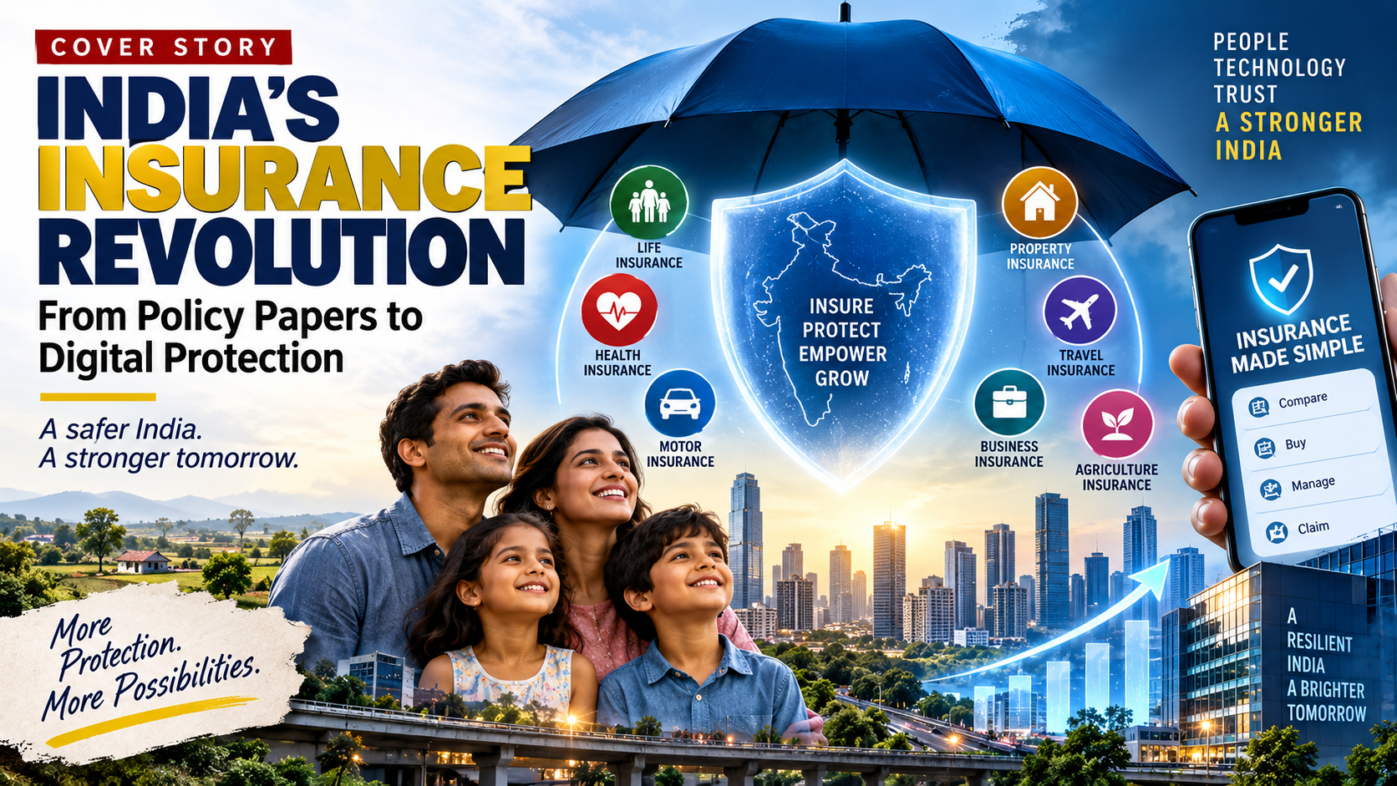
The nature of demand itself is changing. Life insurance is no longer viewed only through the traditional lens of savings and long-term family security, while health insurance is increasingly becoming a necessity as medical expenses rise. India’s rapidly urbanising population is also creating new risks around homes, vehicles, businesses and digital assets. Meanwhile, millions of small businesses are becoming part of formal supply chains and digital commerce, creating demand for protection against everything from equipment breakdowns and liability to cyberattacks and business interruption. Insurance is consequently expanding from a product designed around yesterday’s risks into one that must anticipate tomorrow’s.
Technology is at the heart of this transformation. The insurance journey that once began with a physical form and ended with a paper policy can now start and finish on a smartphone. Customers can compare products, complete KYC, pay premiums, receive policy documents and initiate claims digitally. Behind the screen, insurers are deploying cloud infrastructure, APIs, automation, analytics and artificial intelligence to process information at a speed that traditional insurance operations could never match. India’s digital ecosystem is therefore doing more than improving convenience—it is changing the economics of insurance itself.
Artificial intelligence could prove particularly disruptive. Insurers are beginning to use data-driven systems to identify patterns, assess risks, detect suspicious claims and automate routine decisions. Instead of treating millions of customers through broad demographic categories, technology can enable increasingly granular risk assessment. In motor insurance, connected devices and telematics can provide insights into driving behaviour. In health insurance, digital health information can potentially support more informed underwriting and claims management. For businesses, analytics can help insurers understand risks associated with supply chains, cyber threats, climate events and operational disruptions.
But faster technology does not automatically mean better insurance. The industry faces a difficult balancing act between personalisation and privacy. Insurance companies are dealing with enormous quantities of sensitive financial, medical and behavioural information, making cybersecurity and responsible data governance critical. AI systems can also introduce concerns around transparency and bias if customers do not understand why a claim was flagged, a premium was calculated in a particular way or a particular decision was made. The next generation of insurance will therefore require not only smarter algorithms but also stronger safeguards and greater accountability.
Claims are likely to become one of the biggest battlegrounds in this transformation. For customers, the real test of an insurer is not how attractive a policy looks at the time of purchase, but what happens when something goes wrong. Digital claims processing, automated document verification, image analysis and AI-based fraud detection can potentially reduce delays and administrative costs. But insurers must ensure that automation does not turn a stressful moment into a frustrating digital maze. The industry’s competitive advantage could increasingly depend on combining technological efficiency with human empathy at the point when customers need help most.
Health insurance presents an even more complicated challenge. Healthcare inflation, rising treatment costs and increasing awareness are pushing demand for medical cover, but affordability remains a major concern. The industry must find ways to expand coverage without making premiums prohibitively expensive. It also has to deal with fraud, inconsistent healthcare costs, complex hospital billing and the difficulty of explaining policy exclusions to consumers. Technology can improve claims administration and data analysis, but solving India’s health-insurance challenge will require coordination across insurers, hospitals, healthcare providers, regulators and consumers.
The regulatory landscape is changing alongside the industry. The Sabka Bima, Sabki Raksha (Amendment of Insurance Laws) Act, 2025 raised the foreign investment ceiling in Indian insurance companies from 74% to 100%, opening the door to potentially greater capital, technology and international expertise. The reforms are also aimed at improving ease of doing business, strengthening policyholder protection and expanding reinsurance capacity. The government’s stated objective is not merely to attract investment but to use deeper competition and stronger capitalisation to expand insurance coverage across the country.
Yet India’s insurance revolution cannot be won in India’s biggest cities alone. Rural India, smaller towns and economically vulnerable households represent perhaps the industry’s greatest unfinished opportunity. Selling insurance in these markets requires more than a digital app. Customers need products they can understand, premiums they can afford and distribution networks they can trust. The challenge is to combine India’s digital infrastructure with local knowledge and human distribution. Technology can bring insurance closer to a customer, but trust is still built through clarity, transparency and the ability to get assistance when something goes wrong.
There is also a new generation of risks waiting at the industry’s doorstep. Climate change is increasing exposure to floods, cyclones, extreme heat and other weather-related events. At the same time, India’s digital economy is creating an expanding universe of cyber risks for consumers, startups and large corporations. Electric vehicles, autonomous technologies, ageing populations, gig work and increasingly interconnected supply chains will create risks that traditional insurance models may not have been designed to handle. The insurers that succeed will be those capable of understanding emerging risks before they become mainstream claims.
The biggest change, however, may be psychological rather than technological. India is gradually moving towards an environment where insurance is being viewed less as an unavoidable financial expense and more as an instrument for protecting wealth, health and future income. The government’s ambition of “Insurance for All by 2047” gives the industry a long-term destination, while regulatory reforms, digital infrastructure and rising consumer awareness are creating the conditions for the journey. The winners of this next phase will not necessarily be the companies that sell the most policies, but those that make insurance easier to understand, easier to access and easier to trust. India’s insurance sector is therefore entering a defining decade—and its biggest opportunity may be to make protection itself a mainstream part of India’s economic growth story.
Why Insurance Is Essential
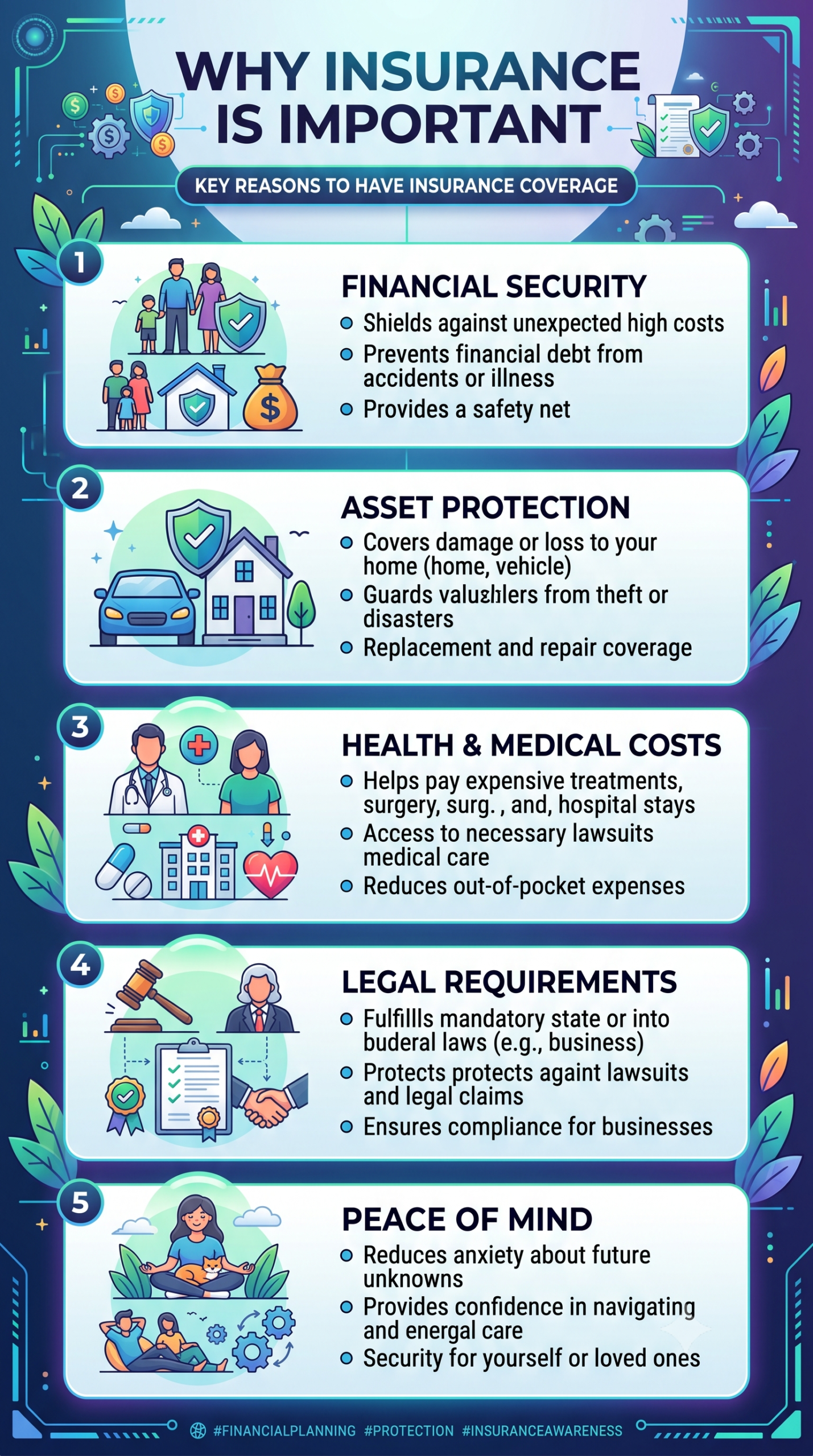
Insurance is more than a financial product—it is a safety net against uncertainty. Life can change suddenly through illness, accidents, loss of income, natural disasters or unexpected expenses, and a single event can wipe out years of savings. Insurance helps transfer part of that financial risk from individuals and businesses to an insurer, giving people greater confidence to plan for the future without constantly worrying about the financial consequences of unforeseen events.
For Indian households, health and life insurance are becoming increasingly important as healthcare costs rise and families become more financially independent. A serious medical emergency can put enormous pressure on household savings, while the loss of a primary earning member can disrupt a family’s long-term plans. Adequate insurance can help protect savings, education plans, retirement goals and other financial commitments from being derailed by an unexpected crisis.
Insurance is equally important for India’s growing business economy. Small businesses, startups, manufacturers, retailers and large corporations face risks ranging from fire and equipment damage to cyberattacks, accidents, natural disasters and interruptions in supply chains. The right insurance cover can help a business recover after a setback rather than forcing it to shut down. As India’s economy becomes more digital and interconnected, newer forms of protection—including cyber, liability, property and business-interruption insurance—are becoming increasingly relevant.
Ultimately, the importance of insurance lies in financial resilience. It does not prevent accidents, illness or disasters, but it can prevent those events from becoming permanent financial setbacks. As India moves towards the vision of “Insurance for All by 2047,” expanding coverage will require affordable products, greater awareness, transparent claims processes and technology that makes insurance easier to access. The future of insurance is therefore not simply about selling more policies—it is about helping more Indians protect what they have built and remain financially secure when life takes an unexpected turn.