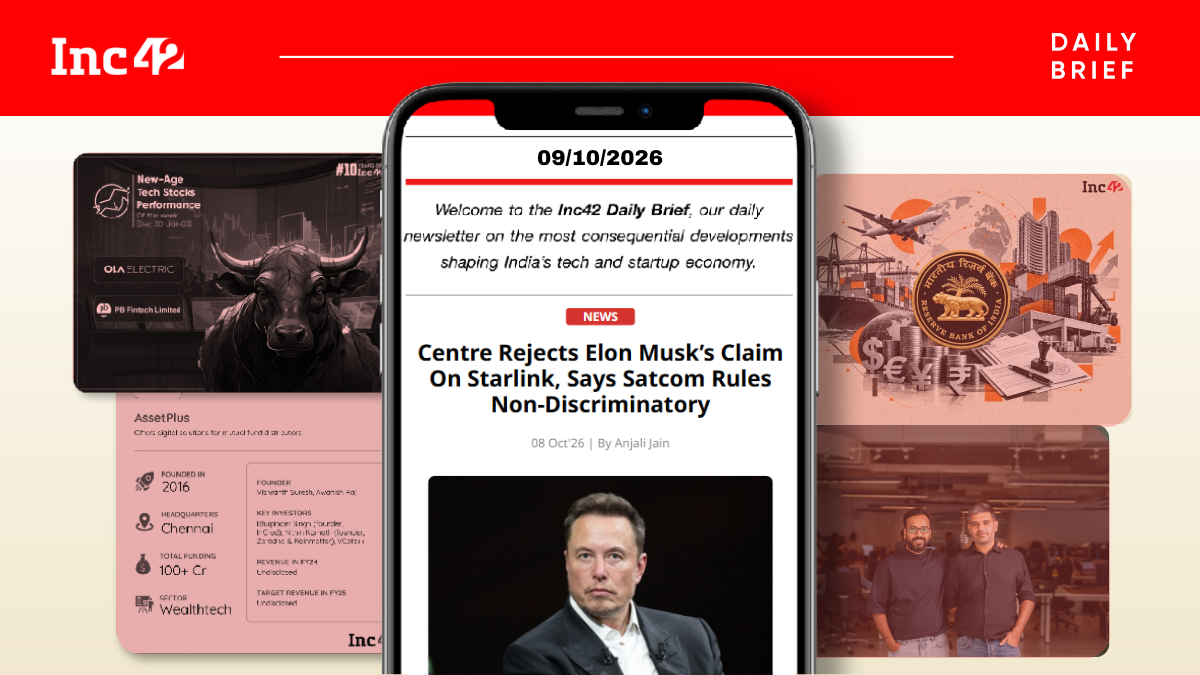
India’s Satcom War Heats Up
A major tussle has erupted between Elon Musk and the Centre. Musk has accused certain “oligarchs” for blocking Starlink’s launch in India, prompting a swift pushback from the government.
Musk Vs Govt: The SpaceX founder claimed that certain “oligarchs” were trying to maintain their monopolistic chokehold in the Indian satcom space. Rejecting the allegations, the communications ministry stressed that the regulatory framework is fair and non-discriminatory. It also added that all three licensed operators are undergoing identical security assessments.
Regulatory Bottleneck: All three licensed satcom operators – Starlink, Jio and OneWeb – are stuck at the security clearance stage with the home affairs ministry. The DoT has issued licences and provisional spectrum, but no company can proceed to commercial launch until MHA approves. As the regulatory paradigm remains in a flux, operators have spent billions on satcom infrastructure.
The Infra Readiness: All three contenders have established domestic ground networks to support commercial deployment. Starlink has built 20 gateway sites with localised data controls, while Eutelsat OneWeb has also set up teleports, LEO gateways and points of presence across India. Meanwhile, Reliance Jio is deploying 23 ground stations across India to link its terrestrial network with satellite connectivity.
The Lingering Concerns: Inside the government, concerns remain over potential security risks, including untraceable communications, data localisation gaps and encryption weaknesses. Officials fear that foreign operators could bypass lawful interception norms or expose user data to external jurisdictions. These issues have slowed clearances across the board, with regulators prioritising national security over speed of deployment.

But with all operators stuck at the same security checkpoint, why has India’s satcom rollout triggered a turf war between some of the world’s biggest billionaires? Let’s find out…
From The Editor’s Desk
🏛️ RBI’s New FEMA Rules
- The new Foreign Exchange Management (Export and Import of Goods and Services) Regulations, 2026 came into effect on October 1. The new framework brings goods, software and other services under a more unified forex reporting system.
- The key change for freelancers, creators and SaaS companies is that service exports now need to be declared through an export declaration form filed through the dealer bank. However, the regime exempts personal transactions and small individual assignments.
- The larger change for service exporters will be that they may need better records of invoices and foreign receipts. Meanwhile, export proceeds will have to be realised within nine months, while transactions settled in Rupees will receive a 12-month period.
💰 DailyObjects Nets ₹332 Cr
- The D2C lifestyle brand has raised $34.3 Mn in its Series C round to scale its offline network, deepen its R&D capabilities and explore global opportunities. The round, which included both primary and secondary deals, valued the startup at ₹1,050 Cr.
- Founded in 2012, DailyObjects sells a range of lifestyle and tech accessories like phone cases, watchbands, bags, wallets and wireless chargers. It operates nine offline stores and expects to close FY26 with a net revenue of ₹230 Cr.
- Going forward, the D2C brand plans to expand its physical retail network to 150 EBOs over the next five years. It is also eyeing a top line of ₹400 Cr by FY27, with plans to build a ₹1,000 Cr business over the coming years.
📱 Govt Mulls MDR Deferral
- Amid pushback from retailers, the Centre is considering a proposal to postpone the implementation of the merchant discount rate on select UPI transactions to January next year. A final decision on the matter is expected in the coming days.
- Members of the UPI and Services Steering Committee also considered exempting businesses, with annual turnover of up to ₹40 Lakh, from MDR. If the plan materialises, it would keep eligible merchant payments free of MDR through the festive season.
- This comes weeks after the finance ministry re-introduced a new MDR framework, which proposed a 0.4% levy on UPI P2M transactions above ₹2,000. As reports of deferment flooded the market, shares of Paytm, Pine Labs and MobiKwik saw a massive sell-off.
📶 Ericsson’s 5G Startup Cohort
- At the India Mobile Congress 2026, the original equipment manufacturer announced the six winners of its flagship startup competition, Ericsson Innovation Challenge. The selected startups include Torchit, Skye Air Mobility, scanO, among others.
- While Torchit is building assistive devices like AI smart glasses for specially-abled people, Skye Air Mobility is using autonomous drones for last-mile delivery. Pune-based scanO uses computer vision to screen for more than 40 oral conditions in 12 seconds.
- Organised in partnership with IAN and TiE Delhi-NCR, the competition evaluated entries on societal impact, innovation, scalability, sustainability and the extent to which each solution addressed a defined real-world problem.
🤖 New AI Rules On The Anvil
- IT minister Ashwini Vaishnaw has said that the government is drafting a consultation paper to regulate AI. The blueprint will likely focus on AI safety and security, navigate the deepfakes risk and ensure adequate skill development.
- The minister further noted that AI and emerging technologies cannot be effectively managed through legislation alone. He added that the Centre intends to pursue a techno-legal solution with the active participation of industry stakeholders.
- In the absence of a dedicated AI law, the IT ministry currently has been using the IT Act and intermediary rules to address synthetic content and platform due diligence. As such, the consultation paper will pave the way for a broader standalone framework.
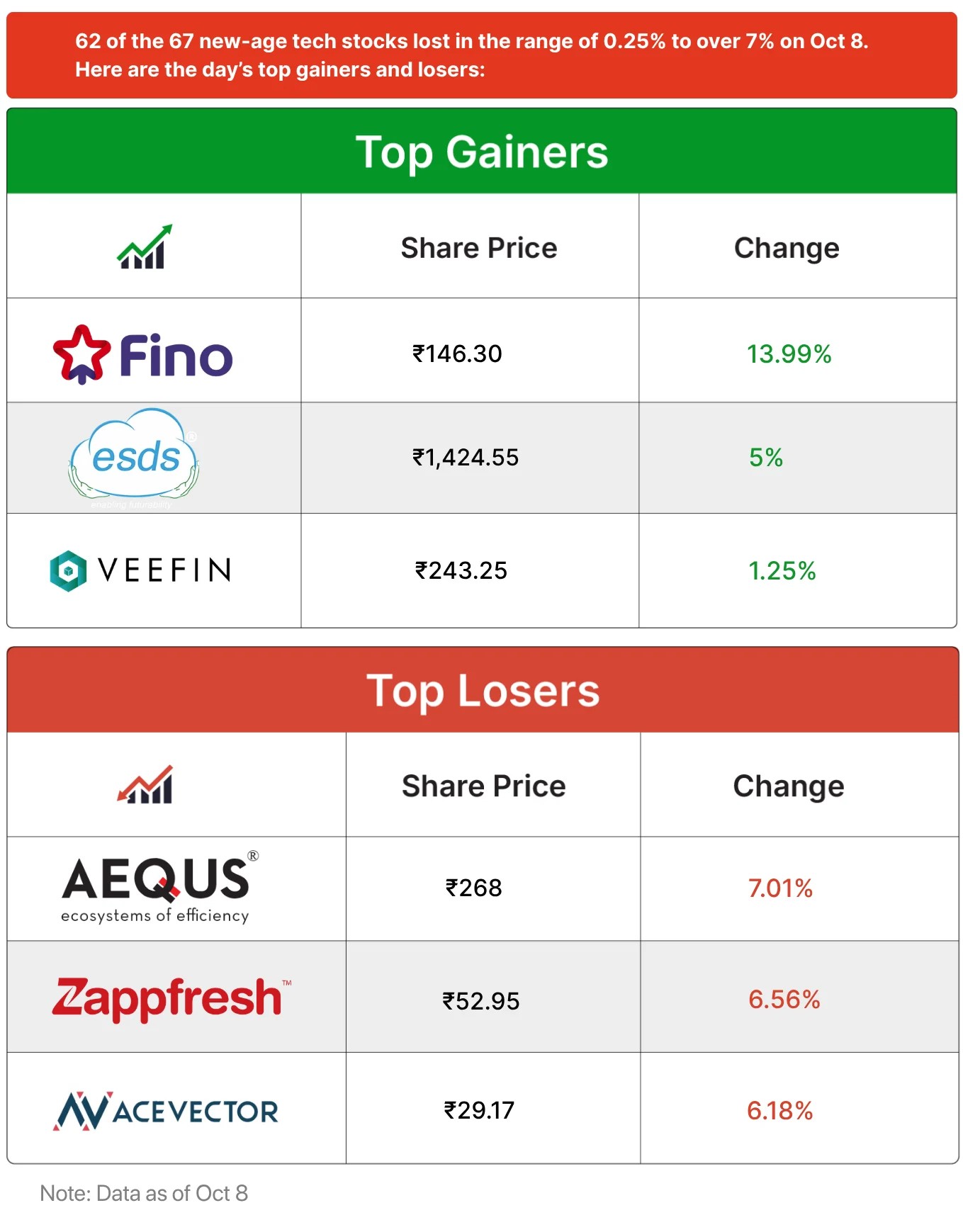
Inc42 Markets
Inc42 Startup Spotlight
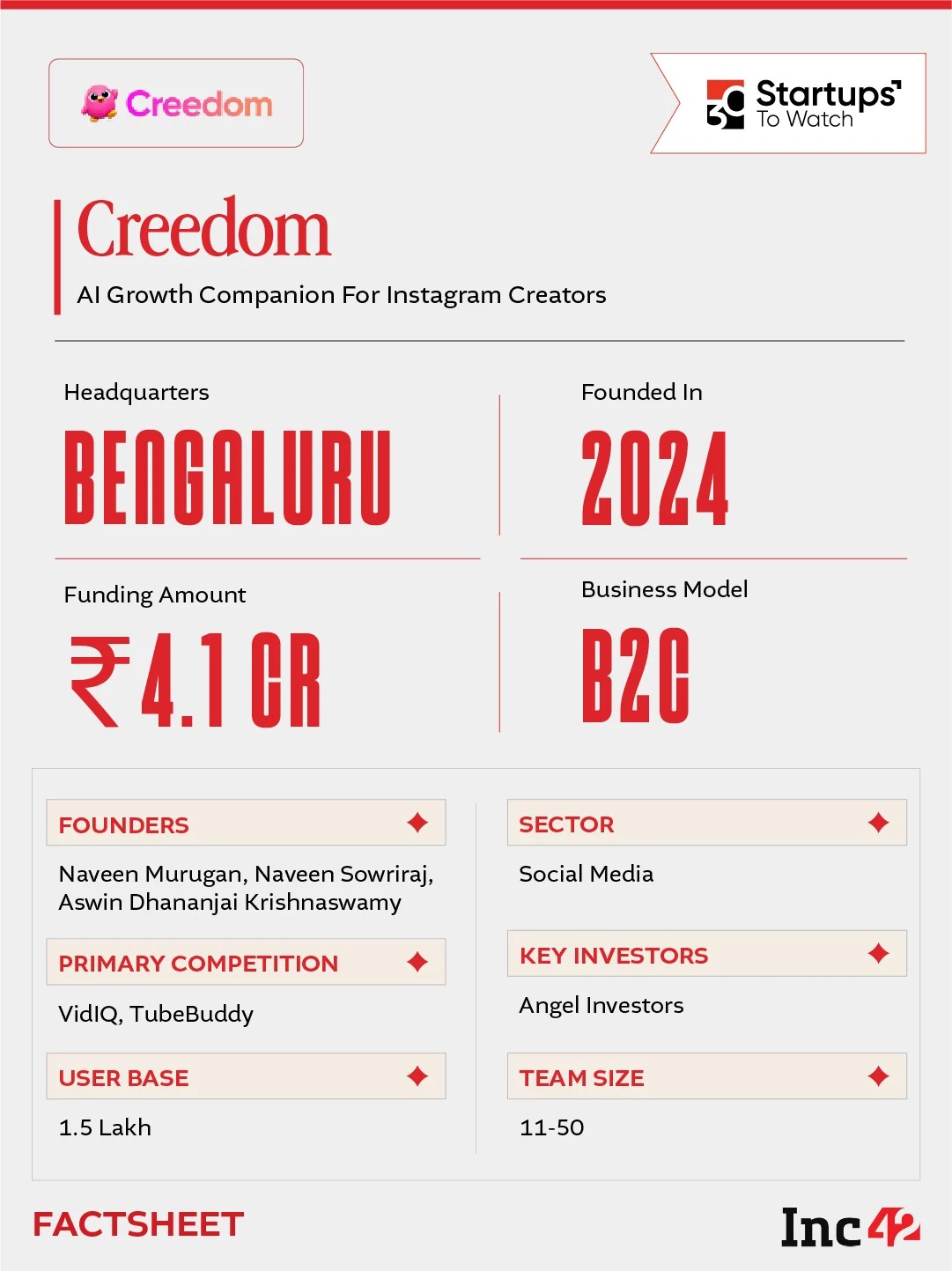
Meet The AI Wingman Helping Creators Grow
Every under-performing post or video carries a lesson, but most creators lack the time or expertise to find it. Creedom is building an AI growth coach that analyses content and audience behaviour to help creators make better content decisions.
A Data-Savvy Wingman: Founded in 2024, Creedom is building an AI companion that connects the dots between content and growth. The platform analyses a creator’s content, identifies patterns and recommends what they should create next. Its AI companion, Cree, lets creators ask questions conversationally instead of navigating complex analytics dashboards.
The Underlying Stack: The platform examines factors such as hooks, pacing, visuals, text, audio timing, audience retention and viewer drop-offs. It then links those creative signals to performance outcomes. This can help explain why one Reel or video outperformed another and identify emerging opportunities in a creator’s niche.
Leveraging Verified Data: Creedom is an official Meta and YouTube technology partner, which enables API-based access to account and channel performance data. This gives its recommendations a more reliable foundation than generic AI advice. Going forward, the startup plans to scale product development, deepen AI capabilities and expand teams in India and the US.
Home to 41 Lakh creators in 2025, India offers a large market for tools that go beyond editing and publishing. So, can Creedom build a personal trainer for content growth?
Infographic Of The Day
From rice to ghee, everyday staples are getting a premium makeover as brands bet on freshness, traceability, traditional processing and health. So, is the Indian premium staples market the next D2C goldmine?