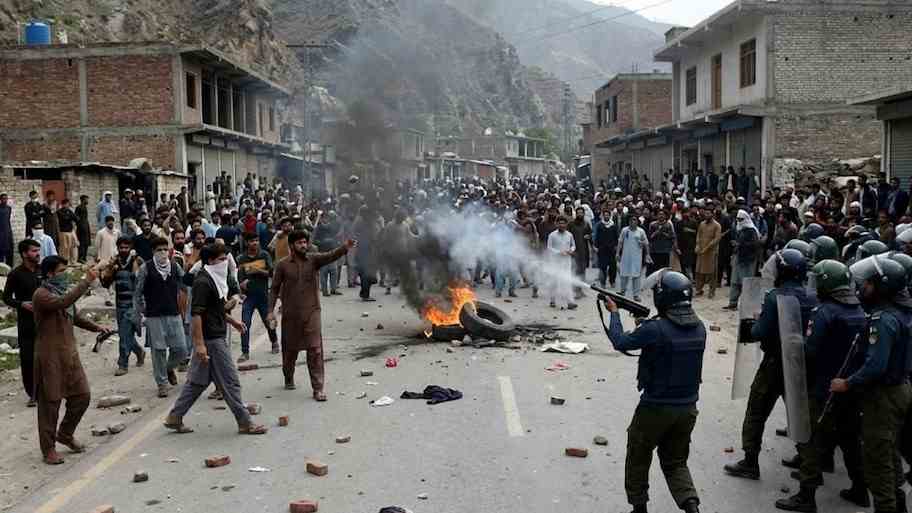
The mass movement that started in Pakistan's illegally occupied Jammu and Kashmir (PoJK/PoK) over basic rights, unbridled inflation, huge electricity bills and shortage of flour and grains has now turned into a major political and human rights crisis. Lakhs of common citizens have taken to the streets of Muzaffarabad, Mirpur, Kotli, Rawalkot and Gilgit-Baltistan. India's Ministry of External Affairs (MEA) has taken a very strict stand on this entire incident and made it clear that the current disturbance in PoK is a natural consequence of Pakistan's repressive policies and continuous plunder of local natural resources. India has strongly advocated for holding Pakistan accountable in international forums. 'Looting of natural resources and systemic oppression': Indian Foreign Ministry's attack During a press briefing in New Delhi, the official spokesperson of the Ministry of External Affairs Randhir Jaiswal expressed deep concern over the human rights violations taking place in the areas under illegal occupation of Pakistan. India said that for decades, Pakistan has exploited the water, forests and minerals of these areas only for its own benefit, while the indigenous people there have been deprived of even basic civil rights, health facilities and affordable electricity. Drawing the attention of the countries of the world towards this, India said that the brutality with which tear gas shells, lathicharge and direct bullets are being fired on peaceful protesters by Pakistani Army, Rangers and local police is a gross violation of human rights. Why did the fire of protest flare up in PoK? (Demands of Awami Action Committee) This big mass movement is being led by 'Joint Awami Action Committee' (JAAC). Local people have taken to the streets mainly over three major issues: Demand for cheap electricity: Very cheap electricity generated from large hydropower projects like Mangla and Neelum-Jhelum located in PoK is given to the whole of Pakistan, while heavy taxes and exorbitant electricity rates are being imposed on local residents. Subsidy on cheap wheat and flour: Severe shortages and skyrocketing prices of basic food items, especially flour, in the region have made life difficult for ordinary families. Ending the privileges of the elite class: There is a demand to stop the luxury facilities and allowances given to administrative officers, ministers and army officers. To suppress the brutal action of security forces and internet blackout situation, the Pakistani administration has disrupted internet and mobile communication services in the entire region, so that the scenes of human rights violations cannot come out. Despite this, it can be seen in the video surfaced on social media that security forces have used indiscriminate force on the protesters. There have been reports of casualties among dozens of civilians and security personnel in several violent clashes. Human rights organizations have also warned that detained civil activists are being subjected to inhumane treatment in prisons. 'The entire Jammu and Kashmir and Ladakh are an integral part of India': India's determination The Ministry of External Affairs, in its official statement, once again reiterated bluntly that the entire Jammu and Kashmir and Ladakh Union Territory are and will always remain an integral and inseparable part of India. India said that depriving the citizens of the area which is forcibly occupied by Pakistan, of basic freedoms and suppressing their voices with the help of guns cannot be acceptable in any democratic system. New Delhi made it clear that the international community should put direct pressure on Islamabad instead of turning a blind eye to cross-border terrorism and the ongoing brutality in PoK.