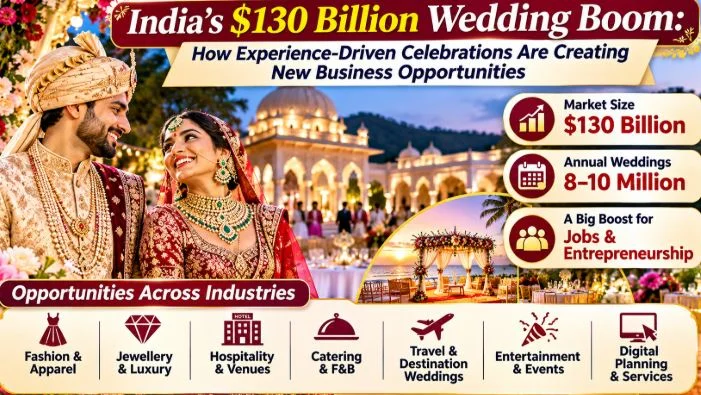
India’s wedding industry is becoming one of the country’s most commercially significant consumer markets, creating opportunities that extend far beyond traditional wedding ceremonies. Estimated to be worth around $130 billion, the sector brings together businesses across fashion, jewellery, hospitality, catering, travel, entertainment and event management.
With an estimated 8–10 million weddings taking place annually, the industry generates substantial demand for products and services. For businesses, this represents a large market supported by family spending, changing consumer preferences and growing interest in personalised celebrations.
What is changing, however, is not simply how much people spend on weddings, but what they expect from the experience. Couples are increasingly looking for customised celebrations, distinctive venues, professional event management and memorable experiences for their guests. This shift is reshaping the way businesses develop products, compete for customers and build revenue.
Experience-Led Spending Is Changing Wedding Business Models
Traditional wedding services remain important, but customers are increasingly looking beyond standard packages. Personalised décor, themed functions, curated entertainment, professional photography and customised catering are becoming important parts of wedding planning.
This is creating opportunities for businesses to move towards specialised services and higher-value offerings. Event management companies can provide complete planning solutions, while caterers, designers, photographers and entertainment professionals can develop packages tailored to individual preferences.
For businesses, the opportunity lies in understanding that customers are not purchasing individual services alone. They are investing in a complete celebration, where coordination, quality and personalisation influence the overall experience.
Companies that can combine creativity with dependable execution are better positioned to stand out in an increasingly competitive market.
Wedding Spending Supports a Wide Business Ecosystem
The commercial impact of weddings reaches businesses of different sizes. Jewellery retailers, fashion designers, beauty professionals, hotels, restaurants, florists, transport operators and local vendors all benefit from wedding-related demand.
Small businesses often gain from orders for clothing, decorations, sweets, gifts and customised products. Independent photographers, makeup artists, musicians and event professionals also find opportunities through family celebrations and referrals.
Larger businesses, including hospitality groups, jewellery brands and established event management companies, can benefit from premium weddings and multi-day celebrations.
This interconnected ecosystem makes the wedding industry an important source of business activity and entrepreneurship. It also creates opportunities for smaller enterprises to build a reputation through service quality, specialised skills and customer relationships.
Destination Weddings Connect the Industry with Tourism
Destination weddings are creating another growth avenue by connecting wedding expenditure with travel and hospitality.
Locations such as Rajasthan, Goa and Kerala attract couples seeking distinctive settings and extended celebrations. These events generate business for hotels, resorts, restaurants, travel companies, transport providers and local service operators.
The economic benefits can extend beyond the wedding venue. Guests may spend on accommodation, shopping, sightseeing and local experiences, supporting businesses throughout the destination.
For tourism companies and hospitality operators, wedding-related services can become an additional revenue stream. Businesses that offer coordinated venue arrangements, accommodation, guest transportation and event support can appeal to customers looking for convenient, end-to-end solutions.
Destination weddings can also create opportunities for local artisans, florists and cultural performers, allowing regional products and traditions to become part of premium celebrations.
Digital Platforms Are Expanding Customer Reach
Technology is changing how couples search for wedding services and make purchasing decisions.
Online directories, social media portfolios, digital planning tools and virtual consultations allow customers to compare vendors, review previous work and explore options before making commitments.
This development is particularly valuable for small businesses that traditionally depended on local contacts and personal recommendations. A well-maintained digital presence can help photographers, designers, decorators and independent service providers reach customers beyond their immediate markets.
Online reviews, transparent pricing and clear communication are becoming important factors in building trust. Businesses that respond quickly, display their work professionally and provide reliable service information can strengthen their position in a crowded marketplace.
Digital wedding platforms and curated exhibitions are also bringing together vendors from different sectors, creating additional channels for customer acquisition and business partnerships.
Seasonal Demand Creates Revenue Opportunities and Challenges
Wedding demand is often concentrated around auspicious dates and peak celebration seasons. During these periods, venues, caterers, decorators, photographers and transport operators can experience a sharp increase in bookings.
For small businesses, peak wedding periods can contribute significantly to annual revenue. However, concentrated demand also creates operational pressure.
Supplier costs may increase, skilled workers can become difficult to secure, and businesses must manage multiple events within tight deadlines. Working-capital requirements can also rise as vendors purchase materials and arrange staff before receiving final payments.
Advance planning, clear payment schedules and dependable supplier relationships are therefore essential. Businesses that diversify into corporate events, private celebrations and hospitality services may also reduce their dependence on a limited number of wedding seasons.
Affordability Is Creating Opportunities Beyond Luxury Weddings
Although premium and destination weddings attract considerable attention, India’s wedding market includes households with widely different budgets.
This creates opportunities for businesses that offer flexible pricing, smaller celebration packages, rental services and customised options. Customers increasingly have the ability to select specific services according to their priorities rather than purchasing expensive all-inclusive packages.
For vendors, affordability does not necessarily mean compromising on quality. Businesses that manage costs, communicate pricing clearly and provide reliable services can appeal to a wider customer base.
A sustainable market also depends on responsible spending. Wedding businesses need to balance customer aspirations with realistic budgets, ensuring that value and service quality remain central to the purchasing decision.
The Business Opportunity Ahead
India’s wedding industry is evolving into a broader experience-driven economy. Its growth is creating opportunities for established companies as well as small businesses, independent professionals and emerging digital platforms.
The next phase of growth is likely to reward businesses that combine personalisation, technology, operational efficiency and customer trust. Hospitality providers can strengthen their event offerings, digital platforms can improve vendor discovery, and local enterprises can reach wider markets through stronger branding and online visibility.
The industry’s long-term potential will depend not only on rising expenditure but also on the ability of businesses to deliver consistent quality, manage seasonal demand and serve customers across different budgets.
India’s wedding market is ultimately more than a collection of celebrations. It is a connected business ecosystem where changing consumer expectations are creating new opportunities across tourism, retail, hospitality and professional services. As experience-led spending gains importance, businesses that understand this shift will be better placed to participate in the industry’s next stage of growth.