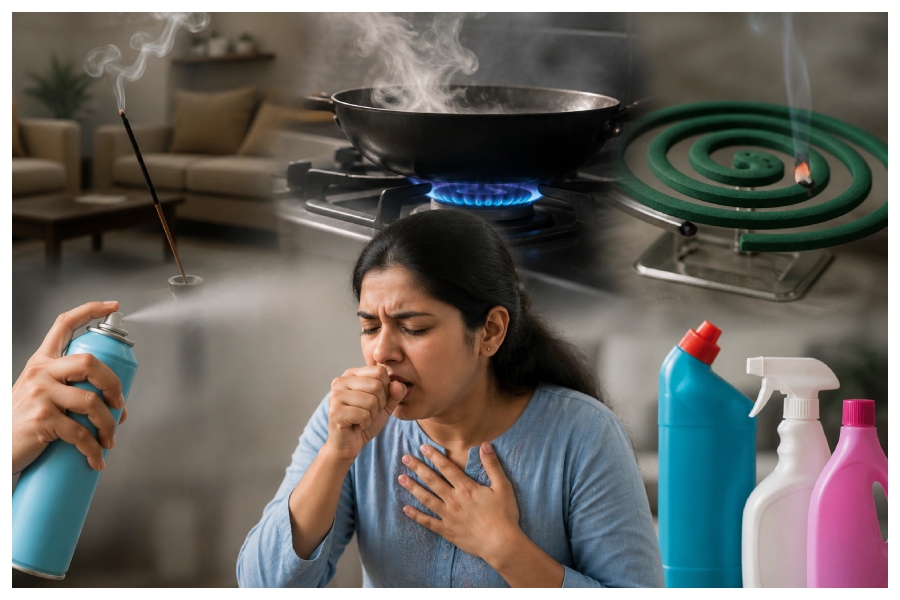
Indoor Air Pollution: When people have cough, sore throat or difficulty in breathing, they often consider outside pollution as the cause. Road dust, vehicle smoke and bad air can harm health, but it is not necessary that the air inside the house is completely safe.
We use many such things in everyday life, the smell, smoke or small particles emanating from them can cause irritation in the respiratory tract. Perfumes, room fresheners, mosquito repellent coils and some chemicals used in cleaning are examples of this. Especially people suffering from asthma and allergies may face more problems.
Let us know which things used at home can increase respiratory problems and what precautions should be taken to avoid them.
1. Excessive use of perfume and body spray
Applying perfume or body spray while leaving the house is a part of many people’s daily routine. But the chemicals released from these strongly scented products can cause irritation in the respiratory tract of some people. Repeated spraying in a closed room can increase the problem.
Sensitive people may experience cough, sore throat, headache or trouble breathing when exposed to it. Strong fragrances can increase symptoms in asthma patients.
What to do: Use perfume in limited quantity. Avoid spraying it in closed rooms and stop using any product if you experience any discomfort.
2. Room freshener and scented candles
People often use room freshener to remove odor from the room. At the same time, some people burn scented candles to make the house fragrant. However, the fragrance emanating from them and some chemicals spread in the air can irritate sensitive people.
Smoke and fine particles can also be released when candles burn. Using them in closed spaces can affect the quality of indoor air.
What to do: To get rid of the smell, find out its cause instead of just covering it with fragrance. Keep dustbins clean, allow moist areas to dry and, when the weather is favourable, open windows for ventilation.
3. Mosquito Coil and Liquid Repellent
Coils and electric liquid repellents are used in many homes to avoid mosquitoes. This is also important to protect against mosquito-borne diseases, but these products should be used according to the instructions.
Burning of mosquito repellent coils releases smoke and fine particles, which can cause irritation in the respiratory tract. At the same time, the smell emanating from liquid repellent can also bother some people. Using them in closed and less ventilated rooms can increase problems.
What to do: Follow the instructions given on the product packet. To avoid mosquitoes, adopt options like mosquito nets and nets on windows. Avoid lighting the coil near your head or in a closed room while sleeping.
4. Smoke of incense sticks and incense sticks
There is a tradition of burning incense sticks and incense sticks during worship in Indian homes. However, the smoke from their burning can release particulates and other pollutants into the air. Chronic or excessive exposure to smoke may cause cough, sneezing and trouble breathing in some people.
Children, the elderly and people suffering from asthma or respiratory disease should take special precautions against smoke.
What to do: Limit the use of incense sticks and incense sticks. While burning them, make arrangements for adequate ventilation and avoid inhaling the smoke directly.
5. Phenyl, bleach and bathroom cleaner
The strong smell of floor cleaner, bleach and toilet cleaner used in house cleaning can sometimes cause irritation to the eyes and throat. Using these products in poorly ventilated bathrooms can also cause breathing problems.
Mixing cleaning products can be especially dangerous. For example, mixing bleach with toilet cleaners containing acids or products containing ammonia can release toxic gases.
What to do: Maintain ventilation with a window or exhaust fan during cleaning. Follow the directions on the product label and do not mix any two cleaners.
6. Ignoring dust and moisture in the house
Scented products aren’t the only cause of respiratory problems. Dust, dust mites, mold and moisture accumulated in the house can also increase the symptoms of allergies or asthma. Dust can accumulate especially in beds, curtains, carpets and rooms that are closed for a long time.
Mold on walls or persistent dampness can also affect the quality of indoor air. Therefore, it is important to remove the moisture problem with regular cleaning.
What to do: Clean the house regularly, remove the cause of dampness and clean the bed and curtains from time to time. A wet cloth can be used to prevent dust from flying while cleaning.
Adopt these easy methods to keep the air of your house clean (Indoor Air Pollution)
It is not necessary to completely stop everything used in the house. Adopting some precautions can help in reducing indoor pollution.
- Open windows when the weather and outdoor air quality are favorable to let in fresh air.
- Limit the use of strong scented sprays and air fresheners.
- Do not allow smoke from coils, incense sticks and candles to accumulate.
- While using cleaning chemicals, keep adequate ventilation in the room.
- Do not allow dust and dampness to accumulate in the house.
- Keep children and people suffering from respiratory diseases away from smoke and strong smells.
What to do in case of persistent cough or shortness of breath?
If you have frequent cough, throat irritation or increased difficulty in breathing while staying at home, then pay attention to its possible causes. If you notice the problem increasing due to strong smell or smoke, stay away from it and consult a doctor.
If symptoms like severe difficulty in breathing, severe chest tightness or blue lips appear, seek medical help immediately. Do not ignore persistent cough as just the effect of household pollution, because infection, allergy or other health problems can also be behind it.
Overall, along with keeping the house clean and fragrant, it is also important to keep its air clean. Small everyday precautions can help reduce the risk of respiratory problems.