
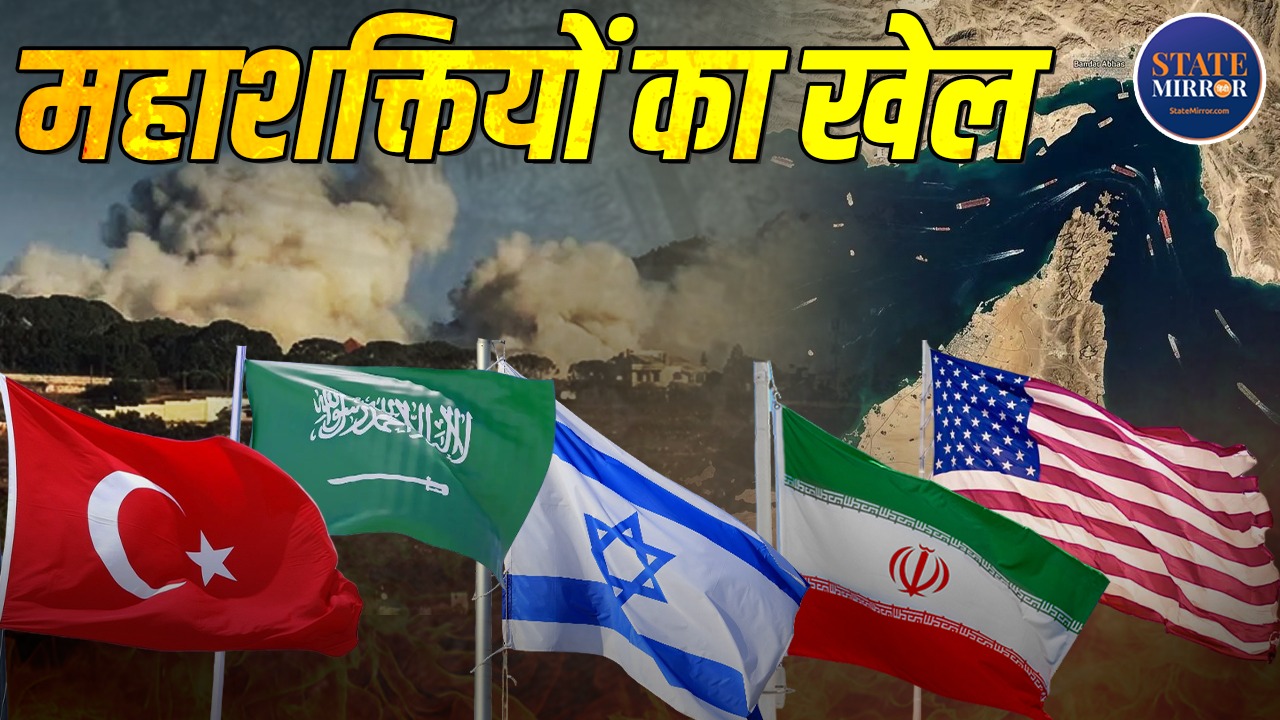
Who is the real player in the Iran-America conflict? 5 countries sitting behind the curtain

The conflict between Iran and America for the last five months is not just a fight between two countries. Now many regional and global powers are pursuing their own strategic interests behind this. Someone wants security, someone wants to maintain influence on the energy market, and someone is trying to balance Western pressure. Therefore, behind every military tension there is a bigger geopolitical game going on.
Why is security Israel’s first priority?
For Israel, Iran is not just a rival but an existential security threat. Iran does not recognize Israel since the Islamic Revolution of 1979. The International Atomic Energy Agency (IAEA) has been continuously expressing concern over Iran’s enriched uranium reserves. Israel claims that if Iran comes close to nuclear weapons capability, the balance of power in the entire region will change. For this reason, Israel has for years been supporting the US administration with tough sanctions, military pressure and action against Iran-backed networks – Hezbollah, Hamas and other groups. This is why Israel’s influence is counted among the most important factors in Washington’s Iran policy.
Israel is America’s closest security partner. Through intelligence sharing, constant monitoring of Iran’s nuclear program, diplomatic influence on American policy makers, and regional security alliances, it influences America’s strategy without becoming a direct participant in the war.
Why does Saudi Arabia want regional power balance?
The competition between Saudi Arabia and Iran is not only religious, but also for the leadership of West Asia. Both have been supporting different sides in Yemen, Syria, Lebanon and Iraq. In March 2023, the two countries restored relations with the mediation of China, but strategic mistrust remains. Riyadh does not want Iran’s missile or nuclear capability to increase so much that the balance of power in the Gulf region changes. On the other hand, Saudi Arabia also wants stability in the oil market so that its economic transformation plan ‘Vision 2030’ is not affected.
Saudi Arabia is a major defense partner of America. It tries to maintain such a balance through oil production, Gulf security, collective diplomacy of Arab countries and US military cooperation, which limits Iran’s power but does not lead to a widespread war.
Why is China worried about energy and trade?
China is the world’s largest energy importer and Iran is one of the important oil sources for it. The two countries have signed a 25-year strategic cooperation agreement, which includes energy, infrastructure and investment. Despite Western sanctions, China has continued purchasing Iranian oil through various means. If the Strait of Hormuz is disrupted, both global energy supplies and China’s economy will be affected. Therefore, Beijing gives priority to stability and dialogue rather than military confrontation.
China provides economic support to Iran, maintains a balanced stance at the UN, mediates regionally and keeps Tehran from being completely isolated through energy trade.
Russia’s strategic game
After the Ukraine war, the strategic partnership between Russia and Iran has deepened. Both are facing Western sanctions and are increasing cooperation in defense, energy and technology sectors. For Russia, West Asia is a region where American influence can be challenged. Also, if regional tensions increase oil prices, Russia gets additional revenue. However, Moscow also does not want a war that would destabilize the entire region and harm its own interests.
Russia provides diplomatic support in the UN Security Council, increases arms and technical cooperation, coordinates energy and maintains a strategic partnership with Iran to balance US influence.
Why is Türkiye adopting a balanced policy?
Türkiye is a member of NATO, but it has adopted a different policy from America on many issues. It also maintains trade, border security and regional dialogue with Iran. Ankara wants to expand its influence in Syria, Iraq and the South Caucasus. If the Iran-US war escalates, the refugee crisis, trade routes and Türkiye’s security will be directly affected. Therefore, its priority is to maintain regional stability rather than standing completely with any one side.
Turkey maintains dialogue with both sides, acts as a bridge between NATO and regional forums, maintains trade contacts and tries to play the role of mediator during crises.

Comments are closed.