
In order to become Sarpanch, Pakistan is playing meeting after meeting, still ‘bowl’ in hand! Araghchi returned from PAK without talks with US

The tension between Iran and America seems to be reaching a turning point. On one hand, efforts to negotiate ceasefire have intensified, while on the other hand, the stance of both the countries seems to be becoming tougher. Pakistan is playing the role of an important mediator in this entire matter, where instead of direct communication between Iran and America, messages are being exchanged. Meanwhile, the tussle over the Strait of Hormuz, which is very important for global energy supply, has made the situation more difficult.
The situation is such that ‘diplomacy and military pressure are going on simultaneously. While America wants to maintain its power and pressure, Iran has made it clear that it is in no mood to accept any ‘excessive conditions’. In such a situation, the question is being raised that Pakistan, which nurtures terrorism, is playing the game of meeting after meeting every day or is there talk of some war. Let us know what has come out in the conversation so far.
Will any solution emerge from the talks in Islamabad?
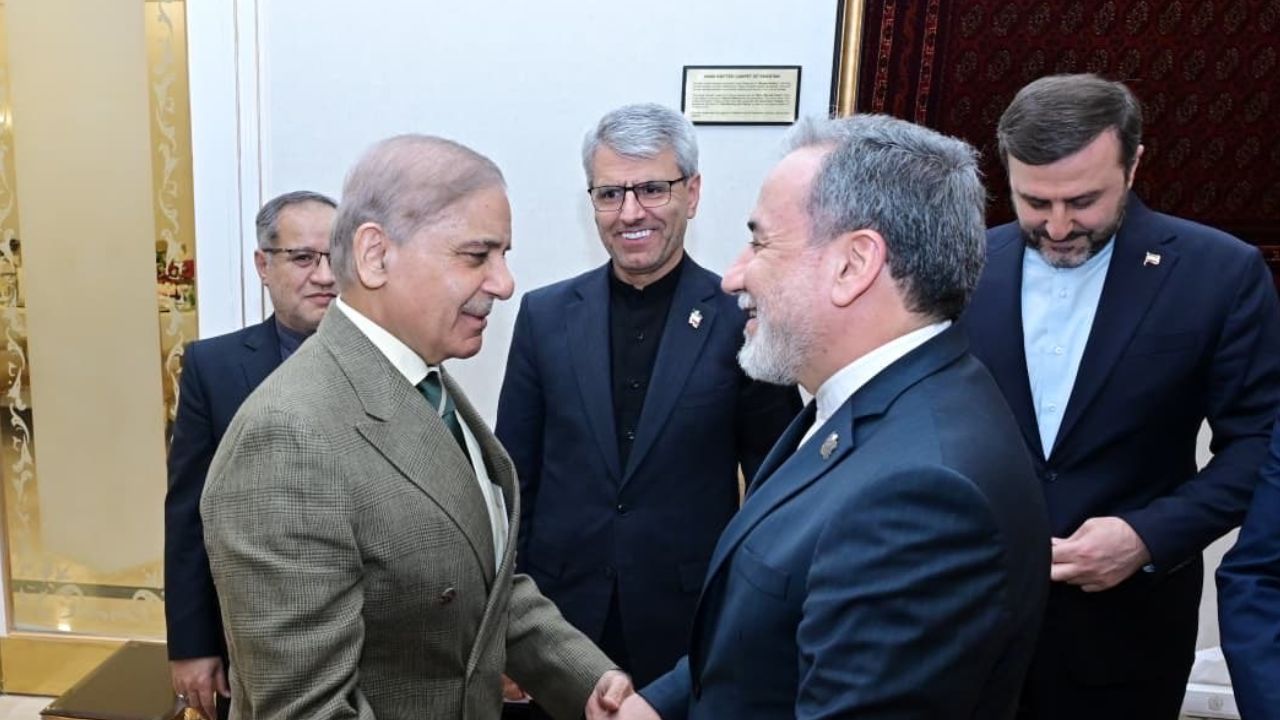
Iran’s Foreign Minister Abbas Araghchi recently reached Islamabad, where he met Prime Minister Shahbaz Sharif, Foreign Minister Ishaq Dar and Army Chief Asim Munir. However, no clear information was revealed regarding the agenda of this meeting.
The Prime Minister of Pakistan only said that ‘We exchanged views on the current regional situation in a very warm and cordial manner, and also discussed issues of mutual interest.’ It is clear from this that talks did take place, but concrete progress towards a direct deal between America and Iran has not yet been seen.
Will there be direct talks between America and Iran?
According to the White House, US representatives Steve Witkoff and Jared Kushner will reach Islamabad and hold talks. But Iran has made it clear that it will not talk directly to America. Iran’s Foreign Ministry spokesperson said that there are no plans for any kind of meeting between Iran and America. This means that Pakistan is currently playing the role of “message carrier” where both the countries are carrying out indirect talks.
What do Donald Trump’s statements indicate?
US President Trump has made it clear that America is not in a hurry, but Iran is short on time. He said, ‘I have all the time in the world, but not Iran. Time is running out fast!’ Trump also claimed that Iran’s military capability has weakened and America’s blockade is strong. He has also ordered that any Iranian boat laying mines in the Strait of Hormuz be destroyed.
Why is the dispute on Hormuz increasing day by day?
Hormuz is the route for about 20% of the world’s oil and gas trade. America has imposed a naval blockade here, in response to which Iran tried to close this route. This is the reason why talks between the two countries came to a halt. Iran says that no talks will move forward until the blockade is lifted.
Why did the first round of talks fail?
The first talks held on April 11 were a complete failure. According to Iran, America made several ‘extreme demands’, which included-
- Stopping Nuclear Enrichment
- Handing over uranium stocks
- Distance from regional allies
- Accepting US control over Hormuz
- Iran completely rejected these conditions.
What new conditions has Iran put forward now?
According to reports, now Iran’s stance has become more strict. Iran under the leadership of Ahmad Vahidi has put forward new conditions:
5 years control over Hormuz
Iran wants the right to protect and control this waterway for 5 years.
Inspection of vessels and collection of duty
Iran wants to inspect every passing ship and charge a fee in the name of “right of passage”.
Demand to include Lebanon also
Iran made it clear that the issue of Lebanon is not separate and it will have to be made part of any agreement.
Hezbollah should not be targeted
Iran wants the issue of disarming Hezbollah to be kept out of the talks.
remove the blockade first
Iran’s biggest condition is that America should first end its naval blockade, only then further talks will take place.
Did the Israel-Lebanon front also become a cause of tension?
Amidst this entire crisis, Benjamin Netanyahu said that his army has complete freedom of action in Lebanon. The Israeli army has claimed that it has killed several Hezbollah fighters in South Lebanon. It is clear from this that this conflict is no longer limited to just America-Iran, but can take the form of a regional war.
What has happened so far and what will happen next?
This struggle, which started on February 28, has now reached its 9th week. America has definitely extended the ceasefire, but both sides are adamant on their respective conditions. On one hand, America wants a compromise by applying pressure, while on the other hand, Iran is not ready to step back from its strategic interests. The coming days will be very important, either diplomacy will find a way out, or this conflict can take a bigger form.

Comments are closed.