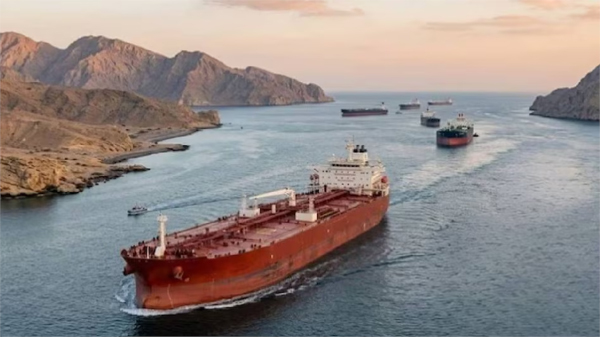
Washington. Amidst the setback to President Donald Trump and his Republican Party in the midterm elections in the US, Iran has taken a big decision regarding the Strait of Hormuz. Iran has announced exemption from restrictions imposed on ships of India, China, Iraq and Qatar from passing through this important sea route. According to Amir Hayat-Moghaddam, vice chairman of the National Security and Foreign Policy Committee of the Iranian Parliament, ships from these four countries can now move through this route without any restrictions.
Import of medicines from India, hope of political support from China
In an interview with the Iranian Students News Agency, Hayat-Moghaddam said that currently India, China, Iraq and Qatar have been exempted from the restrictions related to passing through Hormuz. He said that the purpose of this decision is to strengthen Iran's interests with these countries.
He said that this facility has been given to India so that medicines can be imported from there, whereas the reason behind giving exemption to Chinese ships is to gain political support from Beijing. According to Hayat-Moghaddam, Iran charges transit fees from Indian and Chinese ships, while Qatari ships are allowed to pass without any fees. However, he did not clarify the situation regarding the duty imposed on Iraqi ships.
Why is Hormuz important for India?
The Strait of Hormuz is very important for India's energy security. India imports about 90 percent of its crude oil needs, of which about 30 percent currently comes via the Strait of Hormuz. Earlier this dependence was around 70 percent. Since the outbreak of the conflict in West Asia, India has diversified its sources of imports by increasing oil purchases from alternative sources such as Russia, the US, West Africa and Fujairah in the United Arab Emirates.
However, India's dependence on LPG is still quite high. About 90 percent of India's LPG imports come through the Strait of Hormuz. Apart from this, more than 50 percent of the LNG imports from Qatar and UAE also pass through this route. This sea route is also important for India from the point of view of import of fertilizers.
There is still a ban on the movement of ships
About 25 percent of the global marine oil supply to West Asian countries passes through the Strait of Hormuz, located between Iran and Oman. After Iran closed this route and imposed restrictions on the movement of merchant ships, India has been continuously demanding freedom of navigation and uninterrupted energy supply on international waterways.
Hayat-Moghaddam's statement comes at a time when restrictions remain in place regarding the movement of ships in Hormuz. According to the EU, the navy of Iran's Islamic Revolutionary Guard Corps has implemented a system that requires ships to provide information about their identity, cargo and destination before passing.
19 sailors died in the attacks
According to the International Maritime Organization (IMO), there were at least 70 attacks on merchant ships from the beginning of the conflict in February to August. 19 sailors died in these incidents. 15 sailors are among the 24 Indians killed so far in the conflict in West Asia. In such a situation, the exemption given to Indian ships from Hormuz is considered important from the point of view of India's energy supply and maritime trade.