
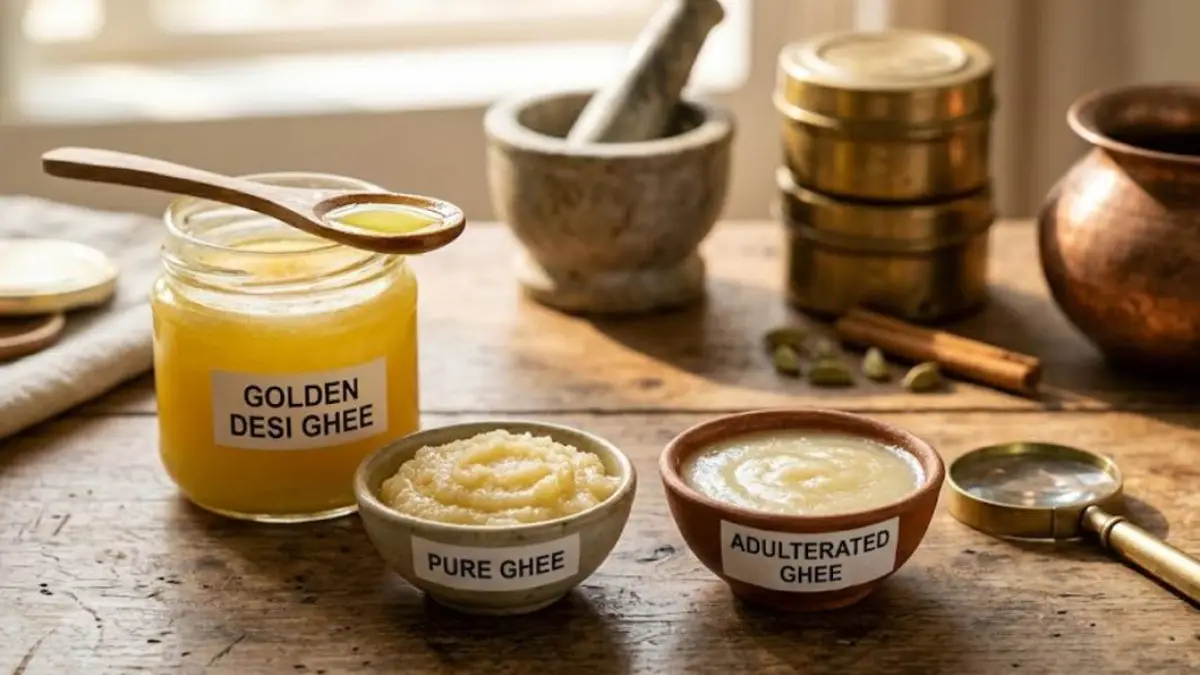

Continuous consumption of adulterated ghee can increase digestive problems and other health risks. Therefore, while buying ghee, it is very important to check its purity.
Identify with palm test
Place some ghee on your palm and leave it for a few minutes. Pure ghee melts quickly due to body heat, whereas adulterated ghee melts relatively late or may appear grainy.
Pay attention to color and fragrance
Real desi ghee has a natural aroma, which becomes more pronounced when heated. At the same time, the aroma of adulterated ghee may seem weak or artificial. Apart from this, the color of pure ghee is light yellow or golden.
test by heating
Heat one spoon ghee. If the ghee immediately melts and turns light brown and has a pleasant aroma, it may be a sign of purity. Adulterated ghee often melts unevenly and may smell different.
glass vessel test
Put some ghee in a transparent glass jar and keep it for some time. If different layers are visible in the ghee or sediment accumulates, it may be a sign of adulteration. Pure ghee usually appears uniform.
Identification of starch by iodine test
If there is a suspicion of adulteration of starch in ghee, melt some ghee and add a few drops of iodine to it. If the color is blue or purple, there may be a possibility of adulteration of starch. However, this test should be done carefully.
Keep these things in mind while buying ghee
- Buy ghee only from a trusted brand or seller.
- Be sure to check the manufacturing and expiry date on the packing.
- Note the FSSAI license number.
- Beware of very low priced ghee.
- Be sure to check the aroma, color and texture of ghee.

Comments are closed.