
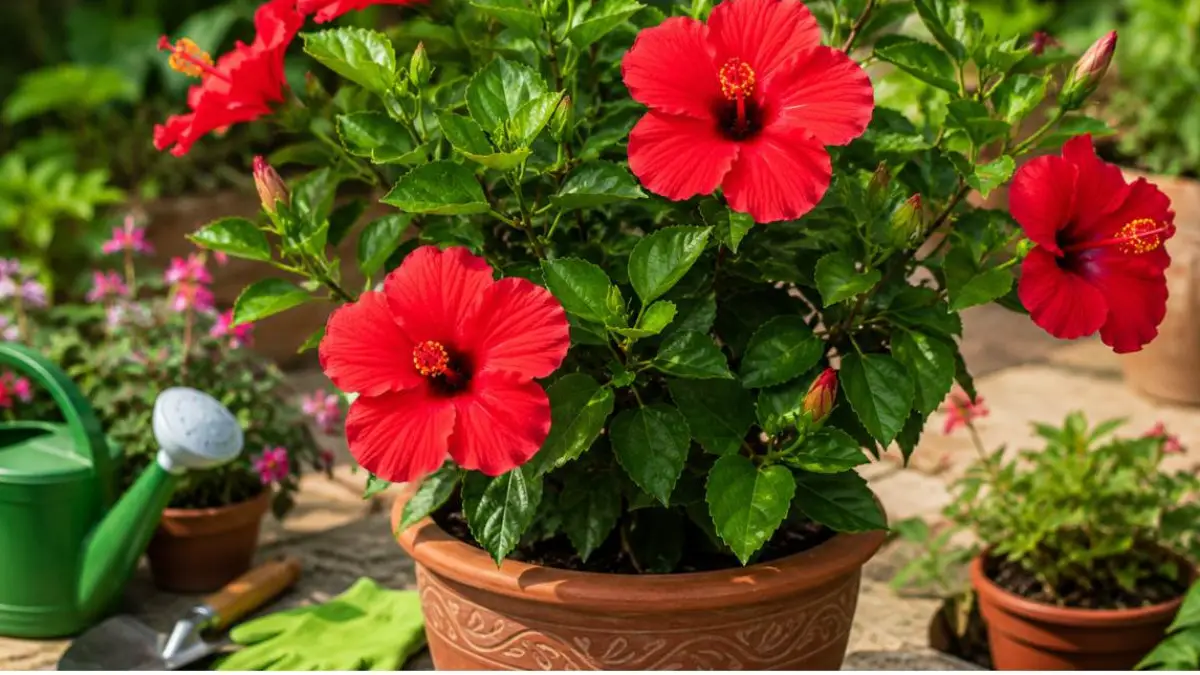

Although many people plant hibiscus, but due to lack of proper care, the plant produces less flowers or its growth stops. If you also want to plant a hibiscus plant in your garden and want to see it laden with flowers throughout the year, then some important gardening tips can be very useful for you.
Hibiscus is an evergreen flowering plant, which grows well in hot and tropical climates. Its red, pink, yellow, white and orange flowers enhance the beauty of the garden. This plant can be kept healthy for a long time with the right soil, adequate sunlight and regular care.
Choose the right place to plant a tree
Hibiscus plant should be planted in a place where it can get sunlight for at least 5 to 6 hours daily. When the plant gets sufficient sunlight, it grows faster and produces more flowers. If the plant is kept in a very shady place, the number of flowers may reduce.
Pay attention to soil preparation
Fertile soil with good drainage is considered most suitable for hibiscus. The mixture can be prepared by adding cow dung, compost and a little sand to the garden soil. Due to this, the roots of the plant remain healthy and nutrients are easily available.
Planting from cuttings or nursery plants
Hibiscus can be planted through seeds, cuttings or plants brought from the nursery. Plants grown from cuttings grow relatively quickly. After planting the plant, the soil should be kept slightly moist in the initial days.
Maintain proper balance of irrigation
Hibiscus needs regular watering, but excess water can damage the roots. Water when the soil becomes dry in summer, while avoiding excess irrigation during the rainy season. It is important to have holes in the pot for drainage.
Use fertilizer from time to time
To get more flowers, adding organic fertilizer or compost every 20 to 30 days can be beneficial. Fertilizer containing phosphorus and potash also helps in increasing the number of flowers.
Pruning is important
By periodically cutting dry, weak and old branches, new branches emerge in the plant. This makes the plant denser and increases the chances of producing more flowers.
How to protect against pests?
Hibiscus can be attacked by pests like aphids, white fly and mealybugs. These can be prevented by using neem oil spray or organic pesticides. Regular inspection of the plant is also important.

Comments are closed.