
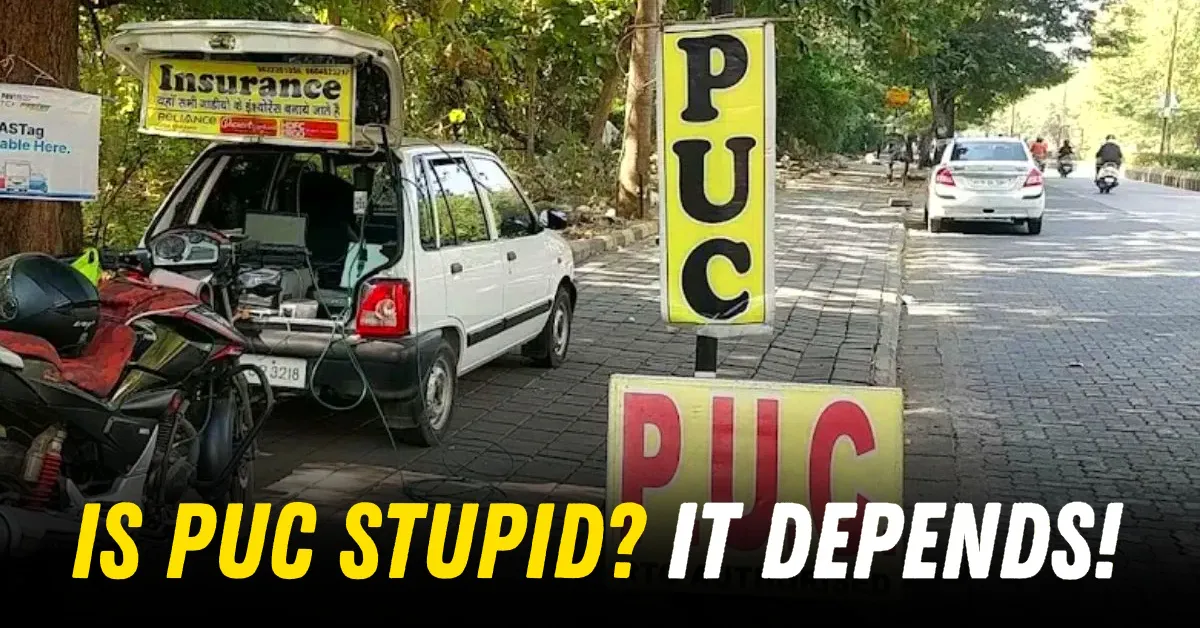

When it comes to Pollution Under Control (PUC) certificates in India, it is something every vehicle owner has dealt with at least once. It is a certificate for which you have to go to an authorised centre and then get your vehicle checked. However, for owners of modern BS6 cars, this process feels a bit unnecessary. These vehicles are equipped with advanced engines and sophisticated electronics that constantly monitor emissions on their own. So, as a result, a lot of people ask if the PUC system is outdated. Or is there still a valid reason why it exists?
Well, the answer is not as straightforward as you might think. The test itself may seem unnecessary for newer vehicles. The reason behind keeping it in place is much bigger than simply checking your car’s exhaust. Now, the biggest reason why many people question the PUC system is because modern cars have become significantly cleaner than older vehicles.
India adopted Bharat Stage 6 (BS6) emission norms. It is comparable to strict European emission standards. Today, modern petrol and diesel engines use advanced fuel injection systems, highly efficient catalytic converters, oxygen sensors, and electronic engine management systems to keep emissions under control.
So, as long as these systems are working properly, the vehicle produces very low levels of harmful pollutants. Another important reason is that every modern BS6 vehicle comes equipped with an On-Board Diagnostics (OBD) system. Basically, it is the car’s own health monitoring system. It continuously checks various components, including the catalytic converter, oxygen sensors, fuel system, and engine performance.
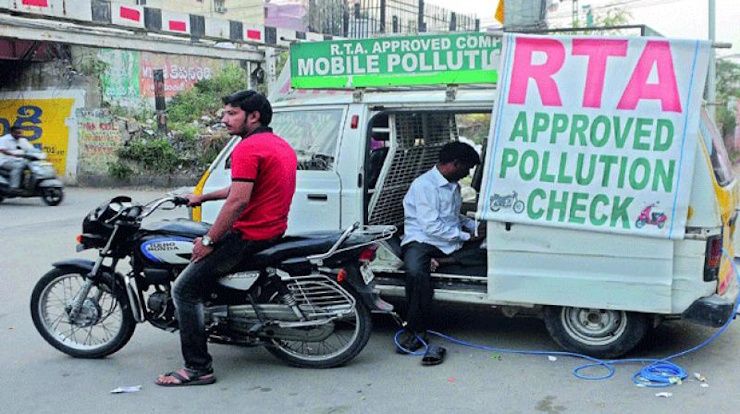
If any of these systems begin malfunctioning and emissions increase beyond acceptable levels, the vehicle immediately alerts the driver by illuminating the Check Engine warning light on the dashboard. In many cases, the car’s own computer can identify an emissions-related problem much earlier than a basic tailpipe test conducted at a PUC centre.
This is why many owners feel the current process has become a paperwork exercise rather than an important inspection. Most vehicles today pass the test within minutes and get a printed certificate, after which they leave without any actual diagnosis or maintenance advice.
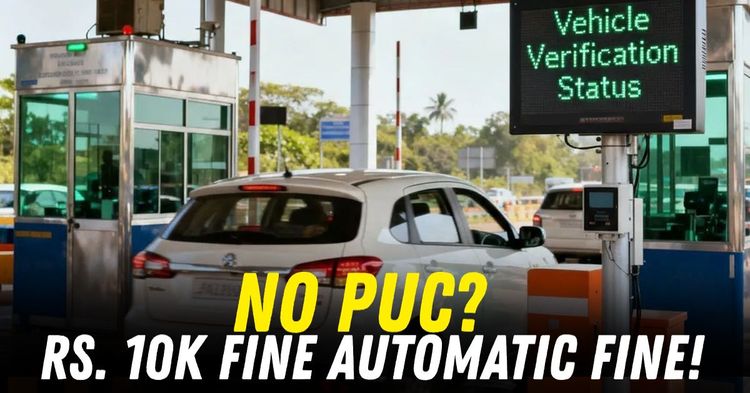
However, even if you think the test is unnecessary, skipping it can become an expensive mistake. Currently, under the Motor Vehicles Act, driving without a valid PUC certificate attracts a fine of Rs 1,000 for the first offence and Rs 2,000 for subsequent violations. In environmentally sensitive regions like Delhi-NCR, this penalty could be as high as Rs 10,000 due to stricter environmental regulations.
So, considering that the test itself costs only a small amount, the financial risk of ignoring it does not make a lot of sense. The PUC certificate also plays an important role during insurance renewal. Following directions from the Supreme Court, the Insurance Regulatory and Development Authority of India (IRDAI) made a valid PUC certificate mandatory while renewing motor insurance. Without a valid PUC, insurance companies cannot renew your policy.
Although IRDAI has clarified that an expired PUC certificate alone cannot be used to reject an accident insurance claim, you may eventually find yourself driving without valid insurance if you fail to renew your policy on time.
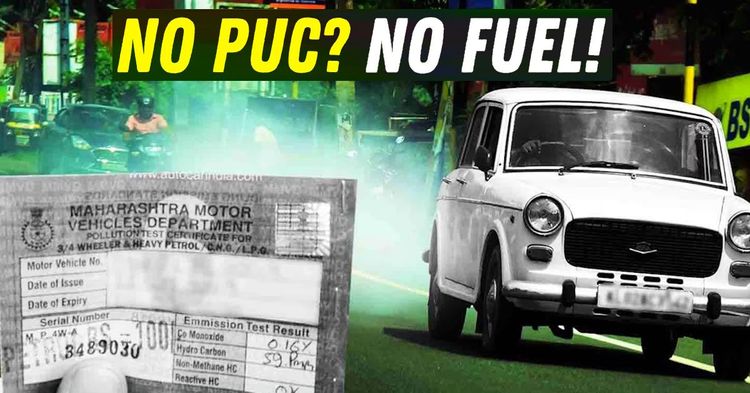
Today, its enforcement is also becoming digital. Many states such as Maharashtra and Delhi have started implementing the “No PUC, No Fuel” policy. Petrol pumps are now being connected to the VAHAN database. This then allows vehicle registration numbers to be verified electronically.
So, if your PUC certificate has expired, the fuel station could refuse to fill your vehicle. This shows that the government is no longer relying only on roadside checks and is instead integrating digital enforcement into everyday vehicle usage.
One of the biggest reasons is that the country’s entire emission testing network depends on regular customer visits. There are thousands of privately operated PUC centres functioning across India, and these are mostly located at petrol pumps. So, if every new private vehicle received a three-to-five-year exemption, millions of customers would stop visiting these centres.
Now, without this steady stream of customers, many PUC centres would become financially unviable and eventually shut down. And this would create a much bigger problem because these centres are needed to test older commercial vehicles, ageing diesel trucks, buses, auto-rickshaws, and other heavily polluting vehicles that contribute far more to air pollution than a new BS6 car.
In a way, newer cars help keep the country’s emission testing infrastructure alive. Another reason is fuel adulteration. Even the cleanest BS6 vehicle depends on good-quality fuel to maintain low emissions. Unfortunately, fuel adulteration still occurs in some parts of the country, where kerosene or cheaper solvents are illegally mixed with petrol or diesel.
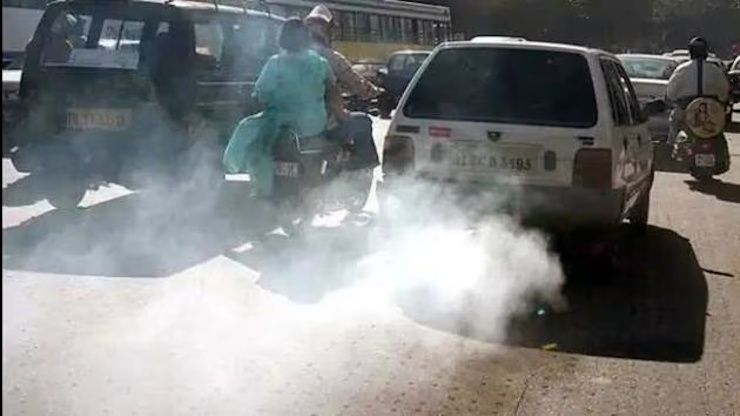
Such contaminated fuel can damage expensive emission-control components like the catalytic converter. As a result, regular PUC testing provides an additional layer of monitoring that can help identify these unexpected failures.
Driving conditions in India also play a huge role. As we all know, vehicles here have to spend long hours crawling through bumper-to-bumper traffic. They also get to operate in extremely hot weather and are exposed to heavy dust and poor road conditions. So, these harsh operating conditions cause filters, seals, and engine components to wear faster than they might in many developed countries.
As a result, these regular emission checks help to identify vehicles whose performance has gone down over time. Some people also believe that the government keeps the PUC system alive simply to generate revenue. However, the government earns only a small digital processing fee, usually around Rs 10 to Rs 20 per certificate.
Most of the amount paid by vehicle owners goes directly to the private PUC centre operators. With this, they cover equipment costs, maintenance, rent, electricity, and employee salaries. The system basically is not a major source of income for the government.
What’s interesting is that most developed countries follow a different approach. In the United Kingdom, new private vehicles are exempt from emission testing for the first three years before undergoing the annual MOT inspection. This is where the agencies check everything from brakes and suspension to emissions.
Germany also provides a three-year exemption, followed by strict TÜV inspections every two years. In many parts of the United States, new vehicles get exemptions that range from three to eight years, depending on the state. Following which, emission testing is often done by connecting a diagnostic scanner directly to the vehicle’s onboard computer instead of inserting a probe into the exhaust pipe.
India is also currently preparing to modernise its system through PUCC 3.0. The updated framework is expected to use AI-enabled software, encrypted certificates, and geotagging. It will also offer stronger safeguards against fake PUC certificates.
What will be more important is that newer BS6 vehicles are expected to get longer exemption periods. This will allow owners to skip frequent testing during the first three to six years of ownership.
So, is the PUC system stupid? For someone driving a well-maintained, brand-new BS6 car, it can feel a bit outdated. Today, modern vehicles are capable of monitoring their own emissions far more accurately than a simple tailpipe test.
However, when viewed from a national perspective, the system still serves several important purposes. It keeps the country’s testing network operational, helps detect problems caused by poor fuel or neglected maintenance, and ensures millions of vehicles remain legally compliant.
So, until the modern PUCC 3.0 system becomes a reality across India, that small PUC certificate may feel like just another piece of paperwork, but it remains one of the simplest ways to avoid hefty fines, insurance complications, and even the possibility of being denied fuel.
Comments are closed.