
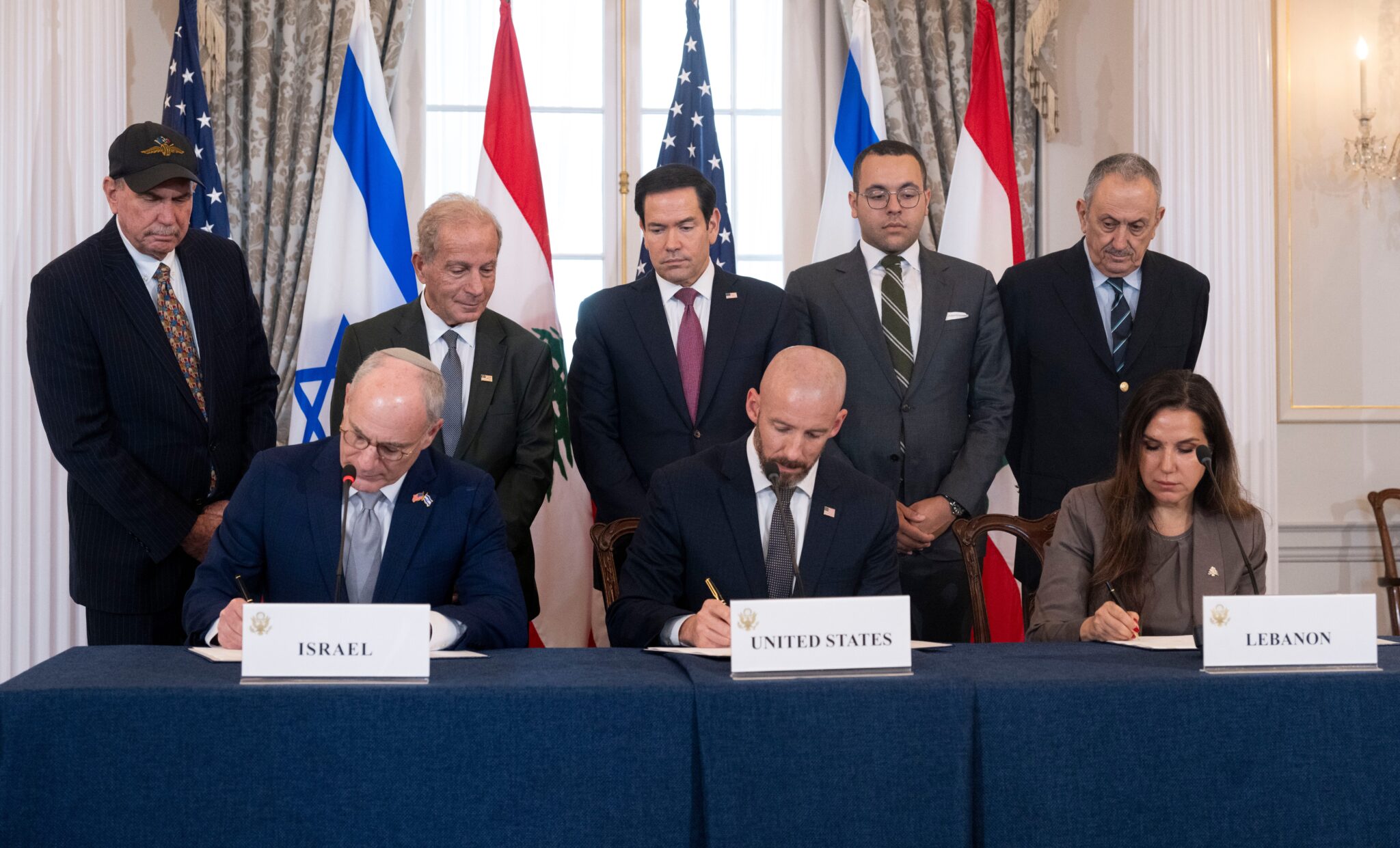

Israel, Lebanon Sign U.S.-Backed Framework Agreement in First Step Toward Peace/ TezzBuzz/ WASHINGTON/ J. Mansour/ Morning Edition/ Israel and Lebanon signed a U.S.-brokered framework agreement aimed at ending months of conflict and laying the groundwork for lasting peace. The agreement focuses on Israeli troop withdrawals, expanding Lebanese government control and dismantling Hezbollah, though the militant group immediately rejected the plan.
Israel Lebanon Peace Framework Quick Looks
- Secretary of State Marco Rubio announced the agreement in Washington.
- Israel and Lebanon signed the framework before U.S. officials.
- The agreement establishes a process to dismantle Hezbollah.
- The U.S. will oversee implementation through a new Military Coordination Group.
- Washington pledged $100 million in humanitarian assistance.
- Hezbollah rejected the framework and warned it could trigger civil conflict.
U.S. Brokers New Peace Framework
The United States announced a new diplomatic breakthrough Friday as Israel and Lebanon signed a framework agreement designed to begin ending months of fighting between Israel and the Iran-backed Hezbollah militant group.
Secretary of State Marco Rubio joined Israeli Ambassador Yechiel Leiter and Lebanese Ambassador Nada Hamadeh Moawad during the signing ceremony in Washington, describing the accord as the first step toward a broader peace process.
According to the State Department, the framework establishes a roadmap for restoring stability along the Israel-Lebanon border while strengthening Lebanon’s sovereignty.
Agreement Centers on Hezbollah
A central element of the agreement is the dismantling of Hezbollah’s military infrastructure.
The State Department said a newly created Military Coordination Group for Lebanonfacilitated by the United States, will oversee implementation of the framework and coordinate security measures between the parties.
Washington also pledged $100 million in humanitarian assistance to support affected communities during the transition.
State Department officials described the agreement as offering Lebanon “a genuine pathway out of a long crisis,” while creating “a verifiable path to removing the persistent threat on its northern border” for Israel.
Israel Sees Path Toward Lasting Peace
Israeli Ambassador Yechiel Ladder described the framework as an opportunity to eventually normalize relations between the neighboring countries.
“Our language is we want to embrace Lebanon,” Leiter said.
“Our language is we want to get in our car in Tel Aviv and take a drive up to Beirut, and we want Beirut to come down and take a drive to Tel Aviv. That’s where we’re going. That’s where we want to go.”
Leiter said the success of the agreement depends on Hezbollah being dismantled and the Lebanese army assuming full responsibility for security throughout southern Lebanon.
Prime Minister Benjamin Netanyahu also welcomed the agreement, calling it “a great achievement” while stressing that Israeli forces will maintain their security zone until Hezbollah no longer poses a military threat.
Lebanon Supports Sovereignty Goals
Lebanese Ambassador Nada Hamadeh Moawad described the agreement as an important beginning rather than a final settlement.
“It is a first step on the road to restoring Lebanese sovereignty and territorial integrity, securing a permanent and final cessation of hostilities, enabling our people to go back to their land and allowing all Lebanese to live in peace, security and prosperity.”
Lebanese Prime Minister Nawaf Salam said the agreement is intended to restore government authority across all Lebanese territory through the country’s armed forces while facilitating an eventual Israeli military withdrawal.
Discussions continue regarding proposed “pilot zones” where Lebanese troops would gradually assume security responsibilities as Israeli forces redeploy.
Hezbollah Rejects the Agreement
Hezbollah was not involved in the negotiations and quickly rejected the framework.
Senior Hezbollah official Hassan Fadlallah said the group opposes direct negotiations with Israel and will not surrender its weapons.
He warned Lebanese authorities would be unable to implement the agreement without risking internal conflict, describing the framework as an attempt to undermine broader regional negotiations involving Iran.
The organization continues to insist that previous international agreements require disarmament only south of the Litani River rather than throughout Lebanon.
Broader Regional Diplomacy Continues
The Israel-Lebanon framework is separate from the ongoing U.S.-Iran negotiations launched under last week’s interim agreement aimed at ending the broader regional conflict.
While those talks focus on Iran’s nuclear program, maritime security and regional stability, the Lebanon agreement concentrates on border security, Israeli troop withdrawals and strengthening the authority of Lebanon’s national government.
Officials from all three governments described Friday’s signing as an important diplomatic milestonethough significant challenges remain before a permanent peace agreement can be achieved.
More on US News
Comments are closed.