Read Desk. India is taking a big step towards developing next generation powerful rockets. ISRO has successfully ignited the core part of a new methane-powered engine. Additionally, the design of a more powerful engine has also been completed, using the same technology that is used in SpaceX's 'Starship' rocket.
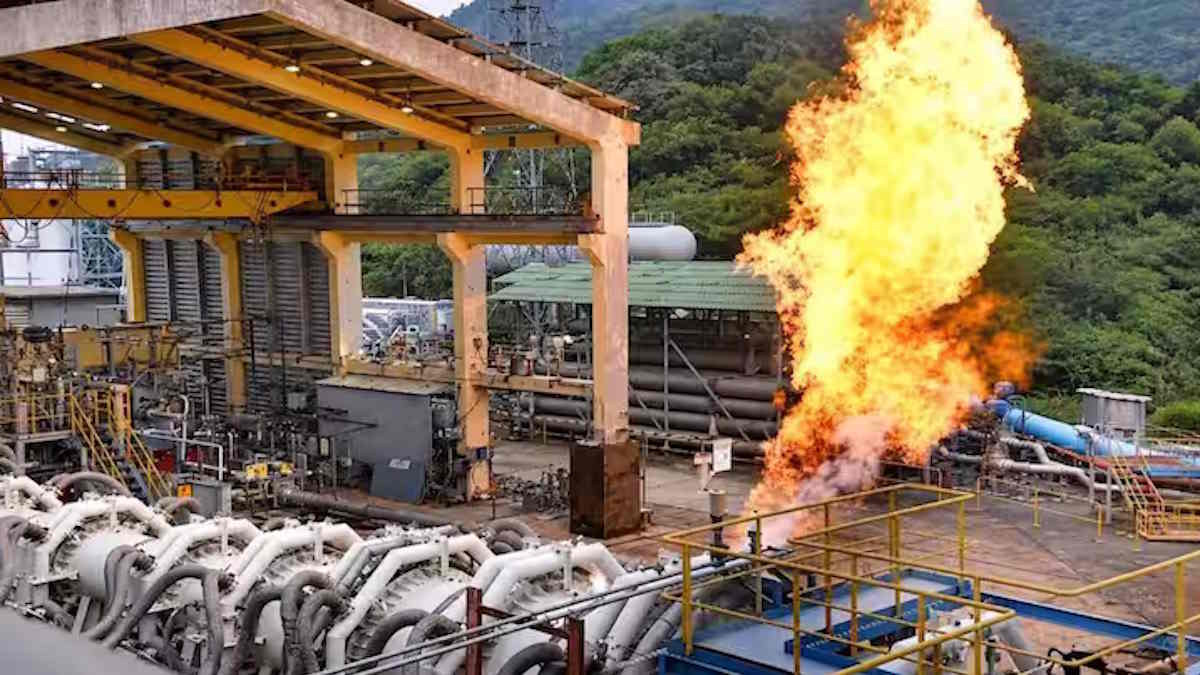
The Indian Space Research Organization (ISRO) conducted the first ignition test of the 'gas generator' of its 1,100-kilonewton LME-1100 engine at the 'ISRO Propulsion Complex' in Mahendragiri, Tamil Nadu on 9 October 2026. The entire engine is expected to be ready by mid-2027, after which several 'hot-fire qualification tests' will be conducted.
ISRO has also completed the design of a 2,400-kilonewton liquid oxygen-methane engine. It uses 'full-flow staged combustion cycle' technology—the same technology used in SpaceX's Raptor engines that power Starship.
This engine is for a future 'heavy-lift launch vehicle', which will help in India's crewed lunar landing mission.
Why is this such a big deal for ISRO and India?
Rocket engines determine how much payload (weight) a launch vehicle can carry and how efficiently it can reach space.
Methane is emerging as an important rocket fuel because it emits very little pollution when burned, could reduce the need for rocket maintenance, and in the future could also be produced using resources on Mars.
SpaceX uses liquid methane and liquid oxygen in its 'Raptor' engines, which are designed for reusable rockets. ISRO is also developing methane-based propulsion systems for its future launch vehicles—including the 'Next Generation Launch Vehicle' (NGLV).
However, the designs of these two engines being developed are different. ISRO's LME-1100 engine works on a 'gas-generator cycle', while the proposed 2,400-kilonewton engine uses a more complex 'full-flow staged combustion cycle' technology. This difference is important because in the latter design, the fuel-rich and oxygen-rich gases are passed through separate turbines, prior to combustion in the main chamber, to obtain better performance from the propellants.
Manufacturing of India's next generation rocket
ISRO started working on methane propulsion in 2019. For this, a small 'technology demonstrator' was developed, whose 'cold-flow' and 'hot-fire' testing was successfully completed in 2019-2020. The results of these tests helped engineers develop the LME-1100 program, which will officially launch in 2023.
Over 70% of the LME-1100's components are co-produced with Indian industrial partners using 'additive manufacturing' (commonly called 3D printing) technology. Its gas generator, turbopump, igniter and thrust chamber are currently undergoing development and testing.
This engine is expected to support India's 'heavy-lift' (carrying heavy payload) launch capabilities in the future. ISRO has selected methane propulsion as a key technology for the NGLV (Next Generation Launch Vehicle) and the 'heavy-lift' rocket that will be needed to send manned missions to the Moon around 2040.
This recent test is progress toward that goal. However, the entire engine is yet to undergo 'integrated testing' and 'qualification' before it can be used in a launch vehicle.
Follow the LALLURAM.COM MP channel on WhatsApp