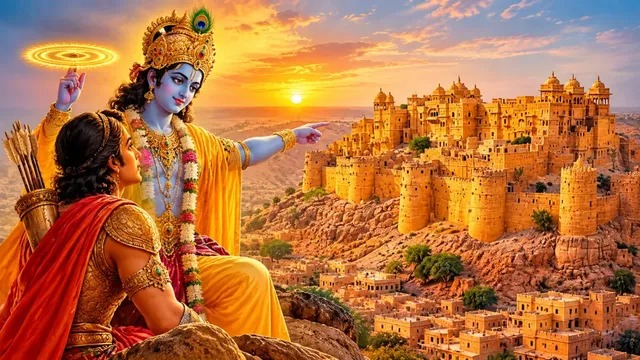
Jaisalmer, also known as the 'Golden City', is famous throughout the world not only for its golden sands and grand forts, but also for its ancient beliefs and historical mysteries. The history of this desert city of Rajasthan is deeply linked to a prophecy of Lord Shri Krishna. But in the last few years, this historical city is also becoming the most favorite weekend and vacation spot for the tourists of West Bengal. This relationship between these desert animals and the lovers of Bengal is very interesting, behind which there are many deep cultural and tourism related reasons. Prophecy of Lord Krishna and Establishment of Jaisalmer The beginning of the history of Jaisalmer is linked to a sacred incident of Lord Shri Krishna. According to mythology, after the Mahabharata war, Lord Shri Krishna, the lord of the Yaduvanshi clan, sitting on the Trikuta hill, had predicted that the next successor of his dynasty would establish an extremely powerful and secure kingdom at this place. It is believed that Rao Jaisal, the founder of Bhati dynasty of Yaduvansh, chose this Trikut hill as his capital in the year 1156 and laid the foundation of this formidable fort. Despite being situated in the middle of the desert, the structure of this fort is such that it has been invincible to invaders for centuries. Being made of yellow sandstone, when the sun's rays fall on it, it shines like gold. That is why it is called 'Sonar Fort' or Golden Fort. Even today, an entire vibrant colony resides within this fort, which is one of the few 'living forces' in the world. Why is Jaisalmer becoming the new favorite tourist center of Bengalis? In the last decade, Jaisalmer has achieved a new position on the Indian tourism map, with an unprecedented increase in the number of tourists from West Bengal. Every year thousands of tourists from Kolkata and other cities of Bengal are attracted to this part of Rajasthan. There are several main reasons behind this: Cultural connectivity and hospitality: Bengali culture is known for art, literature, history and love of travel. Jaisalmer's rich history, folk music, Kalbelia dance and desert culture attract Bengali tourists. The local people here believe in hospitality, which makes Bengalis feel at home. Durga Puja and winter holidays: There is a special trend in West Bengal to travel during Durga Puja and long winter holidays. The pleasant weather of Rajasthan, especially between October and March, proves to be an ideal time for tourists from Bengal. Photography and Cinematic Experience: People of Bengal have a deep love for artistic things. Jaisalmer's Gadisar Lake, Patwa Ki Haveli, sunset view on Sam's Dhors (Sand Dunes) and Camel Safari are like heaven for photography lovers. Architecture and Desert Lifestyle of Sonar Fort Jaisalmer Fort is not just a stone structure, but it is a fine example of ancient architecture. The biggest feature of this fort is that lime or cement has not been used in its construction, rather the 'interlocking' technique of threading the stones together has been used. The Jain temples, ancient mansions and narrow streets inside the fort still tell the story of their old times. Moreover, the lifestyle of the Thar Desert brings a unique experience to the tourists. Camping under the open sky at night, enjoying traditional food with Rajasthani folklore and spending time in the serene environment of the desert removes the mental fatigue of the tourists. Tourists from Bengal especially come here to experience this desert peace and cultural richness. Local economy and increasing scope of tourism: The attraction of Bengalis in Jaisalmer is also having a direct impact on the local economy. Hotel business, handicrafts, guide services, and traditional Rajasthani clothing business have got a new lease of life. Local shopkeepers and hotel operators have also started understanding the preferences and language of Bengali tourists, thereby establishing a great harmony between the two cultures. Tourists to Bengal not only visit historical sites but also shop for local embroideries, leather goods and traditional jewellery.