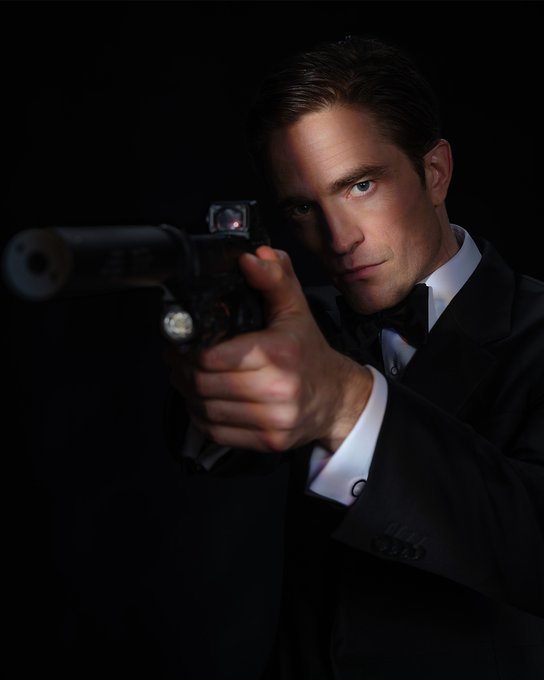
On Monday (November 16), what is being termed the “longest audition in cinema history” finally came to an end. First, a short video went up on the official James Bond accounts with two words: “Identity confirmed”. Then Robert Pattinson appeared in a tuxedo with a gun in his hand and the screen read “James Bond will return”.
It was the least surprising image of his career. It was also the most surprising casting news of the year.
For months, the race seemed to belong to a familiar type: the handsome, well-spoken British actor whose next step up is a franchise. Callum Turner had the jawline and the Masters of the Air (2024) swagger. Jack Lowden had Slow Horses, a series about spies with sore backs and bad lunches. Josh O’Connor had the critics and the tenderness. Any of them would have given us a good Bond. Pattinson, who screen-tested late in the process, gives us a dangerous one. Daniel Craig spent 15 years as a Bond who bled and grieved. At this point, the franchise needed a shock to the system.
A career spent running from the obvious
To me, the case for Pattinson lies in a decade of reckless, gloriously uncommercial choices that turned a teen idol into one of the most daring actors of his generation. He came out of the Twilight series (2008-2012) as one of the most famous young men in the world, then spent a decade hiding inside the films of David Cronenberg, Claire Denis, the Safdie brothers, Robert Eggers and Bong Joon-ho. In Good Time (2017), he was a sweating, bleached-blond hustler who couldn’t stop moving. In The Lighthouse (2019), he farted, wept and fought over a mermaid. In High Life (2018), he was a prisoner floating in deep space. Each time, he picked the role that would scare off a studio executive.
Also read: Why backlash against ‘warrior Sita’ is telling of India’s discomfort with strong, independent women
That restlessness is his signature. His line readings swerve. His body twitches when it should stay still and when the stillness finally comes, it lands like a threat. He has dark charisma without leaning on it and he is funny in a way Bond hasn’t been since the Roger Moore years: dry and slightly unhinged.
Robert Pattinson walks into 007 at the end of the biggest year of his career, with four releases this year. Photo: Wikipedia
It helps that he has also already had a dress rehearsal. In Christopher Nolan’s Tenet (2020), Pattinson played Neil, a linen-suited operative who drinks vodka tonics, knows more than he says and steals most of the film’s best lines. Watching it now, it’s hard not to see a Bond audition hiding in plain sight. The Batman (2022) settled the rest: Pattinson can carry a giant studio franchise and still make a superhero lonely, nocturnal and inscrutable.
The movie star of his generation
Then there’s the timing. Pattinson walks into 007 at the end of the biggest year of his career. This year alone gave us four Pattinsons. In April, he was a jittery groom opposite Zendaya in Kristoffer Borgli’s The Drama. In July, he was Antinous, the slimiest suitor in Nolan’s The Odyssey. In Lance Oppenheim’s Primetime, he plays Chris Hansen, the TV host who built a career on ambushing men on camera, and next month, he also stars in Dune: Part Three. Even Pattinson has called the run a miracle.
In that sense, there’s only one real precedent. In the space of four years, Harrison Ford became Han Solo and Indiana Jones, the scoundrel and the adventurer who shaped the blockbuster for a generation. No actor since has owned two pop-culture icons at once. With The Batman Part II on the way, Pattinson now has the cape and the tuxedo, the brooding detective and the licensed killer. Ford brought an easy, crooked-grin charm to both of his heroes. Pattinson brings something stranger: a nervous, nocturnal intensity that makes even his heroes seem slightly haunted. That strangeness is the thrill and the whole point.
Why Villeneuve wanted him
Yet the most persuasive argument for Pattinson is the man who chose him. Denis Villeneuve has called Bond “sacred territory”, a character he grew up watching with his father. He is also a filmmaker whose cinema runs on men under pressure: the haunted fathers of Prisoners (2013), the hollowed-out agents of Sicario (2015), the split identities of Enemy (2013), the reluctant messiah of Dune (2021). Above all, there is K in Blade Runner 2049 (2017), a government-issued killer who starts to suspect he is more than his function. Strip away the dystopia and that is a Bond story in itself.
As a storyteller, Villeneuve’s style is controlled, patient and monumental. He frames people against vast, indifferent spaces and lets silence do the work. Pattinson’s best performances turn that pressure inward. He plays men whose composure is a costume about to split at the seams. Put the two together and you get a Bond whose calm we don’t fully trust. That tension is what makes a spy worth watching.
Licence to surprise
If you think about it, every great Bond has started out as a punchline. Ian Fleming reportedly dismissed Sean Connery as an overgrown stuntman. Tabloids mocked Daniel Craig as “James Blonde” right up until Casino Royale (2006) turned the jeers into applause.
Also read: From reel to real: Why Imran Khan’s ‘Matru Ki Bijlee Ka Mandola’ feels relevant again
Pattinson knows this script better than anyone. First he was the sparkly vampire nobody took seriously. Then, he was the Batman that fans begged Warner Bros to recast. He silenced both crowds the same way, by being too good to argue with.
For the past 60-plus years since the first film in the franchise, Dr No, was released in 1962, Bond has ordered the same drink, worn the same suit and walked into the same casinos. This is a character that survives on ritual. Pattinson is the first Bond in decades who looks capable of breaking it. The martini will still arrive shaken. The man holding it is anyone’s guess.