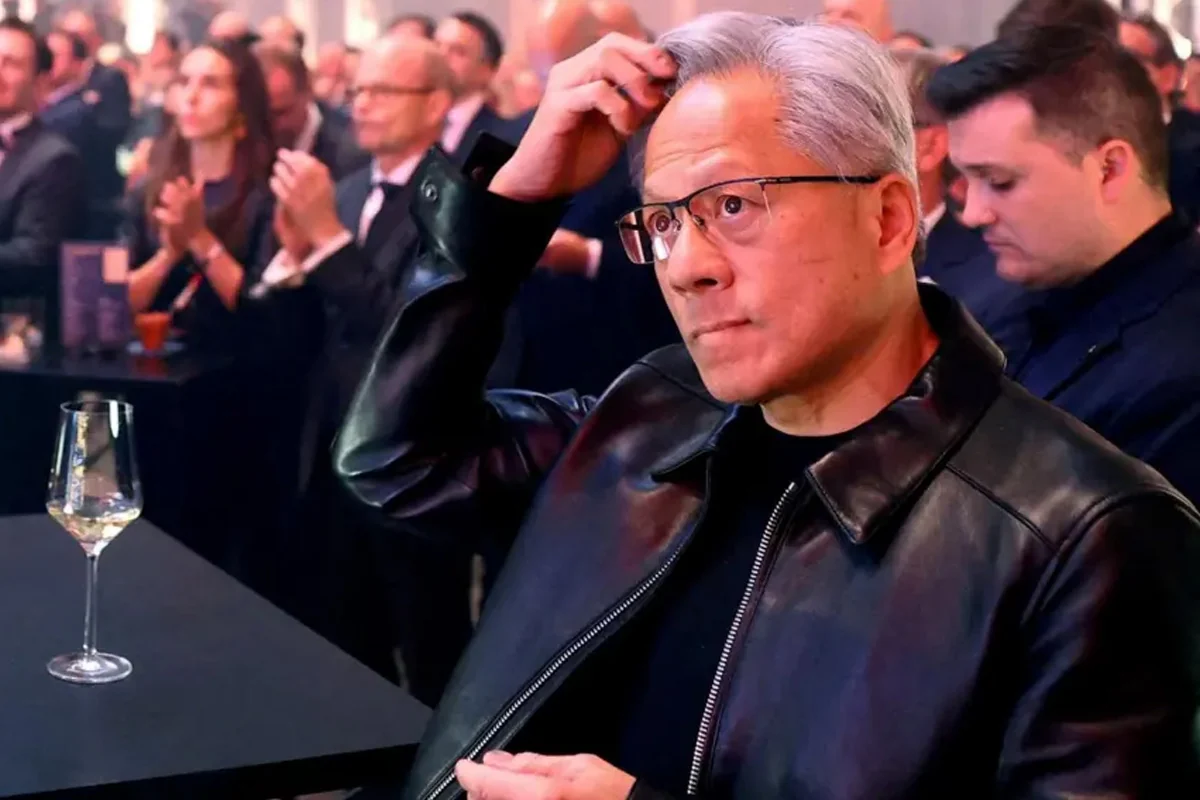
New York: Nvidia co-founder Jensen Huang stands to lose around $108 million (approximately Rs 900 crore) in unvested company shares following his reported departure from the chipmaker. However, the loss represents only a small fraction of his estimated $138.4 billion fortune, with nearly 97% of his wealth still linked to his Nvidia shareholding, according to Bloomberg.
The forfeiture is tied to Nvidia’s equity compensation rules, under which executives lose restricted stock units (RSUs) that have not vested when their continuous service with the company ends.
According to the Bloomberg Billionaires Index, the value of the unvested awards amounts to just 0.08% of Huang’s estimated net worth. His substantial ownership in Nvidia means that the loss of these potential shares has a relatively limited impact on his overall wealth.
The bigger financial impact of the reported leadership change has come from movements in Nvidia’s stock price. The company’s shares fell sharply following news of Huang’s exit, reducing the value of his existing stake by billions of dollars.
Why Jensen Huang stands to lose $900 crore
Bloomberg reported that Huang holds approximately 346,000 unvested RSUs under Nvidia’s equity compensation arrangements.
These awards could have translated into around 310,000 Nvidia shares under the company’s equity incentive plan, subject to the achievement of specified performance targets.
However, because the awards had not vested before his reported departure, Huang will no longer be eligible to receive them under the company’s policy.
Restricted stock units are a form of employee compensation that give recipients the right to receive company shares once specified conditions are met. These conditions can include remaining employed for a particular period or meeting performance targets.
The system is commonly used by technology companies to retain senior executives and align their financial interests with the company’s long-term performance.
When an executive leaves before the required vesting conditions are fulfilled, unvested awards are generally forfeited, subject to the terms of the relevant compensation plan.
In Huang’s case, the estimated $108 million loss reflects the value of stock awards that he will no longer receive. It does not represent a direct cash payment or a reduction in the value of shares he already owns.
Nearly 97% of his fortune remains tied to Nvidia
Despite the forfeiture, Huang’s overall financial position remains heavily dependent on Nvidia’s market value.
Bloomberg reported that the 63-year-old co-founder controls approximately 3.5% of the company’s voting stake. His existing Nvidia holding accounts for nearly 97% of his estimated $138.4 billion fortune.
This concentration means that changes in Nvidia’s share price can have a much greater effect on his personal wealth than the loss of unvested compensation.
Unlike some technology executives whose fortunes are spread across several companies, investments and compensation arrangements, Huang’s wealth is overwhelmingly connected to the chipmaker he co-founded.
Nvidia has only one class of shares, according to the report. This means Huang does not have a separate class of stock carrying enhanced voting rights.
His ownership stake is therefore linked to the company’s ordinary share structure rather than a special dual-class arrangement.
Huang’s cash salary is small compared with his fortune
Huang’s regular cash compensation is also relatively modest when compared with his overall wealth.
According to Bloomberg, he received approximately $7.5 million in cash compensation in each of the previous two years.
Although this is a substantial amount by ordinary standards, it represents only a tiny fraction of his multibillion-dollar fortune.
The bulk of his wealth has accumulated through his Nvidia ownership as the company expanded its position in graphics processing units, AI computing and data-centre infrastructure.
Nvidia’s growth during the artificial intelligence boom has made Huang one of the world’s wealthiest technology entrepreneurs. The company’s processors have become central to the development and deployment of advanced AI systems, driving demand from cloud providers and technology companies.
Consequently, his personal net worth has moved closely with the company’s stock market performance.
Nvidia shares fall after reported exit
While the forfeiture of unvested shares is relatively limited in the context of Huang’s wealth, the market reaction to his reported departure had a much larger immediate financial effect.
Nvidia shares fell as much as 14% during trading in New York after news of his exit emerged. The stock subsequently recovered some of its losses to close 4.3% lower at $166.19.
The decline reportedly wiped more than $6 billion off Huang’s net worth, according to Bloomberg.
That market-driven reduction was considerably larger than the estimated $108 million value of the unvested awards he stands to forfeit.
The difference highlights how much his personal fortune depends on the performance of Nvidia shares. Even a relatively modest percentage movement in the company’s valuation can translate into billions of dollars in changes to his wealth.
However, stock market movements can reflect several factors, and a fall in share price following a leadership announcement does not by itself establish the full reasons behind the decline.
Nvidia’s leadership transition and Huang’s financial legacy
Huang’s reported departure marks a significant development for Nvidia, given his central role in transforming the company into a global semiconductor and AI computing leader.
His long association with the business has also made Nvidia shares the principal source of his personal wealth. The company’s performance has therefore been closely connected to his billionaire status.
The loss of unvested stock awards is a consequence of the company’s compensation rules rather than a major reduction in his existing ownership. His approximately 3.5% stake continues to represent the overwhelming majority of his estimated fortune.
For Huang, the reported $900-crore forfeiture may appear substantial in isolation, but it is relatively small compared with the market value of his Nvidia holdings. The larger financial risk remains the movement of the company’s share price, which can add or erase billions from his net worth.