
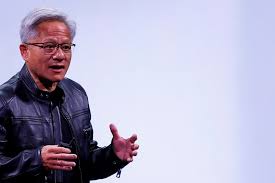

The recent exchange between Jensen Huang and Dwarkesh Patel cuts to a core tension in today’s AI race: should the United States limit China’s access to advanced chips, or does that risk backfiring?
Patel framed the concern in stark terms. He pointed to Claude Mythos, an experimental system from Anthropic that reportedly surfaced thousands of zero-day vulnerabilities across major software platforms. His argument was simple: if systems like that can run on modest compute, then giving China access to high-end chips from Nvidia could supercharge cyber-offense capabilities.
Jensen Huang did not dismiss the concern, but he reframed it. He argued that Mythos itself proves the opposite point. If such results came from “fairly mundane” compute, then restricting top-tier chips will not stop progress. It may only slow it. In his view, China already has enough capacity to build powerful AI systems, even if it must rely on brute force rather than efficiency.
He cited efforts like CloudMatrix from Huawei as evidence. These systems may lag in efficiency, but they can scale. That matters. In AI, raw compute can often compensate for weaker hardware.
From there, Jensen Huang moved to his main point: ecosystem control matters more than hardware denial.
He argued that the United States benefits when global developers build on American tools, frameworks, and chips. If Chinese developers cannot access Nvidia hardware, they will build alternatives. Over time, those alternatives could form a separate ecosystem. That split would weaken U.S. influence over how AI evolves.
The Defence of Jensen Huang Against the Two-Stack AI Future
In his words, creating two ecosystems—one open but running on foreign technology and one closed but tied to the U.S. would be a bad outcome. The risk is not just competition. It is fragmentation. Once developers commit to a stack, switching becomes costly.
This is where Huang leaned on history. He pointed to how entrenched systems like x86 and ARM have become. These platforms persist because they lock in software, tools, and developer habits. AI stacks may follow the same path. If China builds its own full stack, from chips to frameworks, it may not need U.S. technology at all.
Patel raised another concern: what if China follows the same playbook it used in other industries? Products like smartphones and electric vehicles once relied on Western leaders. Over time, Chinese firms built competitive alternatives. If that pattern repeats in AI chips, Nvidia could lose its position.
Jensen Huang rejected that premise. He argued that competition is not a reason to retreat. It is a reason to keep moving faster. He framed the idea of conceding markets as a “loser mindset” and made clear he does not share it.
Huang’s Strategic Case for Integration
Still, his response went beyond rhetoric. He stressed that chips are not interchangeable in the way consumer products are. Switching from one chip ecosystem to another is not like switching phone brands. It requires rewriting software, retraining teams, and rebuilding infrastructure. That friction protects incumbents, at least for a time.
The debate also touched on a broader idea: AI is not one thing. Jensen Huang broke it into five layers energy, chips, infrastructure, models, and applications. Policy often focuses on models or chips, but he argued that all layers matter. Weakening one layer to protect another can harm the system as a whole.
This point is easy to miss. If U.S. chipmakers lose access to a large market like China, they lose revenue. That revenue funds research and development. Over time, that could slow innovation. Meanwhile, Chinese firms would still push forward, even if they take a less efficient path.
So the question is not just about security. It is about trade-offs. Restricting exports may limit short-term risks, but it could also speed up long-term competition by forcing China to build its own stack.
Huang’s position rests on a bet: that integration beats isolation. Keep the world on your platform, and you shape the future. Push others away, and they build their own.
Patel’s counterpoint remains valid. More computing can enable more powerful tools, including harmful ones. The tension between openness and control will not go away.
In the end, this is not a technical debate. It is a strategic one. Both sides agree on the stakes. They differ on the path.

Comments are closed.