Preserving Baba Jitto’s Spirit Through Civic Accountability
Leela Dhar Mangi
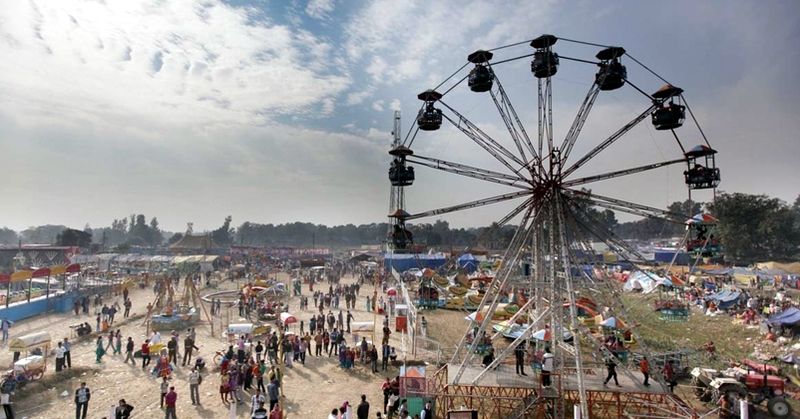
As the annual Jhiri Mela prepares to get underway from November 23 to December 3 at Jhiri village in Marh tehsil, lakhs of devotees, farmers, and families from across Jammu and Kashmir, Punjab, Himachal Pradesh, and Haryana are poised to converge on the historic shrine. While the eleven-day congregation is celebrated across the Duggar region as a grand religious and cultural fair, its deeper resonance lies in the moral legacy it preserves: the supreme sacrifice of Baba Jitto, whose defiance against feudal exploitation remains a timeless symbol of agrarian dignity. As the Jammu administration initiates its customary pre-Mela review meetings, the occasion demands more than routine official directives; it calls for a candid assessment of past assurances and persistent infrastructural gaps.
According to cherished regional tradition dating back to the fifteenth or sixteenth century, Baba Jitto—originally known as Jit Mal from Aghar Jitto near Katra—was an honest cultivator and ardent devotee of Mata Vaishno Devi. Having entered into a sharecropping agreement with local feudal lord Mehta Bir Singh, under which three-fourths of the produce belonged to the tiller and one-fourth to the landlord, Baba Jitto reaped a bountiful harvest. However, when the landlord’s men forcibly appropriated the major share in breach of their agreement, Baba Jitto protested by laying down his life atop the heap of grain, followed closely by his young daughter, Bua Kouri. Over the centuries, this tragedy has endured not merely as folklore, but as a living moral inheritance affirming that the tiller of the soil is entitled to the fruits of his labour.
Today, the shrines of Baba Jitto and Bua Kouri, situated nearly 20 kilometres from Jammu along the Jammu-Akhnoor road, alongside the sacred Bawe Talab and the memorials at nearby Shama Chak, form a vital spiritual circuit. Originating as an annual commemoration on Kartik Purnima, the Mela has evolved into a powerful symbol of social cohesion, drawing pilgrims across caste, creed, and linguistic lines in shared reverence for a champion of honesty and justice.
Yet, an estimated annual footfall of ten to twelve lakh pilgrims inevitably places immense strain on local civic infrastructure. Since the Mela resumed its full scale in November 2022 following a two-year pandemic hiatus, official review meetings have followed a predictable annual script. In 2023, directives centred on mobile toilets, dustbins, uninterrupted power and water supply, and blacktopped approach roads; in 2024, the focus turned to sanitation, fair pricing for agricultural implements, and the rejuvenation of Bawe Talab; in 2025, the inauguration of a pilgrim community hall and four modular bus stops marked welcome progress. This year, authorities have mandated a joint control room, CCTV surveillance, fire tenders, hydrants, and safety certifications for amusement swings.
While these measures are commendable, the cyclical repetition of basic civic demands every year suggests that temporary, pre-event fixes have yet to translate into durable infrastructure. Sanitation, potable water, crowd regulation, parking, lighting, and accessible medical aid—particularly for women, children, and the elderly—cannot be treated as annual emergencies. They constitute basic civic entitlements requiring year-round maintenance. Administrative accountability would be far better served by a transparent post-Mela public audit detailing commitments met, lapses observed, and departmental responsibility fixed, rather than another round of ceremonial pre-event instructions.
Equally significant are the broader cultural demands raised by farmer bodies such as the Shaheed Kissan Baba Jitto Sangharsh Samiti—including proper official signage at the Baba Jitto Indoor Stadium, renaming the Sher-e-Kashmir University of Agricultural Sciences and Technology-Jammu (SKUAST-Jammu) in his honour, and incorporating his life into school curricula. At a juncture when rural livelihoods and agrarian welfare remain central to national discourse, reducing Baba Jitto’s legacy to mere ritual observance would be a missed opportunity.
Ultimately, Baba Jitto stood for the elementary justice of a fair return for honest toil. The truest tribute to his memory lies in ensuring that the Jhiri Mela is conducted with cleanliness, safety, and human dignity, backed by an administration that honours its word as steadfastly as the farmer honoured his land.