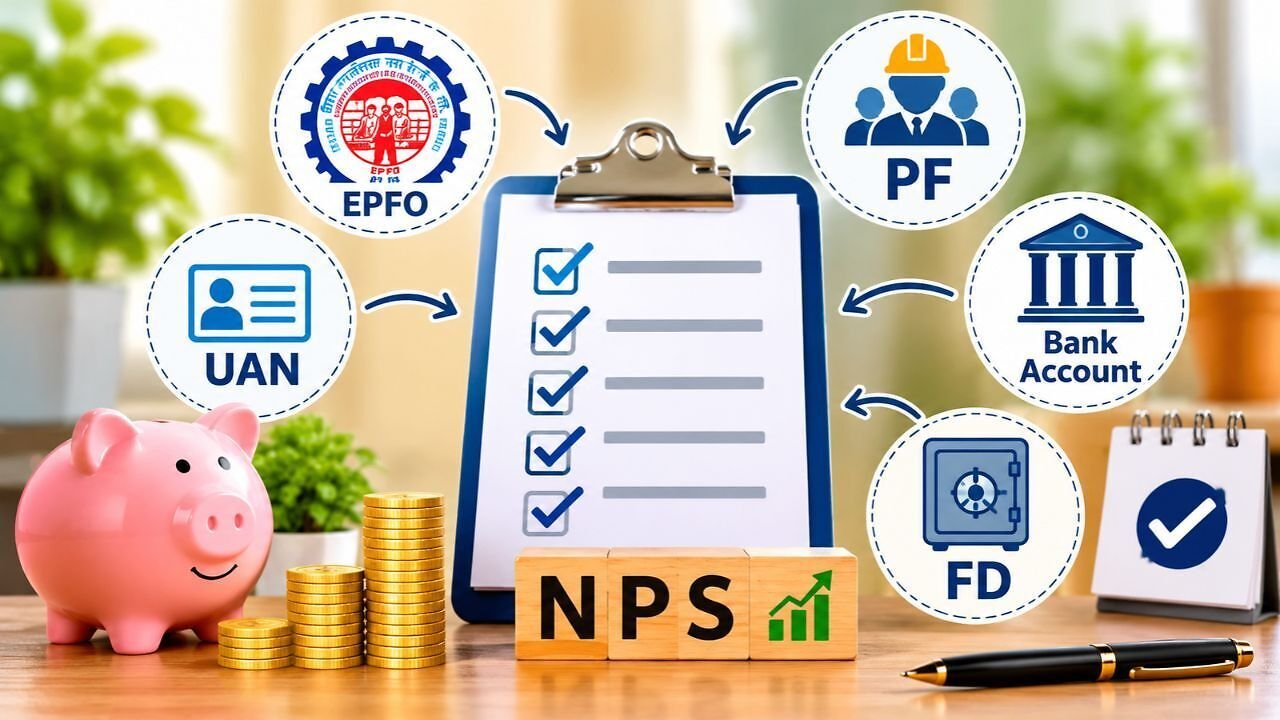
In today's corporate and digital era, changing jobs every two-three years for better career prospects and salary growth has become a common trend. But amidst the joy of joining a new company and the busyness of new work, most professionals forget to organize their old salary bank account, Employee Provident Fund (EPF), health insurance and investments. Financial experts believe that due to this negligence, thousands of crores of rupees of employees who change jobs frequently get stuck in inoperative accounts or become victims of minimum balance penalty of the bank. Under the digital rules of Reserve Bank of India (RBI) and Employees' Provident Fund Organization (EPFO) in the year 2026, it is very easy and important to merge or close your old financial accounts at the right time. 1. What to do with old salary bank account? Otherwise, heavy penalty will be deducted. When you work in a company, your zero-balance salary account is opened on the basis of the tie-up of the company. But as soon as you leave the job and there is no salary credit in that account for 3 consecutive months, then that account is automatically converted into a Regular Savings Account in the bank's system. As soon as it is converted into a normal savings account, the rule of maintaining Minimum Monthly Balance (MAB) applies to it, which can range from ₹ 10,000 to ₹ 25,000 in private banks. If you do not have sufficient balance in that account, the bank starts deducting a penalty of ₹ 500 to ₹ 750 every month and your balance may become zero or negative. Therefore, after joining a new job, if you do not need the old bank account, then transfer the auto-debit (SIP, EMI, credit card bill) to the new account from there and close the account permanently by visiting the bank branch or submitting the account closure form through net banking. 2. Why is it beneficial to merge old PF (EPF) accounts into a new account? Understand the rules of tax and interest. The biggest mistake people make after changing jobs is when they open a new PF account in every new company and do not transfer the money from the old PF account to the new account. Although PF accounts of all companies are linked to the same Universal Account Number (UAN), unless you merge them, they remain as different Member IDs. According to EPFO rules, if no new contribution is deposited in a PF account for 36 consecutive months (3 years), then that account goes into inoperative category and interest on it may stop. Additionally, if you withdraw money from the old account before completing a total of 5 years of continuous service, TDS is deducted on it and income tax is payable. Therefore, immediately after joining the new company, login to EPFO's Unified Member Portal (unifiedportal-mem.epfindia.gov.in) and transfer (merge) the balance of all your old PF accounts online to the PF account of the current company through 'Online Services' -> 'One Member – One EPF Account (Transfer Request)'. 3. How to manage health insurance and NPS of the old company? Most of the employees depend only on the corporate group health insurance provided by their company. But as soon as you resign from the old company, that insurance cover ends on your last working day. If there is a gap of one or two months (notice period or break) before joining a new company, then during that time the family is left without protection in case of any medical emergency. Therefore, always keep an individual or family floater retail health insurance policy with you. Similarly, if your National Pension System (NPS) account was opened on behalf of the old company, do not open a new NPS account when you change jobs, as a person can have only one PRAN (Permanent Retirement Account Number). You can easily shift your existing PRAN to the new company's corporate model or individual (All Citizen Model) through the inter-sector shifting form on the NPS portal. 4. Don't forget to manage SIP, Demat account and tax-saving documents (Form-16) If you had linked your mutual fund SIP, home loan EMI or auto-debit of insurance premium (NACH Mandate) to the old salary account, then before closing the old account, go to your bank or broking app and update the bank mandate in the new salary account, otherwise penalty will be imposed on bounced EMI and your CIBIL Score will be bad. Also, while leaving the job, obtain Relieving Letter, Experience Certificate, Final Pay Slip (Full & Final Settlement Slip) and Form-16 at the end of the financial year from the HR and Finance department of the old company. When working for two companies in the same financial year, correct matching of Form-16 and Investment Declaration of both the companies is extremely important to avoid additional tax notices while filing Income Tax Return (ITR).