JSW Motors is preparing to unveil its first SUV on 3 December, but a less visible part of its car business is already taking shape in China. The company has established a wholly owned office in Wuhu, the city where its technology partner Chery Automobile is based. The development raises an interesting question: how much of a future JSW car will be designed and engineered by JSW itself?
According to a Mint reportthe company set up Wuhu JSW Business Consultancy Co Ltd in January 2026 and is recruiting senior personnel there. The advertised roles cover areas such as technical integration, vehicle assembly, regulatory compliance and procurement. That goes beyond the image of a small liaison desk simply ordering parts from a supplier.
JSW Motors, however, has offered a narrower explanation. Its spokesperson told Mint that the Wuhu office exists for sourcing, procurement and coordination with suppliers, including checks on component quality and delivery schedules. The company said it does not operate an R&D centre in China. This distinction matters: engineering-related job descriptions do not, by themselves, establish that JSW is running a separate vehicle development centre there.
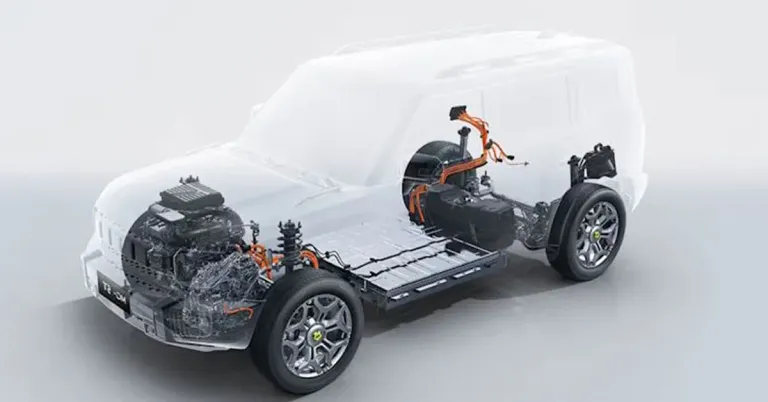
JSW’s first standalone car is expected to be a plug-in hybrid SUV based on the Jetour T2. It will be made in Maharashtra and sold under JSW’s own name. The official Indian specifications and price are still awaited.
Buying a vehicle platform is only the start of the exercise. An SUV engineered for another market needs to be adapted for local roads, weather, fuels, driving patterns and regulations. It must pass safety and emissions requirements, its electronic systems must work reliably with local connectivity services, and its parts supply must support years of repairs.
The job advertisements described in the Mint report refer to integration of engines, electrical systems, software, thermal management and testing. One position reportedly involves adapting vehicle architectures for India and potentially other markets. These are precisely the areas where close daily coordination with a platform supplier could save time, even if the work is classified internally as sourcing and technical liaison rather than independent R&D.
The location is no coincidence. Having staff in Wuhu gives JSW direct access to its principal technology partner and the surrounding component ecosystem. Problems that might otherwise travel through long chains of email can be discussed with engineers, tested and resolved faster. That can be valuable when a newly established carmaker is trying to meet a launch schedule.

The important separation is between where the technology originates, where engineering decisions are taken and where the finished car is manufactured. JSW Motors plans to build its vehicles at its greenfield facility in Chhatrapati Sambhajinagar, Maharashtra. The company has announced a supplier network spanning India and overseas, and it says the first SUV has been calibrated for Indian roads.
Local assembly, however, does not automatically mean that the underlying platform, control software or major components were developed here. Similarly, Chinese technology does not automatically make the vehicle an imported, rebadged product. The practical measure will be the extent of local engineering, supplier content, testing and subsequent product development.
JSW has also signed an agreement with the Automotive Research Association of India to work on vehicle design, validation, localisation, battery systems, driver-assistance technology and homologation. Other announced technology partnerships include Tata Elxsi and KPIT. Together, these suggest an attempt to build an engineering network rather than rely on one foreign supplier for every development decision. How these responsibilities are divided will become clearer as the model programme progresses.
JSW’s independent brand should not be confused with JSW MG Motor India. The latter is the separate business in which JSW partnered with China’s SAIC Motor. The upcoming JSW-badged models form a different operation with their own planned dealer network and a technology relationship with Chery.
For buyers, the China office is not a reason on its own to buy or reject the car. What matters is whether JSW can deliver a dependable vehicle with a competitive price, good quality control and spare parts that arrive when needed. The first few years of service support will be especially important for a new brand.
Its plug-in hybrid system also brings questions that a conventional petrol SUV does not: the usable electric range, battery warranty, charging time, replacement cost and what happens to fuel consumption when the battery is depleted.