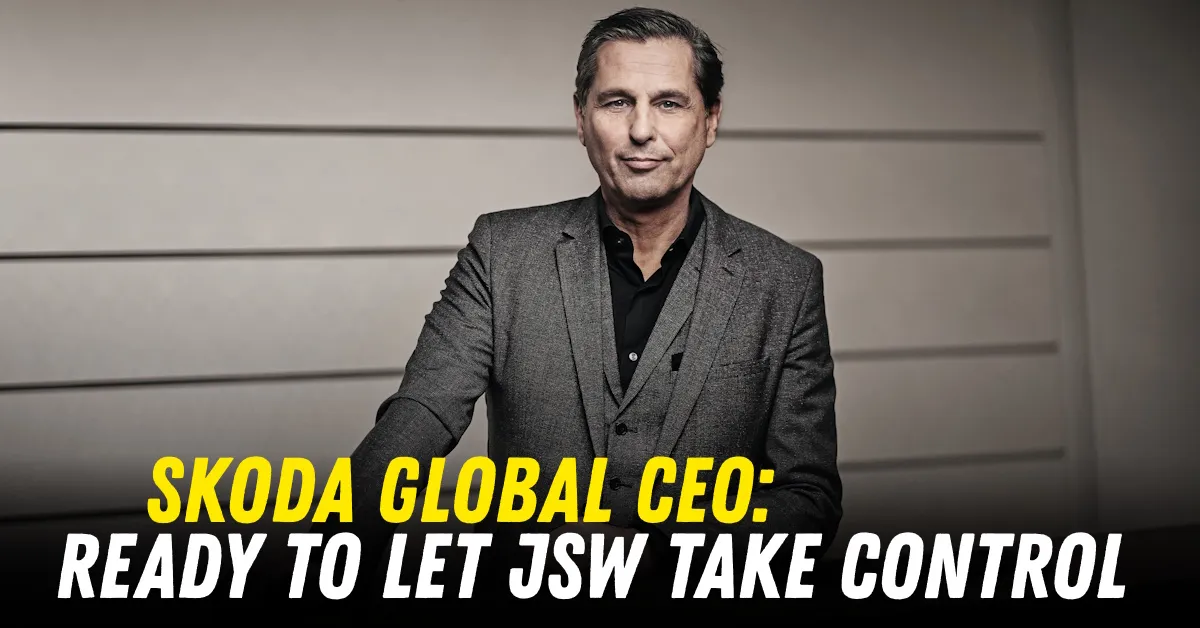
Volkswagen Group’s long search for a local partner appears to be entering its final stretch, and JSW Group remains the name at the centre of the talks. Skoda Auto CEO Klaus Zellmer says the company is within weeks of signing a memorandum of understanding with a potential partner and is confident the process will be concluded this year. He has not officially named JSW, so the transaction is not yet a signed deal.
The latest comments are more significant than earlier statements about simply looking for a partner. EconomicTimes reports Zellmer has now said Volkswagen is open to giving the local partner majority control, adding that majority ownership itself is not a problem if the structure helps the business grow. Separate reports over the past month have consistently identified JSW Group as the party in advanced negotiations to invest in Skoda Auto Volkswagen India.
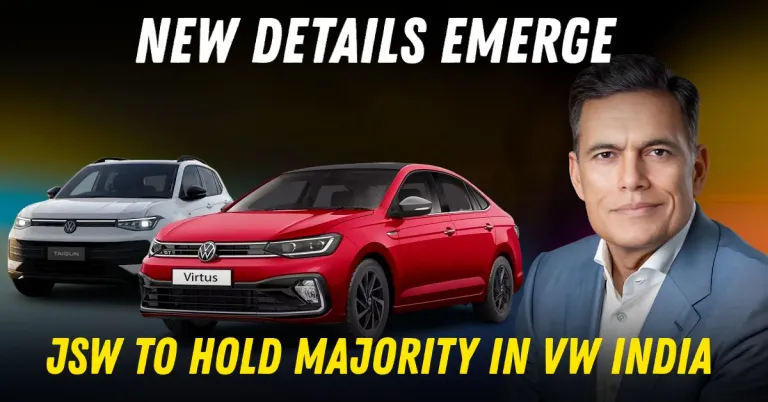
Volkswagen’s problem is not a lack of products or engineering. It is scale. Skoda and Volkswagen together still account for less than 2 per cent of the passenger vehicle market, despite more than two decades of local presence.
Their current locally produced range is concentrated around the Kylaq, Kushaq, Slavia, Taigun and Virtus, while electric cars are still imported or absent from the mass-market portfolio.
JSW can potentially bring capital, local sourcing muscle and faster decision-making. The group already has an automotive presence through JSW MG Motor India and has been building a separate vehicle business of its own. Reports indicate that any Volkswagen alliance could sit in a separate JSW entity rather than being folded into the existing MG operation.
That separation would matter. Volkswagen would be looking for a partner that can fund and localise future products without creating confusion with another carmaker’s portfolio. Zellmer’s own description of the ideal partner is telling: strong local roots, complementary capabilities and enough authority to have a clear say in strategic and operational decisions.
The deal is important because Volkswagen Group’s next investment cycle will cost far more than another facelift or engine update. The group is evaluating a programme of roughly 2 billion euros over the coming decade. A major part of that plan is expected to involve adapting and localising Volkswagen’s China Main Platform, or CMP, for future electric vehicles.
Localising an EV architecture is expensive. It requires suppliers, battery systems, electronics, tooling and enough annual volume to spread those costs. A partner sharing investment can improve the business case and could allow Skoda and Volkswagen to launch locally built EVs at prices far below fully imported models.
The Kylaq shows why Volkswagen wants more local responsibility. Skoda says the compact SUV now contributes more than two-thirds of its volumes, and more than half of Kylaq customers are new to the Skoda-Volkswagen family. The car was developed heavily around local requirements and sits in the country’s largest passenger vehicle segment.

There are still details to settle, especially valuation, shareholding and control. Volkswagen and JSW have not announced a binding agreement, and Zellmer continues to avoid naming the company under discussion. That distinction matters.
But the distance between the two sides appears much smaller than it did a year ago. In July, reports said Volkswagen and JSW were already discussing an investment in the local unit. Now the Skoda CEO says an MoU could be signed within weeks, majority control is negotiable and the partner search should be completed in 2026.
For Volkswagen, this is therefore less about selling part of its local business and more about finding the scale to fund its next one. If JSW is the partner that emerges, the biggest impact will not be on today’s Taigun or Slavia. It will be on the locally developed EVs and new-generation products that follow them.