A partnership that could reshape Volkswagen and Skoda’s future in India has hit a roadblock. JSW Group and Volkswagen are reportedly struggling to agree on who will control the proposed joint venture and, just as importantly, which cars and factories will actually form part of it. The talks have not collapsed, but the disagreement goes much deeper than dividing shares between two companies.
According to a Bussiness report dated 23 November 2026, JSW wants a 51 per cent stake, while Volkswagen is pushing for a structure in which both partners share management control. The companies are also considering leaving some of Skoda’s existing operations outside the venture. Neither side has announced a final deal.
JSW Green Mobility and Skoda Auto signed a non-binding memorandum of understanding in September 2026. Their stated aim was to explore a partnership covering development, manufacturing and sales, including vehicles for export. Petrol, diesel, hybrid, plug-in hybrid and electric powertrains could all fall within the wider plan.
A majority shareholding usually gives an investor a powerful say in running a business. But 51 per cent ownership does not automatically give one partner complete control. A joint venture agreement can reserve major decisions, such as investments, product approvals, technology use and senior appointments, for approval by both partners. That is the point at which the reported disagreement matters.
JSW wants to bring down manufacturing costs and make the products more competitive. Doing that may require changes in supplier sourcing, localisation, production processes and the choice of future models. Volkswagen, on the other hand, has to protect its brands, engineering standards and technology. A partnership could become difficult to run if JSW provides the money but cannot make the decisions needed to cut costs.
The proposed exclusion of parts of Skoda’s business may be even more important than the shareholding dispute. Skoda’s Kylaq, Kushaq and Slavia are built locally, while Volkswagen sells the related Taigun and Virtus.

Together, these models represent the group’s core mass-market operations. Bussiness adds that one option under discussion would keep Skoda’s locally developed models under separate management, while allowing certain premium models into the partnership.
Skoda is also the stronger volume contributor at present. Society of Indian Automobile Manufacturers figures cited in the report put its April–October 2026 sales at 44,133 units, against 18,043 for Volkswagen.
Leaving the larger-selling brand’s core models outside would reduce the business JSW could immediately influence. It would also raise an obvious question: would the new venture be built mainly around future launches rather than the cars already doing the numbers?

The fate of the Chakan plant near Pune is equally crucial. The factory produces the Kylaq, Kushaq, Slavia, Taigun and Virtus, and also handles engine assembly. Its reported annual capacity is around 2.25 lakh vehicles.
One proposal would leave that facility outside the venture. The group’s other plant, at Chhatrapati Sambhajinagar, has a much smaller reported capacity of roughly 60,000 vehicles a year.
If Chakan remains outside, the partners would have to decide where joint-venture cars will be built, who owns the equipment and how production costs are shared.
While JSW’s automotive manufacturing plans around Chhatrapati Sambhajinagar could provide an option, moving or localising production is not as simple as shifting a model name from one company to another.
For buyers, a successful deal could eventually mean more locally manufactured models, a wider choice of powertrains and potentially more competitive prices. Volkswagen Group has been exploring a more localised electric-car programme. The proposed partnership also allows room for conventional and hybrid models.
The danger is that negotiations over control and assets delay the very investments the partnership is supposed to unlock. New platforms, supplier contracts and factory upgrades need decisions years before the finished car reaches a showroom.
A deal that excludes much of the existing business could still work, but its case would depend heavily on a clear product pipeline and enough production volume to justify the spending.
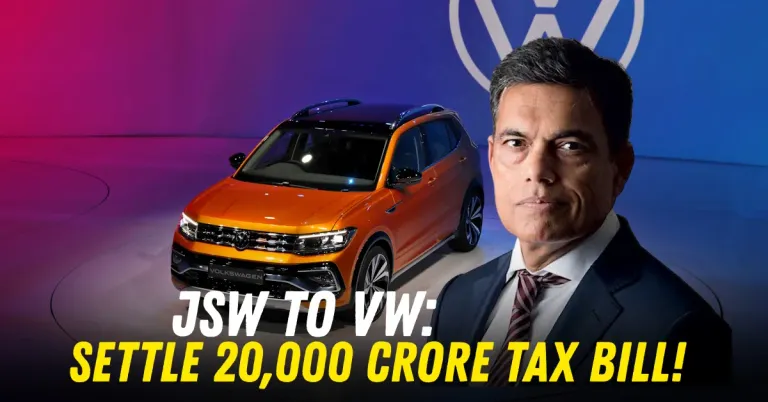
There is another unresolved matter. Skoda Auto Volkswagen India faces a customs-duty demand of about $1.4 billion, arising from allegations concerning the classification of imported parts and vehicles.
The company has contested the demand, and the matter remains under litigation. The partners would need to agree on how any potential liability is handled, rather than assume that it has already become a payable penalty.
JSW already has an automotive partnership with SAIC through JSW MG Motor India and is developing other vehicle businesses. Volkswagen has engineering, brands and manufacturing experience, but its mainstream sales remain modest relative to the biggest carmakers. Both have reasons to keep talking. What is missing is a simple question: who puts in what, and who gets to decide what happens next?