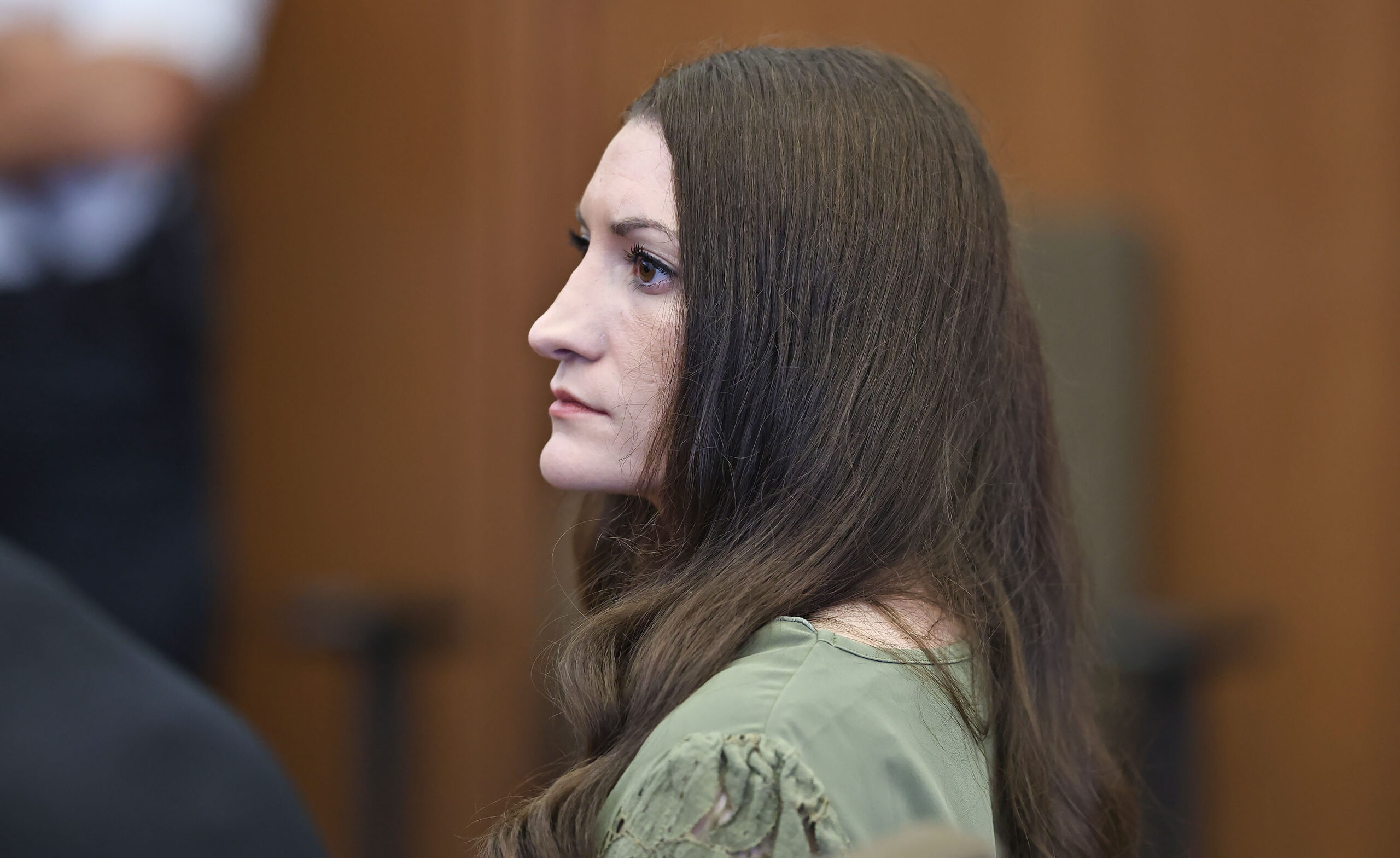
Judge Declares Mistrial in Lindsay Clancy Murder Case After Jury Deadlocks/ TezzBuzz/ WASHINGTON/ J. Mansour/ A judge declared a mistrial in Lindsay Clancy’s murder case after jurors failed to reach a unanimous decision following seven days of deliberations. The defense argued that postpartum psychosis left Clancy unable to understand the wrongfulness of killing her three children, while prosecutors portrayed the deaths as planned. The judge briefly delayed finalizing the mistrial to allow the defense to pursue an emergency appeal.

Quick Look
- Jurors deliberated for more than 38 hours over seven days.
- The panel could not agree on whether Clancy was criminally responsible.
- Judge William Sullivan concluded that a mistrial was required.
- Sullivan allowed time for the defense to seek emergency appellate review.
- Neither side disputed that Clancy killed her three children in 2023.
- The defense attributed her actions to postpartum psychosis.
- Prosecutors argued that she planned the killings to end her own “misery.”
- The case prompted a national discussion about postpartum mental health.
- Prosecutors could seek a retrial if the mistrial becomes final.
- The jury began its seventh day of deliberations Friday.
- Jurors have twice informed the judge that they are unable to reach a verdict.
- The foreperson accused one juror of disregarding instructions about reasonable doubt.
- Judge William Sullivan declined to question or dismiss the disputed juror.
- Clancy does not deny killing her three children in 2023.
- Her defense attributes the killings to postpartum psychosis.
- Prosecutors argue that Clancy acted deliberately and understood her conduct.
- A continuing deadlock could result in a mistrial.


Deep Look
Jury Fails to Reach Unanimous Verdict
PLYMOUTH, Mass. — A judge declared a mistrial in Lindsay Clancy’s murder case after jurors said they could not reach a unanimous verdict following more than 38 hours of deliberations over seven days.
The closely watched trial centered on whether Clancy was criminally responsible when she killed her three children at the family’s Massachusetts home in 2023 or should be found not guilty because of insanity.
Judge William Sullivan briefly delayed finalizing the mistrial to give Clancy’s attorney an opportunity to pursue an emergency appeal.
The jury had repeatedly reported that it was deadlocked. Sullivan sent the panel back to continue deliberating after impasse notices on Tuesday and Wednesday, but the disagreements proved impossible to resolve.
Dispute Emerges Over Holdout Juror
Tensions intensified Thursday when the jury’s foreperson informed the judge that one juror was not properly following the court’s instructions regarding reasonable doubt.
Sullivan questioned jurors individually and repeated that prosecutors were required to prove Clancy’s criminal responsibility beyond a reasonable doubt. He also explained that the standard did not mean proof beyond every possible doubt.
Defense attorney Kevin Reddington sought to have the disputed juror questioned again or removed from the panel. Sullivan rejected those requests, saying the foreperson’s note did not establish that the juror was refusing to follow the law.
The unresolved conflict ultimately left the jury unable to return a unanimous verdict.
Criminal Responsibility Was Central Question
Neither prosecutors nor defense attorneys disputed that Clancy killed her children — Cora, 5; Dawson, 3; and Callan, 8 months.
The central issue was her mental condition at the time and whether she could understand that her actions were wrong or conform her behavior to the law.
Clancy, a former labor and delivery nurse, strangled the children in the basement of their Duxbury home before jumping from a second-floor window. The fall left her paralyzed from the waist down.
She did not testify during the trial.
Defense Points to Postpartum Psychosis
Clancy’s lawyers argued that she was experiencing postpartum psychosis and had not received appropriate care from medical providers despite repeatedly seeking help.
The defense presented evidence of her declining mental health following the birth of her youngest child, including numerous medications and a brief stay at a psychiatric hospital.
Reddington also challenged the quality of the police investigation. He said officers failed to analyze the window screen through which Clancy jumped and did not properly enter a bag containing her medications into evidence.
At one point, he argued that it was not even a “lousy investigation” because there was “no investigation.”
Clancy’s former husband, Patrick Clancy, testified that she later told him she had heard a man’s voice directing her to kill their children.
Prosecutors Argue Killings Were Planned
Prosecutors acknowledged that Clancy experienced depression and other mental health difficulties. They argued, however, that those conditions did not prevent her from understanding her actions.
The prosecution portrayed the killings as deliberate, saying Clancy sent her then-husband out on errands to remove him from the house and used the opportunity to kill the children.
Prosecutors contended that she acted in an effort to end her own “misery,” rather than under the control of postpartum psychosis. They also questioned the seriousness of her subsequent suicide attempt.
The opposing psychiatric testimony became central to the jury’s deliberations, with prosecution and defense experts offering sharply different assessments of Clancy’s condition.
Emotional Trial Draws National Attention
The trial included intensely emotional testimony and was widely followed through televised proceedings and social media.
Clancy sobbed as medical examiner Barbara Olson described the injuries suffered by the children. Her reaction became so disruptive that Sullivan temporarily recessed the proceedings.
Officer Stephen Hall also became emotional while recounting the discovery of the children in the basement.
Online attention generated broader discussions about postpartum psychosis and depression. Some mothers publicly described their own experiences, while social media users also circulated unsupported conspiracy theories about the case.
Patrick Clancy Describes Forgiveness
Patrick Clancy testified about finding his wife outside the family’s home after her fall and later discovering the children.
In a statement posted to a fundraising page shortly after the deaths, he asked the public to forgive his then-wife.
“I want to ask all of you that you find it deep within yourselves to forgive Lindsay, as I have,” he wrote. “The real Lindsay was generously loving and caring towards everyone — me, our kids, family, friends, and her patients. The very fibers of her soul are loving. All I wish for her now is that she can somehow find peace.”
Patrick Clancy has since remarried.
What Happens After the Mistrial
If the mistrial declaration stands, prosecutors must decide whether to retry Clancy, dismiss the charges or negotiate a plea agreement with the defense.
A mistrial caused by a deadlocked jury does not amount to an acquittal and generally does not prevent prosecutors from bringing the case to trial again.
The defense’s emergency appeal could also affect what happens next, particularly because of its objections concerning the disputed juror and the court’s reasonable-doubt instructions.
Jurors Return for Seventh Day
The deadlocked jury in Lindsay Clancy’s murder trial resumed deliberations Friday for a seventh day following an unusual dispute over whether one juror was properly applying the legal standard of reasonable doubt.
The disagreement became public when the jury’s foreperson sent Judge William Sullivan a note alleging that a single juror would not follow the court’s instructions. The disclosure offered the clearest indication so far of what may be preventing the panel from reaching a verdict.
Jurors must decide whether Clancy was criminally responsible when she killed her three young children at the family’s Massachusetts home in 2023.
The closely followed trial has divided observers over whether Clancy should be held criminally accountable and has drawn wider attention to postpartum mental illness.
Judge Questions Jurors Privately
The jury has twice told Sullivan that it cannot agree on a verdict.
On Thursday, the judge questioned each juror individually and in private. He then repeated his legal instructions, emphasizing that proof beyond a reasonable doubt does not require eliminating every conceivable doubt.
Sullivan also reminded the panel that prosecutors bear the burden of proving their case before directing the jurors to resume deliberations.
Defense Request to Requestion Juror Denied
Before deliberations continued Friday, Sullivan rejected a defense request to question the disputed juror individually for a second time.
“Reading that note carefully and strictly,” Sullivan said, “that note does not indicate this is a person who refuses to follow the law.”
Clancy’s attorney, Kevin Reddington, had asked the judge Thursday to dismiss the juror, arguing that the person was refusing to follow the court’s instructions. Prosecutors opposed the request, and Sullivan declined to remove the juror.
“I don’t feel it is proper for me to side with one side or the other of the deliberations,” the judge said Thursday. “I don’t feel it’s appropriate for me to say, ‘I agree with one juror or the 11.’ I have asked if they are able to follow my instructions. They swore earlier that they could.”
Clancy Joins Courtroom Discussion
For the first time during the trial, Clancy was brought forward to participate in a private sidebar discussion with the judge and attorneys.
Clancy is paralyzed from the waist down and uses a wheelchair. Reddington pushed her to the front of the courtroom for the conversation.
“She has a right to know what’s going on,” he later told reporters.
Mental State Is Central to the Case
Clancy, a 36-year-old former labor and delivery nurse, has never denied strangling her children in the basement of their home before attempting to take her own life.
Her children — Cora, Dawson and Callan Clancy — were 5 years old, 3 years old and 8 months old.
The defense contends that Clancy was experiencing postpartum psychosis and was not criminally responsible for her actions. Prosecutors argue that she understood what she was doing and deliberately arranged for her then-husband to leave the house on errands before the killings.
Prosecutors have also questioned the seriousness of Clancy’s subsequent suicide attempt.
Continued Deadlock Could Produce Mistrial
If the jurors remain unable to reach a unanimous decision, Sullivan could declare a mistrial.
Prosecutors would then have to decide whether to retry Clancy, dismiss the charges or seek a negotiated plea agreement with her defense team.
If the jury finds her criminally responsible, Clancy could be convicted of murder or manslaughter. If she is acquitted, a judge could still order her committed to a mental health facility if an evaluation concludes that she presents a danger to the public.
Editor’s note: This story discusses suicide. In the United States, the Suicide & Crisis Lifeline can be reached by calling or texting 988.
More on US News