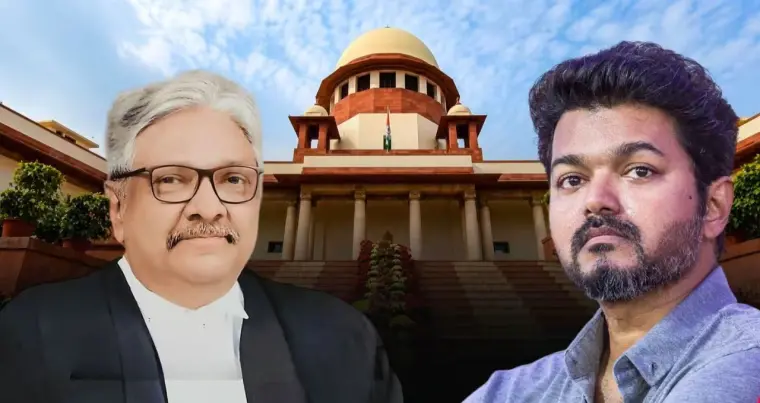
Former Supreme Court judge Justice KM Joseph has expressed serious concern regarding the proposed delimitation on the basis of population. He says that if Lok Sabha seats are redistricted on the basis of census, the impact of votes of voters from southern states may be relatively less.
Delimitations in India: The debate regarding the proposed delimitation is increasing in India. Former Supreme Court judge Justice KM Joseph has expressed apprehension that if future redistribution of Lok Sabha seats is done on the basis of the new census, the comparative importance of the votes of voters in the southern states may reduce. Calling it an unbalanced situation in terms of representation, he has stressed the need for a practical solution.
Justice Joseph expressed these views at a program of the Kerala High Court Bar Association. He discussed the balance between representation and population in India, citing the example of the principle of “consent of the governed” present in the American constitutional system.
What is the concern on population based delimitation?
The issue of distribution of Lok Sabha seats among states in India has long been linked to the balance of population and political representation. The 1971 census has long been used as the basis for redistribution of seats, while there has been concern in southern states about large changes in representation based on data from later censuses.
Justice KM Joseph argues that many states in South India have performed better in the field of family planning and population control. If in future more populous states get more seats in the Lok Sabha, the share of southern states with relatively lower population growth in Parliament may decrease.
According to him, in such a situation the impact of the votes of voters in southern states may be comparatively less. He has emphasized the need to find a solution to this problem.
Example of American model given
Justice Joseph also gave the example of America to explain India’s position. Each state gets two seats in the US Senate, regardless of its population. This gives small and large states equal state-level representation in the Senate. However, the constitutional and electoral systems of India and America are different. Therefore, there is no talk of directly implementing the American model in India.
Justice Joseph’s reference was primarily to how a balance can be struck between the political interests of different sectors while deciding representation in a democratic system.
Delimitation becomes a big political issue in Tamil Nadu
The issue of delimitation has become particularly sensitive in Tamil Nadu politics. State Chief Minister C. Joseph Vijay had earlier sought to retain the existing 543 Lok Sabha seats and the current seat-distribution of states. Tamil Nadu Assembly had also passed a resolution in the same direction. Vijay had written a letter to Prime Minister Narendra Modi demanding necessary amendments in the Constitution and maintaining the total number of members of the Lok Sabha at 543. His argument has been that states which have achieved success in population control should not suffer loss in political representation for the same.
Why is the change in Vijay’s attitude important?
However, there was some softening in his stance which came out on August 20. Vijay now stressed that if delimitation happens, the southern states’ existing share in Parliament should not be reduced. That is, their main emphasis now is on securing the ratio of representation. This change is important because the southern states have long feared that the redistribution of seats could reduce their political influence regarding the proposed delimitation system of the central government.
Under the delimitation proposal put forward in 2026, there is talk of increasing the size of the Lok Sabha to approximately 816 seats. In the proposed model, the central government has argued that the total number of seats can be increased while maintaining the existing share of the southern states. For example, Tamil Nadu’s seats are expected to increase from 39 to 59, while the state’s total Lok Sabha share is expected to remain around 7.2 percent.