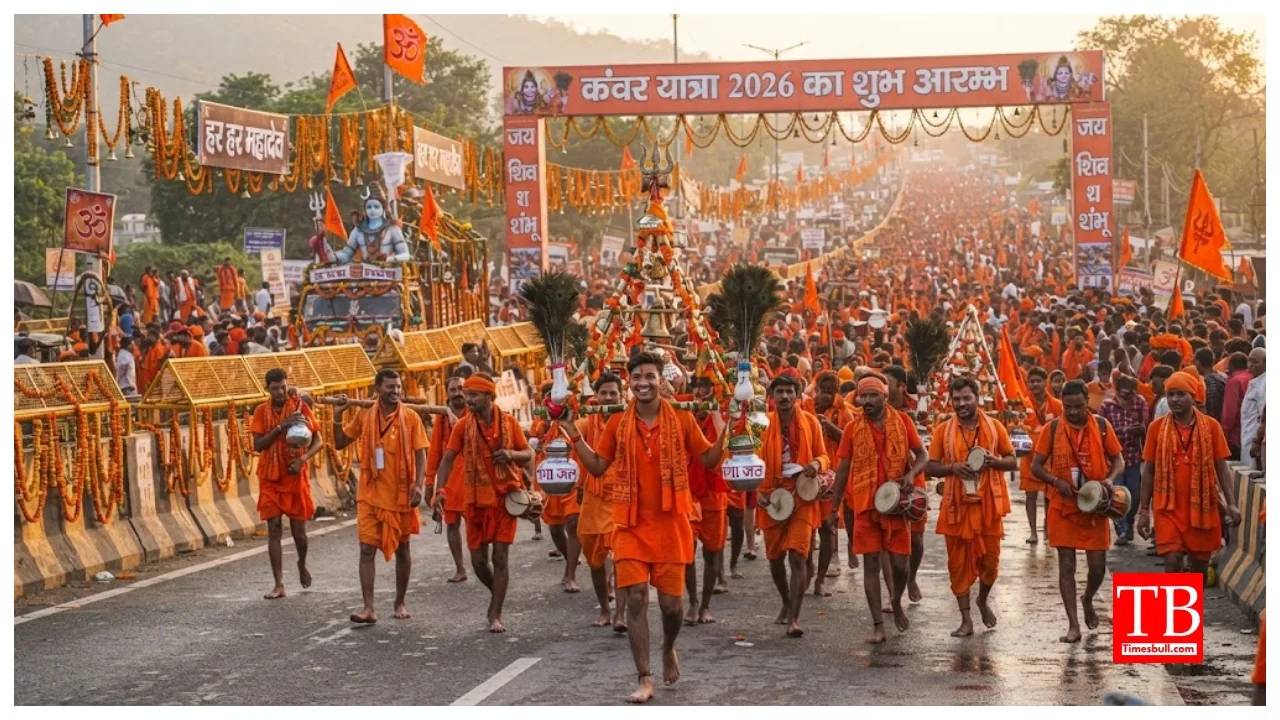
Kanwar Yatra 2026: The month of Sawan is dedicated to the worship of Lord Shiva and is considered highly auspicious for devotees. Throughout this month, millions of Shiva devotees across the country worship Lord Shiva, observe fasts on Mondays, and undertake the Kanwar Yatra—fetching holy water from sacred rivers to perform *Jalabhishek* (ritual bathing) on the Shivling.
The Kanwar Yatra holds great significance in several states, including Uttar Pradesh, Bihar, Jharkhand, Haryana, Delhi, Rajasthan, and Madhya Pradesh. Every year during Sawan, lakhs of devotees travel on foot to Shiva temples carrying holy water fetched from sacred sites such as Haridwar, Gangotri, Gaumukh, Sultanganj, Garhmukteshwar, and Prayagraj.
During this journey, chants of “Bol Bam” and “Har-Har Mahadev” fill the air, creating an atmosphere steeped in devotion. If you are planning to undertake the Kanwar Yatra or observe the Sawan Monday fasts this year, here is all the essential information regarding the 2026 Kanwar Yatra: key dates, Sawan Mondays, auspicious timings for *Jalabhishek*, types of *Kanwars*, rules for worship and fasting, and the religious significance of Sawan.
When will the Kanwar Yatra 2026 begin?
The Kanwar Yatra in 2026 will commence on July 30, 2026. From this day onwards, Shiva devotees will begin their journeys to Lord Shiva’s temples, carrying water from the Ganges and other sacred rivers. The Kanwar Yatra is not merely a religious pilgrimage; it is considered a symbol of reverence, faith, self-restraint, and penance. During this period, lakhs of devotees walk barefoot for many kilometres to offer the holy water to the *Shivling* and seek the blessings of Lord Shiva.
When will the Kanwar Yatra 2026 conclude?
The Kanwar Yatra will conclude on August 11, 2026. Sawan Shivratri will also be celebrated on this day, allowing many devotees to perform *Jalabhishek* at Shiva temples. On Sawan Shivratri, special prayers, Rudrabhishek rituals, devotional singing (bhajan-kirtan), and night-long vigils (jagran) are organised at Shiva temples.
Key Dates for Kanwar Yatra 2026
The Kanwar Yatra is set to begin on July 30, 2026 (Thursday). Following this, Sawan Shivratri will fall on August 11, 2026 (Tuesday); the main *Jalabhishek* (ritual offering of water to the deity) will take place on this day.
The Four Mondays of Sawan 2026
Every Monday during the month of Sawan is dedicated to Lord Shiva. This year, there are four Mondays in Sawan. The first Monday falls on August 3, 2026; on this day, devotees of Shiva will observe their first fast. The second Monday of Sawan is on August 10, 2026, when special worship of Lord Shiva will be performed. The third Monday falls on August 17, 2026, and is considered highly auspicious. Finally, the fourth Monday falls on August 24, 2026, marking the last Monday of the Sawan month.
Why is the Kanwar Yatra Undertaken?
The Kanwar Yatra is not merely a religious tradition but a symbol of devotion and faith in Lord Shiva. According to religious belief, devotees fetch holy water from sacred rivers—specifically the Ganges—to perform *Jalabhishek* on Lord Shiva. This act pleases the deity, leading to the fulfilment of wishes and bringing happiness and prosperity into people’s lives. It also dispels negative energy and fosters spiritual peace. Many devotees undertake the Kanwar Yatra with the specific aim of having a particular wish fulfilled.
How Did the Kanwar Yatra Begin?
According to mythological beliefs, the history of the Kanwar Yatra is ancient. It is believed that Lord Parashurama was the first to undertake the Kanwar Yatra. Some traditions also suggest that Shravan Kumar used a *Kanwar* (a bamboo pole with containers hanging from both ends) while serving his parents. For this reason, the Kanwar Yatra is considered a symbol of service, penance, and devotion.
What are the different types of Kanwars?
Each devotee undertakes a specific type of Kanwar Yatra based on their capacity and vow. Primarily, there are four types of Kanwars.
Sadharan (Simple) Kanwar
This is the most common form of the Kanwar Yatra. Devotees travel on foot and may rest when necessary, placing the Kanwar on a special stand. Most devotees undertake this type of journey.
Dak Kanwar
The Dak Kanwar is considered the most arduous journey. Devotees walk or run continuously without stopping. The Kanwar is never placed on the ground during the journey, and the *Jalabhishek* (ritual offering of water) is performed within a specific timeframe. This type of journey demands exceptional discipline and physical stamina.
Khadi (Standing) Kanwar
The Khadi Kanwar is regarded as a form of extreme penance. The Kanwar is never placed on the ground; instead, devotees take turns carrying it. Great care is exercised throughout the entire journey.
Jhanki (Tableau) Kanwar
This is considered the most visually captivating form of the Kanwar Yatra. The Kanwar is beautifully decorated, often featuring tableaux depicting Lord Shiva, Goddess Parvati, and other religious themes. Colourful lights, flowers, and various decorative elements are used. This journey serves as a centre of cultural attraction alongside being an act of deep devotion.
What is the religious significance of the month of Sawan?
In Hinduism, the month of Sawan is considered extremely dear to Lord Shiva. According to religious belief, the *Samudra Manthan* (Churning of the Ocean) took place during this month. To protect the world, Lord Shiva held the deadly *Halahal* poison in his throat after it emerged during the churning. Holding the poison caused his body to become intensely hot. Consequently, the gods, goddesses, and nature itself cooled his body by offering Ganga water, ordinary water, *Belpatra* (Bilva leaves), and sandalwood paste. It was following this event that the tradition of offering water to Lord Shiva during the month of Sawan began.
How to observe the Sawan Monday fast?
If you wish to observe the Sawan Monday fast, following certain guidelines is considered auspicious. Wake up early—ideally during *Brahma Muhurta* or before sunrise—and bathe. Wear clean clothes and meditate on Lord Shiva. Afterwards, perform *Jalabhishek* (ritual bathing with water) on the *Shivling*. During the worship, chant the mantra “Om Namah Shivaya” with devotion; chanting the *Mahamrityunjaya Mantra* is also considered auspicious. After the worship, read or listen to the Sawan Monday fast narrative (*Vrat Katha*). Devotees may make a solemn vow (*Sankalp*) according to their capacity. Perform the *Aarti* of Lord Shiva again in the evening. Finally, partake of the *Prasad* and break the fast.
Things to keep in mind during Sawan
According to religious beliefs, avoid consuming meat during Sawan. Refrain from alcohol and intoxicants. Stay away from lying and deceit. Do not give in to anger or use abusive language. Maintain cleanliness and self-restraint.
Conclusion
The Kanwar Yatra of 2026 will commence on July 30, 2026, and conclude on August 11, 2026, coinciding with Sawan Shivratri and the main *Jalabhishek*. This year, the four Mondays of Sawan fall on August 3, 10, 17, and 24; these days hold special significance for the worship of Lord Shiva. Devotees can undertake various forms of the Kanwar Yatra—such as *Sadharan* (simple), *Dak* (rapid), *Khadi* (standing/continuous), or *Jhanki* (tableau)—based on their devotion and resolve. Furthermore, observing the Sawan Monday fast and offering *Gangajal*, *Belpatra*, milk, curd, honey, ghee, sandalwood, and *Dhatura* to the *Shivling* while chanting “Om Namah Shivaya” is considered highly auspicious.