
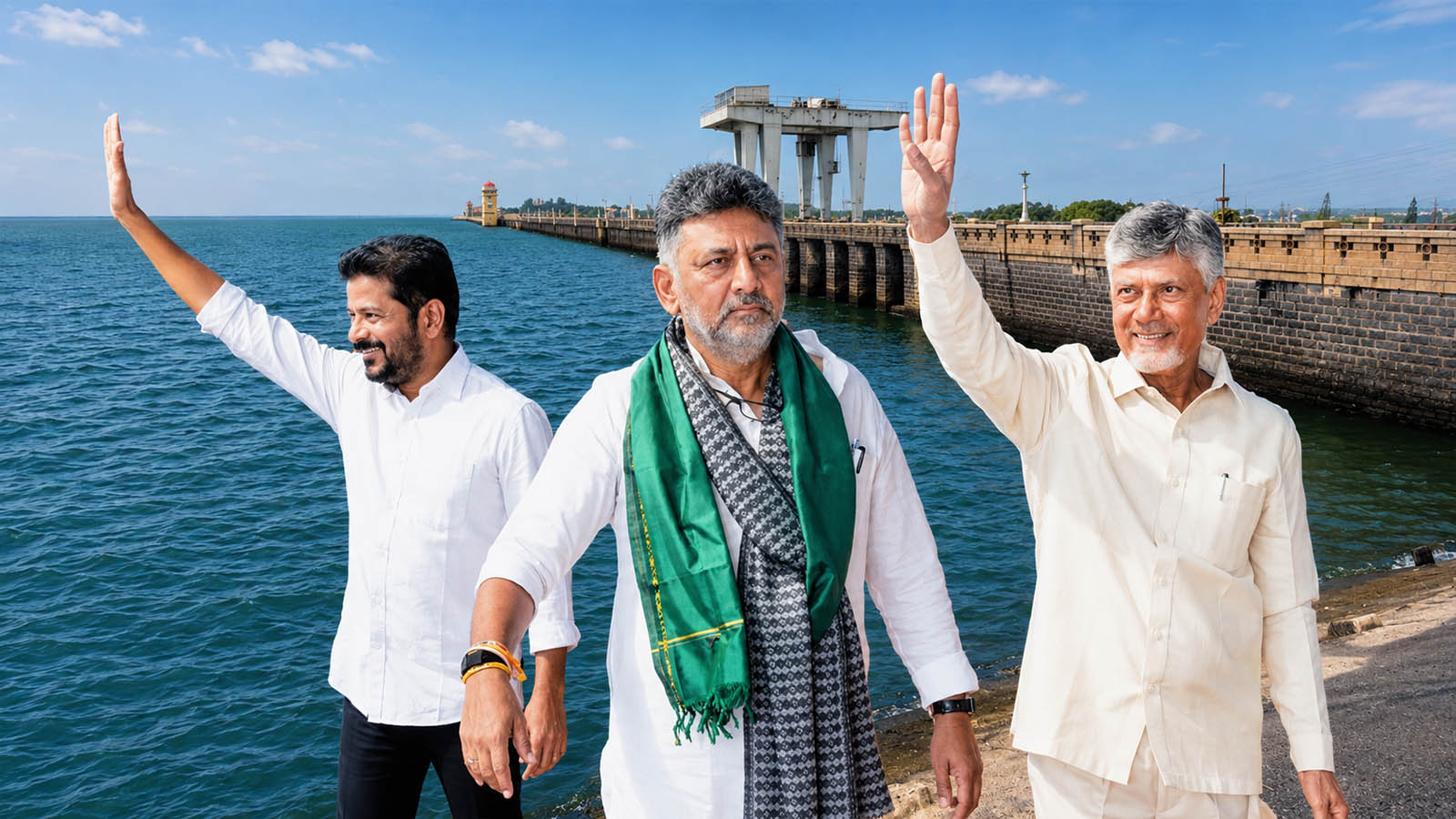

In South India, water has long been one of the most combustible political fault lines, where rivers doubled as battlegrounds and reservoir levels dictated the temperature of interstate ties.
From the decades-long Cauvery dispute that repeatedly pits Karnataka against Tamil Nadu to the simmering Krishna and Tungabhadra water-sharing tensions among Andhra Pradesh, Telangana and Karnataka, few issues have inflamed regional passions as much as the politics of water.
Three CMs come together on water issues
However, despite this historically fractious backdrop, something unusual happened on Thursday (June 25), leaving the supporters of cooperative federalism impressed. A momentous confluence of the chief ministers of three major states — Karnataka, Andhra Pradesh and Telangana — took place with the Tungabhadra Dam, long considered a vital shared lifeline for South India. The scene marked a rare and significant display of political unity between three states that have clashed many times over Tungabhadra’s water.
Also read: TN will turn into desert if Karnataka builds Mekedatu Dam: Vijay govt in Assembly
The Tungabhadra Reservoir, long considered a vital shared lifeline for South India, has just written a historic new chapter in cooperative federalism. In a rare and significant display of political unity, the dam recently served as the backdrop for a historic confluence of the Chief Ministers of Karnataka, Andhra Pradesh, and Telangana.
CMs DK Shivakumar (Karnataka), N Chandrababu Naidu (Andhra Pradesh) and Revanth Reddy (Telangana) gathered in Koppal, Karnataka, for the inauguration of the reservoir’s 33 new spillway crest gates, an event that marked a groundbreaking blueprint for inter-state water diplomacy. Union Minister of Jal Shakti CR Paatil was also present. They also had a meeting over issues related to the sharing of Tungabhadra’s water, along with other officials.
About the project
The road to this milestone began with an unexpected crisis in August 2024, when the sudden washing away of Gate No. 19 threatened the structural integrity of the dam and risked massive loss of water. Recognising the immediate danger to millions of farmers, engineers from Karnataka and Andhra Pradesh came together to install a temporary stop-log gate within days.
But the real triumph lay in the permanent solution. Rather than applying a temporary patch, the two states acted decisively through the Tungabhadra Board. In an unprecedented milestone for water resources engineering, teams worked on a war footing to completely replace all 33 spillway gates within a single Kharif season.
Also read: Telangana’s ‘Future City’: New economic growth engine or real-estate dream?
Executed at a cost of Rs 51 crore, the massive overhaul was completed in a record-breaking 123 days. By wrapping up this mega-project before the onset of the current monsoon, the dam has been successfully secured to safely store its full capacity of 105 TMC (Thousand Million Cubic feet) of water for the upcoming agricultural season.
What the dam episode said about collective federalism
In a country where inter-state river water disputes routinely drag on for decades through tribunals and courtrooms — often fostering deep-seated political enmity — the coordination demonstrated at Tungabhadra marks a monumental shift.
The coming together of the three chief ministers, two from the Congress and one from the Telugu Desam Party, an ally of the Bharatiya Janata Party, was more than just a ribbon-cutting ceremony. It represents a strong foundation for future water coordination in South India.
By prioritising technical solutions and mutual survival over political grandstanding, the leadership of the three states proved that critical infrastructure crises can be resolved rapidly when shared interests are put first.
At the core of the camaraderie is a philosophy that has often eluded regional water debates: protecting one’s own water rights while actively safeguarding the interests of neighbouring states.
What the chief ministers said
Karnataka CM Shivakumar called the occasion “a historic event for South India” and said all three states had reached an agreement on measures, including de-silting the reservoir and examining a balancing reservoir at Navali, Karnataka.
He also said the discussions held would be remembered as a crucial step in inter-state cooperation on the management of water.
Calling the occasion a “Red Letter Day”, Revanth said the joint meeting of the three CMs and the Union minister constituted a historic first step towards an amicable sharing of Tungabhadra’s water. He also urged all political forces to rise above partisan interests and eye welfare of the farmers in all three states and sought a permanent solution to the problem.
The Telangana chief minister also recalled that the kings of the erstwhile state of Mysore had overlooked their differences to reach a common ground to protect agriculture.
Also read: How Andhra is carving itself out as a major defence hub amid stiff southern competition
Naidu called for linking the Godavari and Kaveri rivers so that the interests of the three states and Tamil Nadu are addressed. The TDP leader also recalled a historical episode of cooperation in 1983 when the then prime minister, Indira Gandhi, and some states agreed to give 5 TMC of water to Tamil Nadu.
Andhra Pradesh (then undivided), Maharashtra, and Karnataka collectively gave 15 TMC of water to the southernmost state to meet Chennai’s (then Madras) drinking water needs. It is considered as one of the high points of cooperative federalism in India’s political history.
Shivakumar’s strategic political move
The replacement of the reservoir’s ageing crest gates may have been an administrative decision under former chief minister Siddaramaiah, but Shivakumar, who took over less than a month ago, ensured its completion carried a much larger political message.
After the 19th crest gate washed away during heavy rains in the past, Siddaramaiah acted swiftly by directing officials to install a replacement gate within six days, preventing further water loss and easing farmers’ concerns. Recognising that the nearly 70-year-old gates posed a long-term risk, he accepted an expert committee’s recommendations and approved replacing all crest gates.
While Siddaramaiah laid the foundation, Shivakumar converted the project’s completion into a display of political statesmanship. By inviting Naidu and Revanth for the inauguration, he elevated a routine infrastructure programme into a symbol of cooperative federalism.
The joint event projected Karnataka as a state committed to inter-state cooperation on shared water resources. For Shivakumar, it was also a strategic political move that enhanced both the state Congress government’s image and his own stature as a regional leader capable of building consensus beyond party and state boundaries.
‘Tungabhadra Model’, the way forward?
After the developments of Thursday, a new form of cooperative mechanism could be implemented to avoid river disputes that have also turned deadly in the past, resulting in violence and deaths.
Instead of weaponising water for political mileage or inciting regional discord, sitting down within technical and legal frameworks—while respecting geographical realities and the inherent rights of river basin regions—offers the only viable path forward for the southern states while addressing their water woes.
It is this spirit of rational and empathetic dialogue that could ultimately provide permanent irrigation and economic security to the people in general and farmers in particular in Rayalaseema (in southern Andhra), Telangana, and Karnataka.
(Adapted from a video discussion on The Federal Telangana’s YouTube channel.)

Comments are closed.