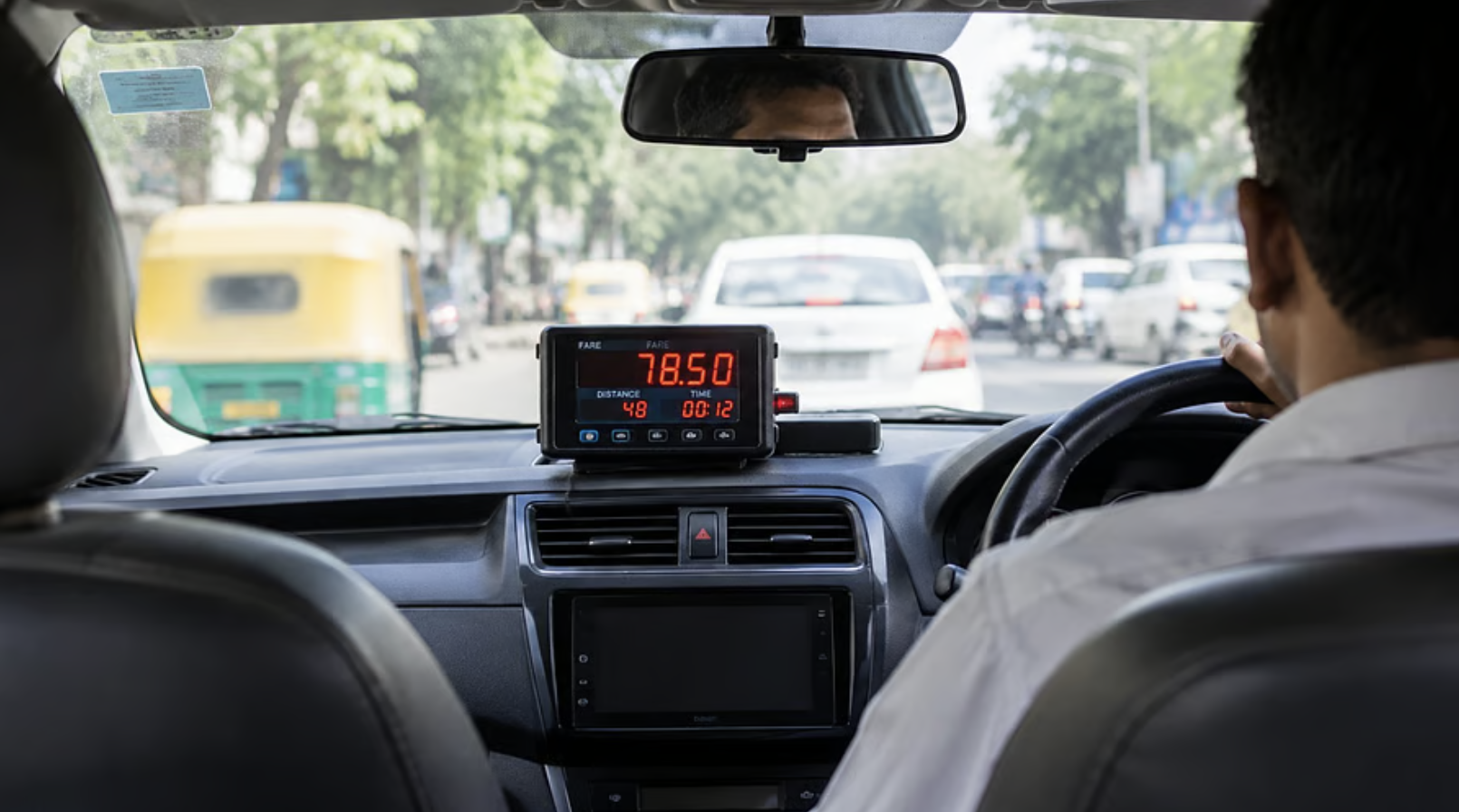
The Karnataka government is preparing to make physical digital fare meters mandatory for all taxis, including those operating through ride-hailing platforms such as Ola, Uber and Rapido. The initiative aims to prevent arbitrary fare manipulation, improve pricing transparency and protect the financial interests of cab drivers.
Karnataka Transport Minister Byrathi Suresh has indicated that the new rules are expected to come into effect from January 2027. Vehicles found operating without mandatory fare meters after implementation could face seizure.
Why Karnataka Wants Physical Fare Meters In App-Based Cabs
Currently, app-based taxi services calculate and display fares digitally through their respective mobile applications. However, the government has received complaints regarding discrepancies between government-prescribed fares and those charged by aggregators.
While passengers have complained about excessive fares during peak hours, rainfall and traffic congestion, drivers have alleged that aggregators sometimes charge customers lower fares at the expense of their earnings.
For instance, despite the government-prescribed rate of Rs 24 per kilometre for smaller taxis, some aggregators have allegedly offered rides at Rs 15 or Rs 16 per kilometre.
Physical meters calibrated according to government-approved rates are expected to provide greater transparency for passengers and drivers.
Karnataka Proposes Maximum 20% Surge Pricing
The Transport Department has also proposed allowing surge pricing but limiting it to 20% of the base fare.
Under the proposed framework, a ride with a base fare of Rs 100 cannot cost more than Rs 120 during periods of high demand on account of surge pricing alone.
In comparison, the Centre’s Motor Vehicle Aggregator Guidelines, 2025, permit dynamic pricing of up to twice the base fare.
The proposed amendments remain subject to Cabinet approval and formal notification.
What Are The Government-Approved Taxi Fares?
Under Karnataka’s February 2024 fare notification, taxi charges depend on the purchase price of the vehicle:
- Vehicles costing up to Rs 10 lakh: Rs 100 for the first four kilometres, followed by Rs 24 per kilometre.
- Vehicles costing between Rs 10 lakh and Rs 15 lakh: Rs 115 for the first four kilometres, followed by Rs 28 per kilometre.
- Vehicles costing above Rs 15 lakh: Rs 130 for the first four kilometres, followed by Rs 32 per kilometre.
A 10% additional charge applies to journeys between midnight and 6 am.
Cab Drivers Will Need To Purchase Fare Meters
Taxi owners will be required to purchase physical meters from the open market and have them calibrated by the Legal Metrology Department.
However, the availability of suitable meters could present an initial implementation challenge.
Transport operators have also sought greater clarity regarding different taxi categories, including tourist vehicles, corporate taxis and vehicles operating through advance bookings.
Meanwhile, Maharashtra has expressed interest in studying Karnataka’s proposed model to address similar complaints involving app-based taxi services in Mumbai and Pune.
Summary
Karnataka plans to make physical digital fare meters mandatory for Ola, Uber, Rapido and other taxis from January 2027 to prevent fare manipulation and protect drivers’ earnings. The government has also proposed capping surge pricing at 20%. Taxi owners will need to install calibrated meters, while vehicles violating the new regulations could face seizure.
Image Source