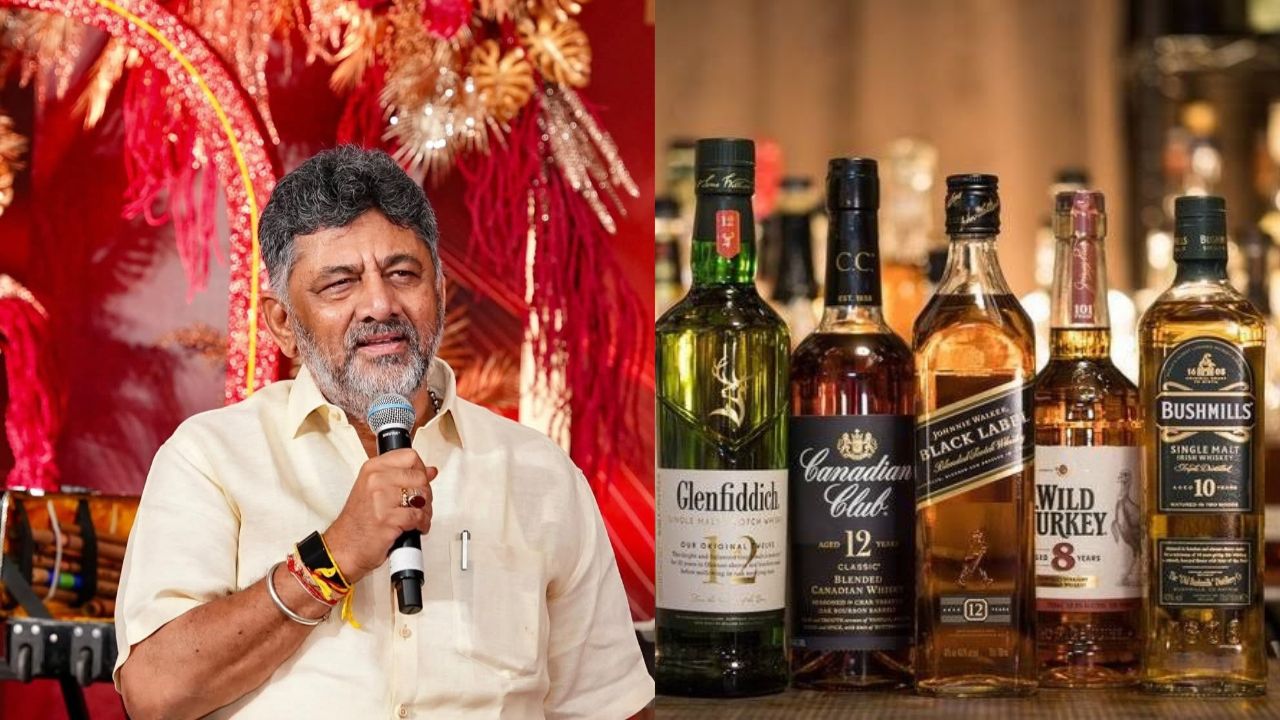
Karnataka: Karnataka's revised alcohol taxation system is facing questions from the liquor industry, with beer sales rising sharply while Indian-Made Liquor (IML) volumes record only modest growth. Industry body CIABC has urged the state government to reassess the policy, arguing that much of the additional excise revenue is coming from IML consumers rather than higher sales volumes.
How Karnataka Changed Its Liquor Tax System
Karnataka introduced an Alcohol-in-Beverage (AIB)-based excise duty framework on May 11, 2026. The new system links taxation to the amount of alcohol in a beverage, replacing the earlier structure based on volume and price categories.
Also Read: Petrol Pump Sealing Turns Fatal: Indian Oil Manager Mahesh Shelke Stabbed 7 Times
The state also reduced its excise duty slabs from 16 to 8 and gave manufacturers greater flexibility in setting retail prices. While some premium spirits and beer products may become cheaper, certain entry-level liquor brands face higher tax costs, potentially pushing up prices for budget-conscious consumers.
Beer Sales Surge but IML Drives Revenue Growth
Government sales figures for July-September 2026, cited by the Confederation of Indian Alcoholic Beverage Companies (CIABC), show beer volumes increasing by nearly 50%. IML sales, however, grew by just 1.52%.
Despite the modest volume growth, IML generated an additional Rs 1,064.52 crore in revenue during the quarter. Beer contributed Rs 228.57 crore in additional revenue.
Overall, Karnataka's excise revenue rose by Rs 1,291.94 crore. According to CIABC's analysis, IML accounted for approximately 82% of the increase, raising concerns about the extent to which higher tax collections depend on consumers of mass-market liquor.
What It Means for Consumers
CIABC has warned that rising taxes could weaken demand for affordable liquor if manufacturers pass on additional costs. Premium products, meanwhile, may benefit from lower prices under the revised structure.
The figures do not establish that the new tax system alone caused the sales trends. Longer-term data will be needed to assess its impact on consumption and government revenue.
Also Read: Karnataka NRI Murder Mystery in Sharjah: Airport Worker Body Found in 9 Pieces After 2 Months
The industry body has also argued that alcohol-related risks depend on the amount of pure alcohol consumed and drinking patterns, rather than simply whether the beverage is beer or spirits.
For Karnataka, the challenge is to balance revenue growth, consumer affordability and public health priorities.