
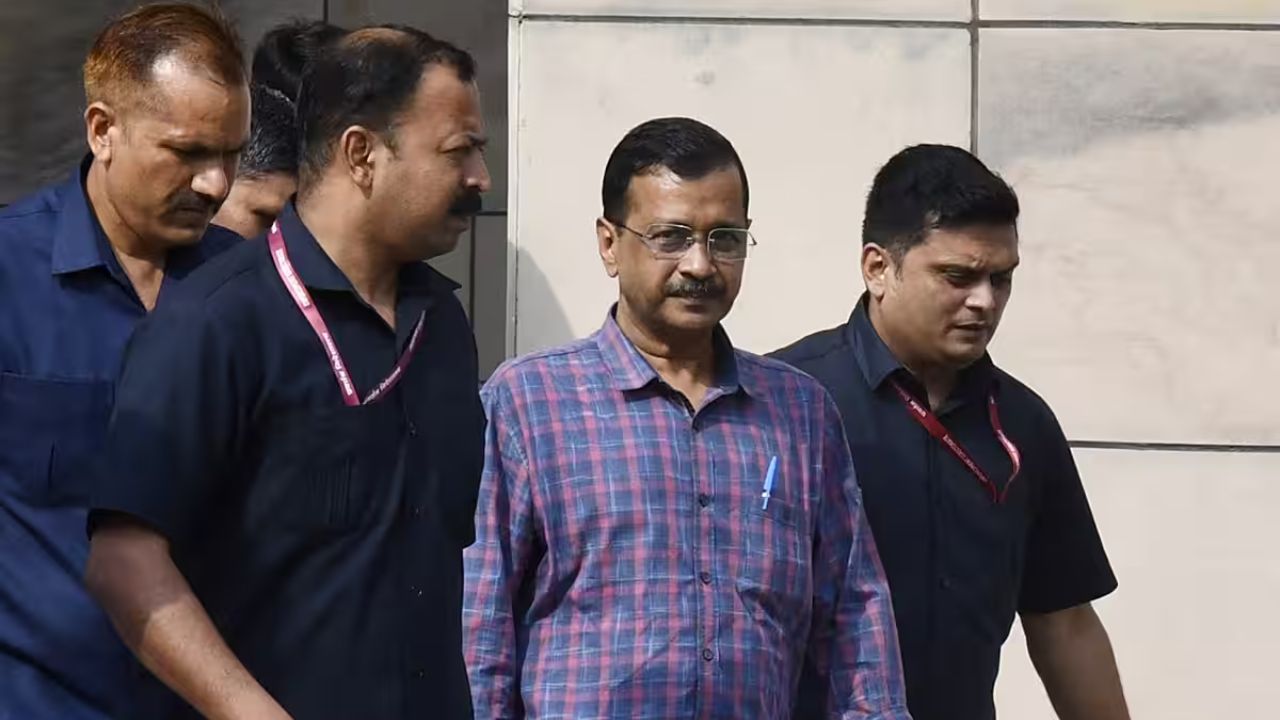
Kejriwal will not appear in court, how will the case proceed with the help of amicus curiae? understand

In the Delhi Excise Policy case, Arvind Kejriwal had appealed that Justice Swarn Kanta Sharma be removed from his case. When this appeal was not accepted, Kejriwal refused to appear in the case. Now questions were being raised as to how the case would proceed if the accused did not appear. Now Justice Swarn Kanta Sharma has said that she will appoint some senior lawyers as amicus curiae and with their help the case will be taken forward. He has postponed till May 8 the hearing on the petition challenging the lower court’s decision.
The lower court has acquitted all the accused including Arvind Kejriwal in the excise policy case. CBI has challenged this decision in Delhi High Court. This case has been given to the bench of Justice Swaran Kanta Sharma, that is why Arvind Kejriwal, Manish Sisodia and Durgesh Pathak have refused to appear in his court. Now Delhi High Court has said that amicus curiae i.e. amicus curiae will be appointed to represent these three. These three leaders had appealed to remove Swarn Kanta, fearing conflict of interest and bias, but Swarn Kanta refused to withdraw from the case.
Amicus curiae will be appointed
Now Delhi High Court has postponed the hearing on CBI’s petition till May 8. The court said that it would be appropriate to proceed with the case only after someone is appointed to represent them. Justice Swarn Kanta Sharma has said, ‘I will appoint an amicus curiae. I will appoint three senior lawyers in this case. Solicitor General Tushar Mehta, appearing for CBI, asked whether the court was making this appointment for Kejriwal and others who have no representation in the proceedings. To this Justice Swarn Kanta replied ‘yes’.
Also read: ‘If I did not give Rs 5 crore then I did not get the ticket’, Manoj Tiwari made allegations as soon as TMC lost
Justice Swarn Kanta said, ‘We will list it on Friday. I will issue an order on the subject of amicus curiae and then start the hearing. Let us tell you that on April 20, Justice Swarn Kanta had rejected his petitions in which he was requested to recuse himself from the case. Kejriwal, Sisodia and Durgesh Pathak wrote a letter to Justice Swarn Kanta saying that they would not appear before him in person or through a lawyer and would follow ‘Mahatma Gandhi’s path of Satyagraha’.
What is the amicus curiae rule?
The highest court of the country i.e. the Supreme Court has emphasized on the necessity of appointing amicus curiae in many of its decisions. Apart from this, its rules have also been explained many times by the Supreme Court. If for any reason the accused does not appear in the court or does not want to appear, then in that case an amicus curiae is appointed. During the hearing of a case in 2019, the Supreme Court had said that if there are cases like death sentence or life imprisonment, then a person with at least 10 years of experience should be appointed amicus curiae.
Also read: Is NCERT releasing the book which was banned by SC by changing it?
Similarly, if the matter is in the High Court, then priority should be given to the senior lawyer of the High Court. The amicus curiae so appointed is also allowed to meet and discuss with the accused.
In the same case, on February 27, the lower court had acquitted Arvind Kejriwal, Manish Sisodia and 21 others in the excise policy case, but on March 9, the bench of Justice Swarn Kanta Sharma stayed the recommendation of the subordinate court to initiate departmental action against the CBI investigating officer in the excise policy case. Issuing notice to all 23 accused on the CBI plea, Justice Swarn Kanta Sharma said that certain observations and findings of the subordinate court at the stage of framing of charges prima facie appear to be erroneous and need to be considered.

Comments are closed.