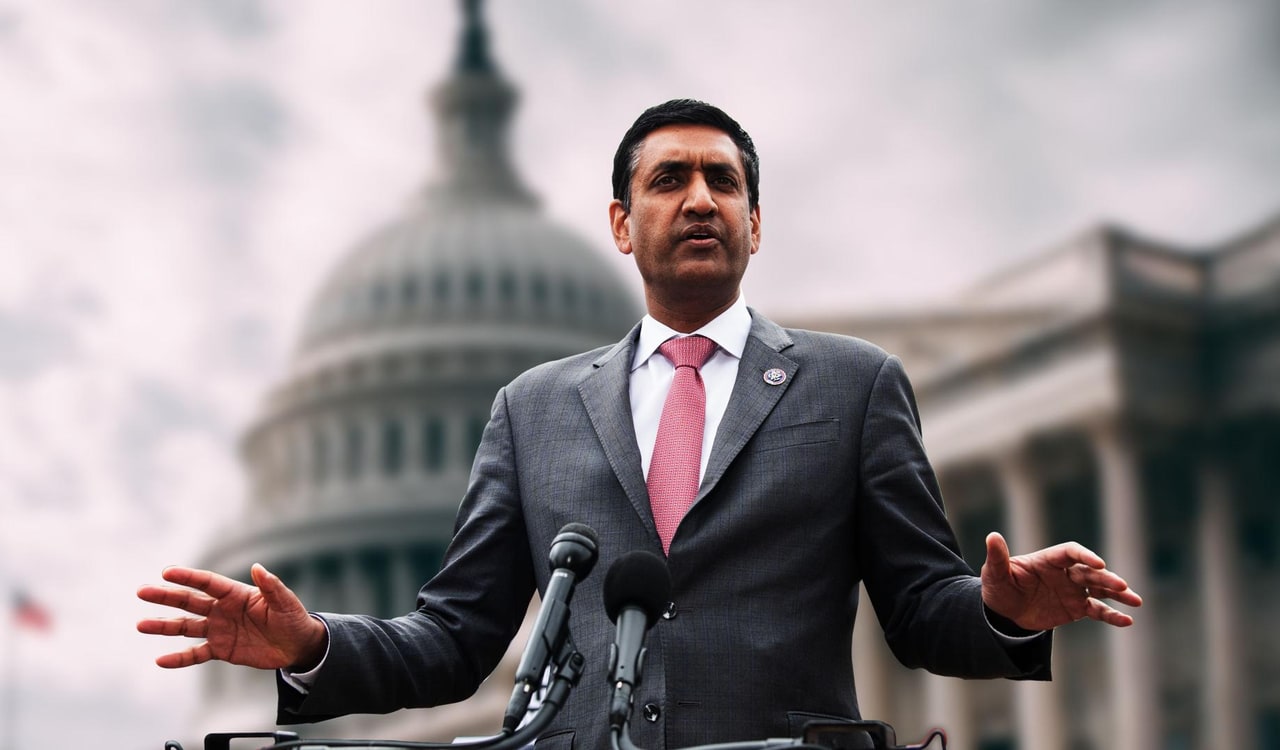
Indian-American Congressman Ro Khanna said a potential Alexandria Ocasio-Cortez bid would leave room for him in the 2028 Democratic primary, while backing limits on self-funded campaigns and super PAC spending
Published Date – 30 November 2026, 12:44 AM
Indian-American Congressman Ro Khanna, who said a potential 2028 Democratic presidential bid by Alexandria Ocasio-Cortez would not rule out his own bid. (File image)
Washington: Indian-American Congressman Ro Khanna said on Sunday that a presidential bid by fellow progressive Alexandria Ocasio-Cortez would leave room for him to seek the Democratic nomination in 2028, while calling for limits on candidates using personal wealth to finance their campaigns.
Speaking on NBC’s “Meet the Press”, the California Democrat praised Ocasio-Cortez and said he wanted a competitive primary involving several strong candidates. He did not announce a campaign.
Host Kristen Welker asked whether there would be an opening for Khanna if the New York congresswoman entered the race. His response addressed that hypothetical contest, rather than a declared candidacy by either lawmaker.
Khanna said his central economic argument would concern the gap between the wealth concentrated in Silicon Valley and the circumstances of people in the Pennsylvania communities where he grew up.
He called for a new economic programme suited to artificial intelligence and technological change, drawing a comparison with Franklin D. Roosevelt’s New Deal and its response to the industrial economy. He said the benefits of a modern economy should reach a broader section of Americans.
Campaign financing was another focus of the interview.
Welker asked whether the Democratic National Committee’s new pledge against super PAC and dark-money spending could favour wealthy candidates able to finance their own campaigns.
Khanna said he supported the approach provided candidates also limited their personal contributions to $3,500. He said he would not self-fund a presidential campaign if he entered the race and urged other prospective candidates to adopt the same position.
He also said candidates should refrain from steering donors towards aligned super PACs and should denounce independent spending on their behalf.
The DNC’s published rules require presidential candidates to sign and comply with its Fair Campaign Practices Pledge to qualify for party-sanctioned debates. The party says it cannot legally ban super PACs or dark-money groups, but can require candidates to denounce specified spending supporting them or attacking their primary opponents.
Those provisions apply to the Democratic primary, rather than the general election, according to the DNC.
Welker also asked Khanna about the Thanksgiving endorsement he received from progressive commentator Cenk Uygur.
Khanna remained non-committal when asked whether his family supported a presidential bid. He described campaigning as demanding on spouses and families and said the decision involved more than political calculations.
He expressed hope that a new generation of political leaders could help bridge divisions and offer an economic programme that enabled more Americans to prosper.