
Kharna Prasad Significance: Kharna day is very special in Chhath festival. The Prasad made on this day has its own identity. Especially Kharna Prasad is considered incomplete without kheer made of jaggery and wheat bread. In Bihar and Purvanchal, preparations are made in every house on this day. But have you ever wondered why there is a tradition of making this special dish on Kharna? There are some special things behind this, from religious beliefs to food. Let us know.
What is the religious significance of Kharna?
Kharna is the second day among the four days of Chhath festival. In this festival celebrated on the next day of Nahay-Khay, the devotees keep fast for the whole day. After taking bath in the evening, Lord Surya and Chhathi Maiya are worshipped. After this, prasad of jaggery kheer and roti is taken. It is believed that only after eating the Prasad of Kharna, the devotees start the 36-hour waterless fast. Kharna Prasad is first offered to God, then distributed among the family members and people around.
The symbol of sun and moon is hidden in jaggery kheer.
Kheer made on the day of Kharna is called Rasiyav in many places. It is prepared by mixing rice, milk and jaggery. There is a tradition of using jaggery instead of sugar in this kheer. It is said that the rice and milk used in kheer are considered symbols of the moon, while jaggery is associated with the sun. Chhath Mahaparva is the festival of Sun worship, hence these things are given special importance in this Prasad. This is the reason why the tradition of making jaggery kheer in Kharna continues even today.
Why do we eat roti with jaggery kheer in Kharna?
Along with kheer, roti made of wheat flour is also included in the Prasad of Kharna. It is prepared without salt. In many homes, pure desi ghee is applied on roti. Actually, in Chhath Puja, special importance is given to satvik food and simplicity. The combination of roti and kheer is part of the traditional meal. It does not require many spices or other things to prepare it. This is the reason why this simple food is accepted as Prasad on the day of Kharna.
Why is Kharna Prasad made only on earthen stove?
The method of making Prasad also has special importance in Chhath Puja. Even today, in many homes of Bihar and Purvanchal, Kharna kheer and roti are made on earthen stove. There is a tradition of using mango wood for this. Earthen stove and cooking food with wood are associated with the old traditions of Chhath. While preparing Prasad, full care is taken of the cleanliness and purity of the kitchen. However, now in many homes Kharna Prasad is also made on gas stove.
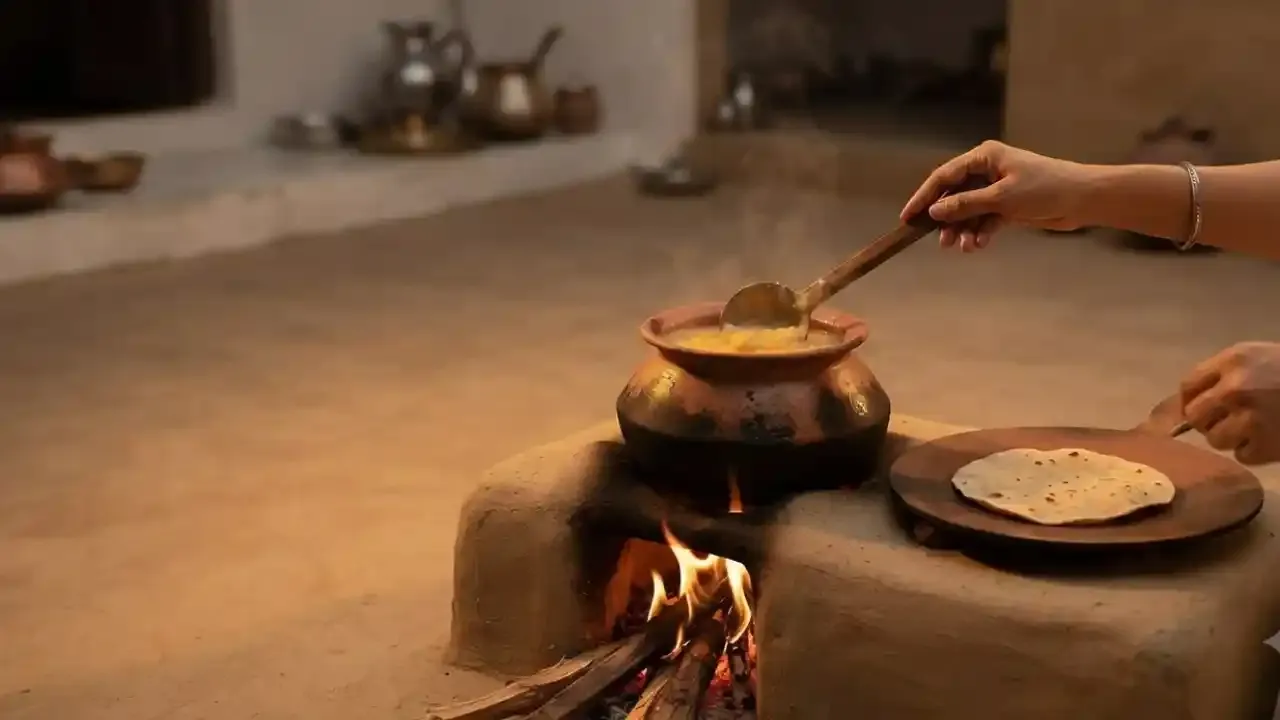
Chhath fast starts after Kharna
After consuming the Prasad of Kharna, the devotees complete the vow of fasting for 36 hours without water. Next day in the evening, Arghya is offered to the setting sun. Then on the fourth day in the morning, the fast is broken after offering Arghya to the rising sun.
FAQ
What is prepared on the day of Kharna in Chhath Puja?
On the day of Kharna, mainly jaggery kheer (Rasiav) and wheat flour rotis are made.
Why is there a tradition of making jaggery kheer in Kharna?
According to religious beliefs, milk and rice used in kheer are considered symbols of the Moon, while jaggery is associated with the Sun.
How many hours of waterless fast is observed after Kharna?
After consuming the Prasad of Kharna, the devotees observe a waterless fast for about 36 hours.
To whom is Kharna Prasad fed?
First of all, Kharna Prasad is offered to Lord Surya and Chhathi Maiya. After this, the fasting person accepts it and distributes it among the family and surrounding people.