The app is among a burgeoning list of Indian start-ups trying to address some of India’s most complex challenges in sectors ranging from legal-tech to healthcare, infrastructure, education and agriculture using AI.
Unlike the US and China which have a global dominance in building frontier language models like ChatGPT, India’s AI revolution is happening downstream in data centre infrastructure and consumer applications rather than in research.
Start-ups are solving issues for everything from pothole detection to tribal language translation to assisting overworked public-health professionals with medical tasks – often working with highly fragmented, multilingual datasets in extremely cost sensitive industries.
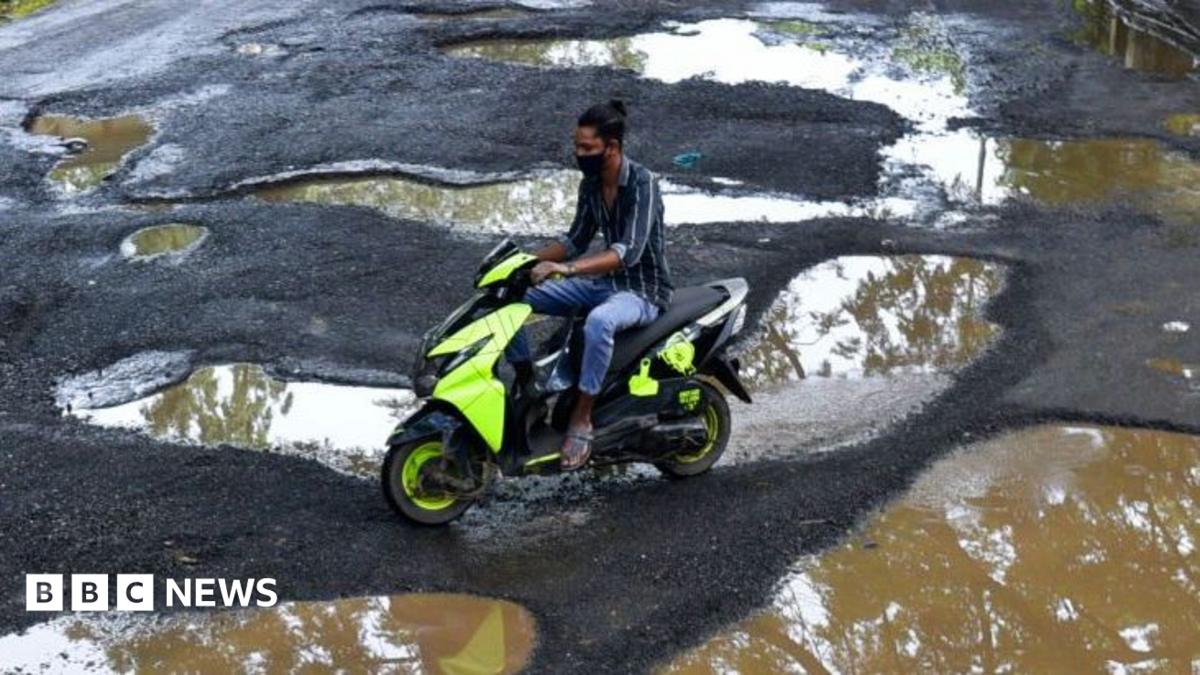
Bengaluru-based YouTube teacher Gaurav Sen’s AI app detects potholes using a dash-cam, satellite-based navigation and an AI vision model to analyse images.
It then identifies civic officials responsible for fixing them and sends them this data. He got viral attention recently given how widespread the menace of potholes is across India’s urban sprawls.
On last count, there are at least half a dozen other similar offerings that map and report road damage to authorities across the country.
“A municipal corporation can take the app and use it on public buses and taxis, to access real-time, updated data on road conditions,” Sen told the BBC.
In Mumbai on India’s western coast, Fractal Analytics – among the few Indian listed AI companies – has deployed its AI tool “Vaidya” in hospitals run by the local civic authority.
The app allows citizens to receive AI-generated, simplified summaries of their lab reports in multiple languages, identify nearby healthcare facilities based on their needs and gives doctors AI-guided pre-consultation support such as medical history and medication details of patients.
It also provides hospital administrators with a public health dashboard based on aggregated, anonymous insights from lab reports accessed through its tie-up with municipal hospitals, giving them crucial visibility into emerging infections or other disease trends.
This boom has led to a surge in funding for AI start-ups – up 265% year-on-year according to Inc42, externala start-up information platform. They raised over $1bn in the first nine months of this year amid a relatively muted fundraising environment for the broader ecosystem.
Yet, these companies face an uphill task in commercialising their ideas and taking them beyond pilot.
“The cost of building in India is sometimes much higher than what Indian customers are willing to pay,” Fractal’s co-founder Srikanth Velamakanni told the BBC at his sprawling office overlooking Mumbai’s film city.
“The computing power needed to run an AI model is the same whether it is built in India or the US – but American customers have a far bigger paying capacity than those here.”
Indian AI founders are also being forced to build around scarcity, with availability of high quality chips at the right scale and price, a major impediment for many.
“I believe I am building one of the most impactful things for this country,” says Mandava.
“But I am starved for GPUs [chips that perform millions of calculations and help train AI models]. I have a hellish time trying to acquire them,” he says.
The country has promised its start-ups 38,000 GPUs through its government-led AI mission, externalbut demand for this compute power is far greater than supply.
Cumbersome regulation and bureaucracy are other major challenges.