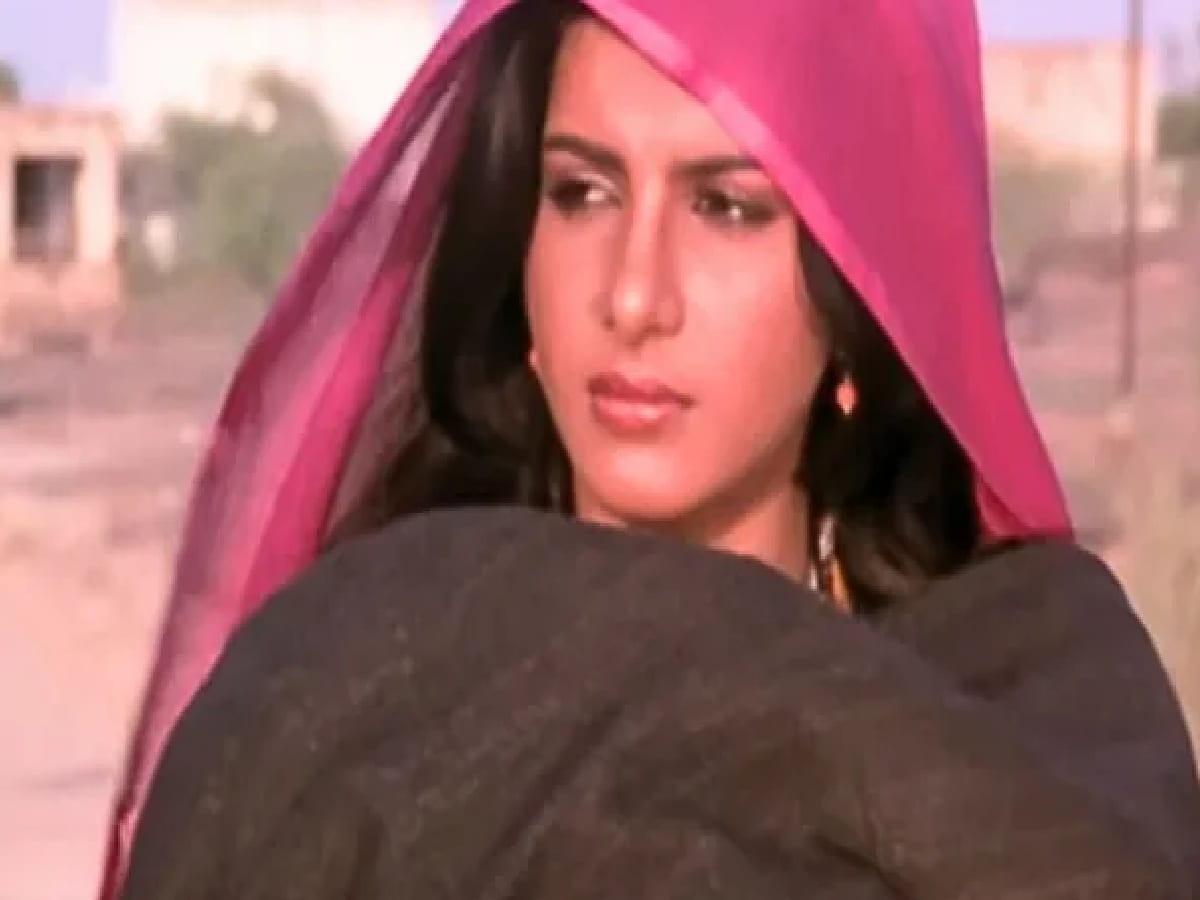
Many such songs have been composed in the Indian cinema and Hindi music world which cross the boundaries of generations and become immortal, but the great Oscar and Grammy winning lyricist Gulzar Sahab, four decades ago, created a unique Shahkar whose roots are not 100 or 200 years from today, but are linked to seven centuries old rich history. In the year 1985 when veteran filmmaker J. When the blockbuster action-drama film 'Gulaami', directed by P. Dutta, was released, one of its songs forced the whole of India to dance to its spiritual tune. This song was none other than the timeless track 'Jihaal-e-Miskin Makun Baranjish' recorded in the melodious voices of Swar Kokila Bharat Ratna Lata Mangeshkar and famous playback singer Shabbir Kumar. This song, which has undisputedly been on the top of the playlist of Indian music lovers for the last 41 years, was actually composed after being inspired by the immortal lines of a very rare and historical composition of the great Sufi mystic, poet and musician of the 14th century, Amir Khusro.
Amir Khusro, the most favorite follower of fourteenth century renowned Sufi saint Hazrat Nizamuddin Auliya and known as 'Tutiye-Hind', had set a unique example of linguistic experiment in his famous ghazal, in which one line was written in Persian language and the other line was written in typical Braj language i.e. Hindavi. Khusro's native Misra was-'Jihal-e-miskin makun tagaful, duare naina banaye battiyan; That the time of Hijran is not visible, why don't you take it and put up the umbrellas?which meant don't ignore my helplessness, don't make things up by turning a blind eye. Gulzar Sahab lifted the soul of the main character from this seven hundred years old classical heritage and weaved a new story by making some creative changes in it as per the need of the love story and script of the film 'Gulaami' –'Jihal-e-miskin makun baranjish, bahal-e-hijran poor heart hai; 'Whose heartbeat is heard, your heart or our heart'which the music composer duo Laxmikant-Pyarelal made evergreen with their captivating music.
When Nagma was shot on superstar Mithun Chakraborty and beautiful actress Anita Raj in the film 'Gulaami', based on the backdrop of the scorching sands of the desert and the rebellion against feudal oppression, the audience felt a wonderful confluence of love and helplessness on screen. J. Directed by P. Dutta, this multi-starrer film had a strong cast of veteran actors like Dharmendra, Naseeruddin Shah, Kulbhushan Kharbanda, Smita Patil, Reena Roy, Raza Murad and Om Shivpuri, but this romantic song gave a sensitive emotional depth to the film. This cult song, released 41 years ago, is equally relevant in today's digital age, the proof of which is that modern Bollywood musicians have created many new remixes and recreated versions of it, which continue to trend among today's young generation and on social media reels.
This song has been on the lips of every Indian music lover for four decades, but due to the complex words of Persian and Urdu, very few people are aware of its hidden spiritual and emotional meaning. In this song, the word 'Jihal' is derived from 'Haal' which means 'condition or condition', while the literal meaning of 'Miskin' is 'deserted, helpless, poor or destitute', and 'Baranjish' means 'displeasure, rivalry or distance'. Therefore, the direct meaning of the entire line 'Jihal-e-Miskin Makun Baranjish' is that “Looking at my helplessness, helplessness and pitiful condition, do not be angry with me and do not hold any grudge or grudge against me.” Similarly, in the next episode 'Bahal-e-Hijran Bechara Dil Hai', 'Hijr' means 'separation or separation', the meaning of which is that “My poor heart is already bleeding and in a bad condition due to the unbearable pain of separation and the heat of separation.” In short, this is the painful plea of a suffering lover who requests his beloved to understand his helplessness and not to inflict the torture of his indifference on her.