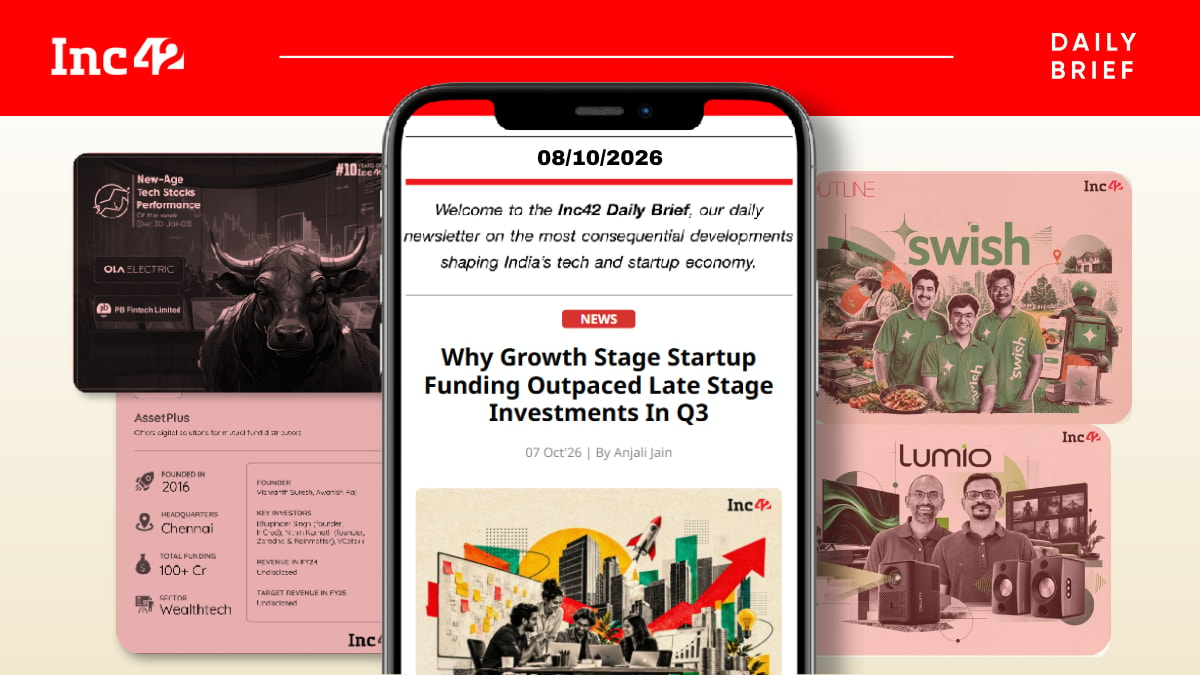
Late Stage VCs Turn Risk Averse In Q3
Indian startup funding stabilised in Q3, but investor appetite split sharply. The quarter saw capital deployment skew heavily toward mid to growth stage startups while mature, late stage ventures faced headwinds. So, is the Indian startup funding engine re-wiring itself?
The Growth Mania: Growth stage funding zoomed 46% YoY to $1.1 Bn in Q3, with median ticket sizes up 4% YoY to $8.3 Mn. This was driven by a surge in early stage domestic funds and expanding pipelines from micro VCs. Besides, investors also favoured mid-stage startups because the latter offer significant headroom for expansion and lower valuation risk.
The Late Stage Dip: Conversely, late stage funding stalled at $994 Mn in Q3 2026, down 10% YoY. This came as big VC firms pulled back. Macroeconomic shifts, attractive US treasury yields, and lingering high valuations from prior funding booms also forced investors to exercise extreme caution. Investors demanded profits, clear paths to IPOs, and milestone-linked tranche structures before committing capital.
The Sectoral Divergence: Nevertheless, Q3 saw funding mix tilt toward frontier technologies. AI emerged as the top-funded sector with $438 Mn, followed by cleantech at $433 Mn and deeptech at $290 Mn. In contrast, fintech and ecommerce funding fell 11% and 31% YoY, respectively. Experts say these newer sectors have longer gestation periods, prompting investors to back them earlier and wait for validation before committing larger sums.
The Road Ahead: Industry insiders believe that unlocking the next funding wave will hinge on the commercial success of the current growth stage pipeline in deeptech and AI. They also see successful IPOs, profitability and realistic valuations becoming the catalyst for restoring institutional confidence and paving the way for more late stage capital going forward.

As Indian startup funding enters its mature era, why did the investors suddenly turn cautious on mature bets in Q3 2026? Let’s find out…
From The Editor’s Desk
🥗 Swish Takes On Swiggy & Zomato
- The quick food delivery startup has forayed into the conventional food delivery business with Swish Go. The new feature allows users to order food from external third-party restaurants and cloud kitchens.
- The new service is being piloted in select pincodes in Bengaluru and is being advertised as an offering with no packaging and platform fees. Swish has onboarded QSR brands like Nothing Before Coffee, Mealy, Taaka Chinese, among others, for Go.
- Founded in 2024, Swish operates its own cloud kitchens to offer food delivery within 15 minutes. With presence in 50+ pincodes across Bengaluru, Gurugram, Noida, Delhi, and Ghaziabad, the startup has raised $78 Mn in funding to date.
💰 Lumio Bags $12 Mn
- The consumer electronics manufacturer has raised around ₹102.5 Cr in its Series A round led by Blume Ventures to further invest in its products and software stack, explore new categories and expand its retail presence and after-sales network.
- Founded in 2024, Lumio sells smart TVs, projectors and speakers. The startup has also created an AI-powered personalised content discovery engine called TLDR. It claims to serve over 35,000 households and crossed ₹100 Cr in GMV within 13 months of launch.
- The startup competes with the likes of established players like Samsung, LG, Sony and Xiaomi in India’s consumer electronics market. The space is projected to become a $158.4 Bn opportunity by 2034.
🛒 Ex-Flipkart Execs Seek Exit
- Multiple former senior executives of the ecommerce giant, including Mukesh Bansal and Sanjay Baweja, have urged Walmart to buy back their vested ESOPs amid uncertainty over Flipkart’s public listing plans.
- The former executives argue that leaving Flipkart should not disqualify them from accessing the value of their stock options. Meanwhile, Walmart said it would examine the concerns and reiterated that IPO remains part of Flipkart’s strategic roadmap.
- The development comes three months after Flipkart announced an ESOP buyback programme for active employees. The liquidity event valued the ecommerce major at $38.2 Bn, but did not offer the former executives a route to monetise their holdings.
🛵 Ola Electric’s ₹1K Cr Rights Issue
- The EV maker has set an issue price of ₹27 per share for its upcoming rights issue, a discount of more than 5% to its last closing price. The issue, which comprises 37 Cr partly paid-up shares, will open for subscription on October 22 and close on October 30.
- Existing shareholders will be entitled to two rights shares for every 25 fully paid-up shares. Investors will pay ₹16.20 per share upfront, while the remaining ₹10.80 will be collected through a first and final call.
- The fundraise comes a few months after Ola Electric raised ₹780 Cr a QIP in June, making this the EV maker’s second major capital raise of 2026. The corpus will be used to finance operations, reduce leverage and support its expansion plans.
⚛️ Quanfluence Nets $10 Mn
- The quantum compute startup has raised around ₹92 Cr in a round led by Chiratae Ventures to ramp up hiring and further develop its full-stack photonic quantum computing system. The startup plans to roll out larger quantum machines by 2029.
- Founded in 2021, Quanfluence has already commercialised its quantum-inspired optical Ising machine that uses light waves as computational units. The startup claims to have sold around three machines and currently runs paid pilots with 10-15 corporations.
- The funding comes as investors bet on quantum startups, which are moving towards commercial and industrial applications. While the space is still in its infancy, the Centre has announced a dedicated fund to further fuel the local quantum ecosystem.
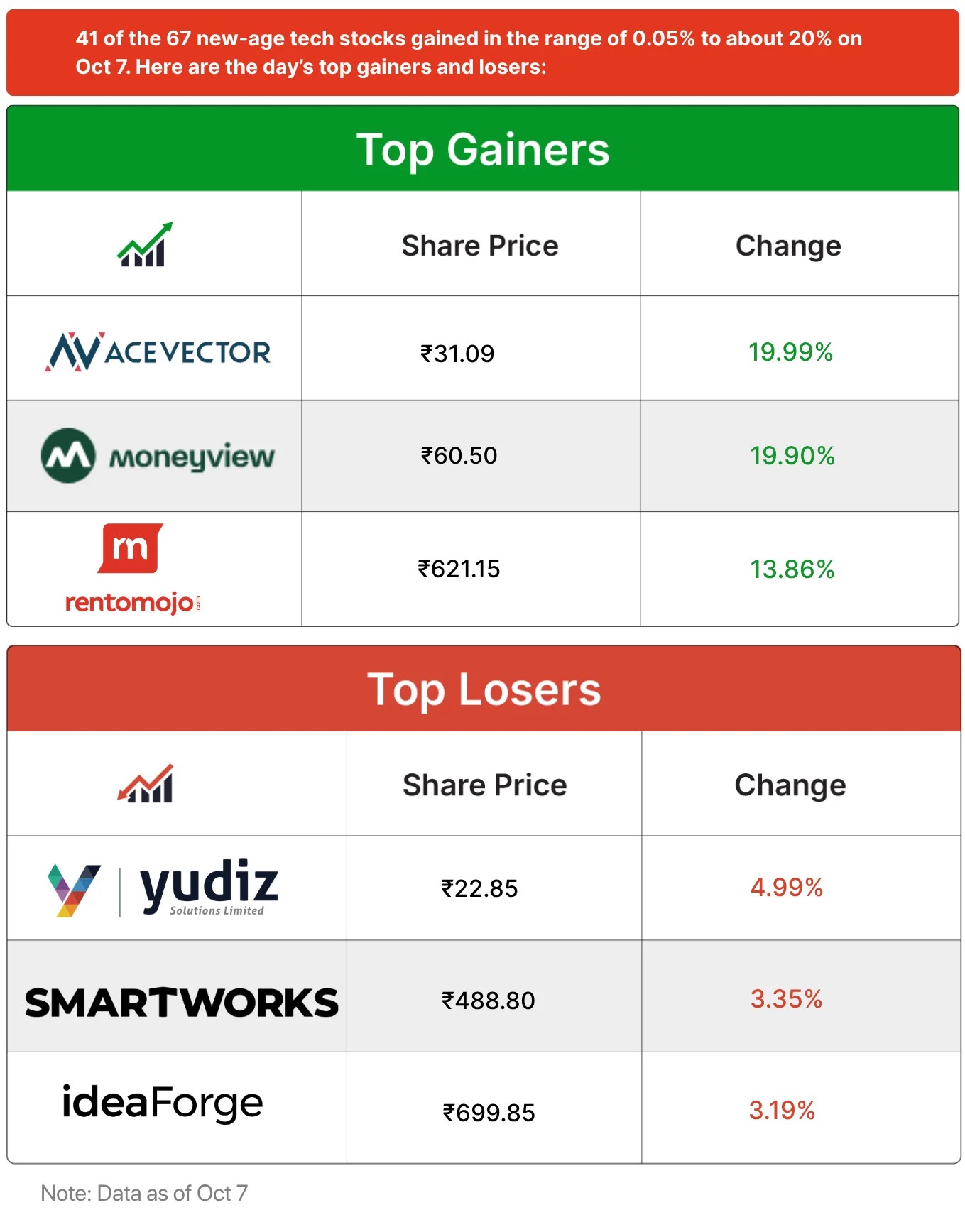
Inc42 Markets
Inc42 Startup Spotlight
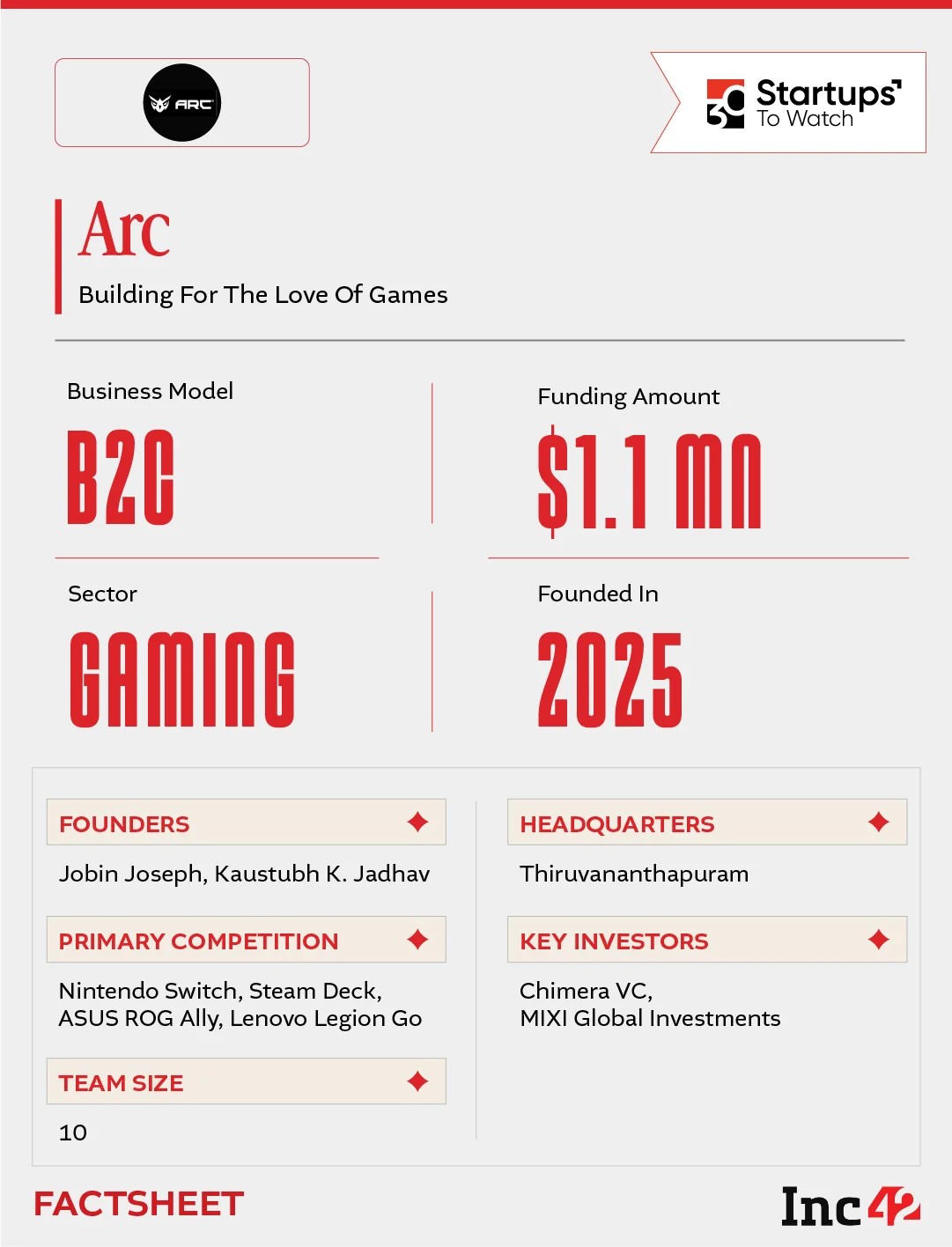
Can ARC Put India On The Handheld Gaming Map?
Indian gamers looking beyond smartphones often have few choices: either buy an expensive imported handheld or commit to the fixed PC setup. ARC is trying to close this gap with a local portable gaming system built around Qualcomm hardware and its own operating system.
Gaming For India: Founded in 2025, the Bengaluru-based startup is developing the ARC X1, a dedicated gaming device designed to combine mobile convenience with console-style controls. It is built on Qualcomm’s Snapdragon G2 platform and runs its proprietary Android-based ‘Owl’ operating system.
Hardware Meets Portability: The X1 features a 7-inch Full HD display with a 120Hz refresh rate, dedicated controls, custom haptics and a 9,300 mAh battery. Its ARM architecture is designed for power efficiency, while the software stack supports native Android games, PC-game compatibility and planned cloud and remote play. Meanwhile, OwlOS adds controller-first navigation, game discovery, performance optimisation and mapping tools.
Healthy Early Traction: ARC is offering the X1 at ₹29,500 to its early-access community, with the regular price set at ₹33,500. Ahead of the commercial rollout, the startup claims to have onboarded more than 50,000 users on its waitlist and 22,000 customers for beta opt-ins. Going forward, the startup has set its eyes on scaling product development and manufacturing.
With the homegrown gaming market projected to become a $9.9 Bn opportunity by 2031, can ARC turn early enthusiasm into a durable gaming ecosystem?
Infographic Of The Day
From beauty and wellness to snacking, Marico is tapping into acquisitions to steadily expand beyond its traditional categories. Here’s a look at the FMCG giant’s acquisition spree so far…
