
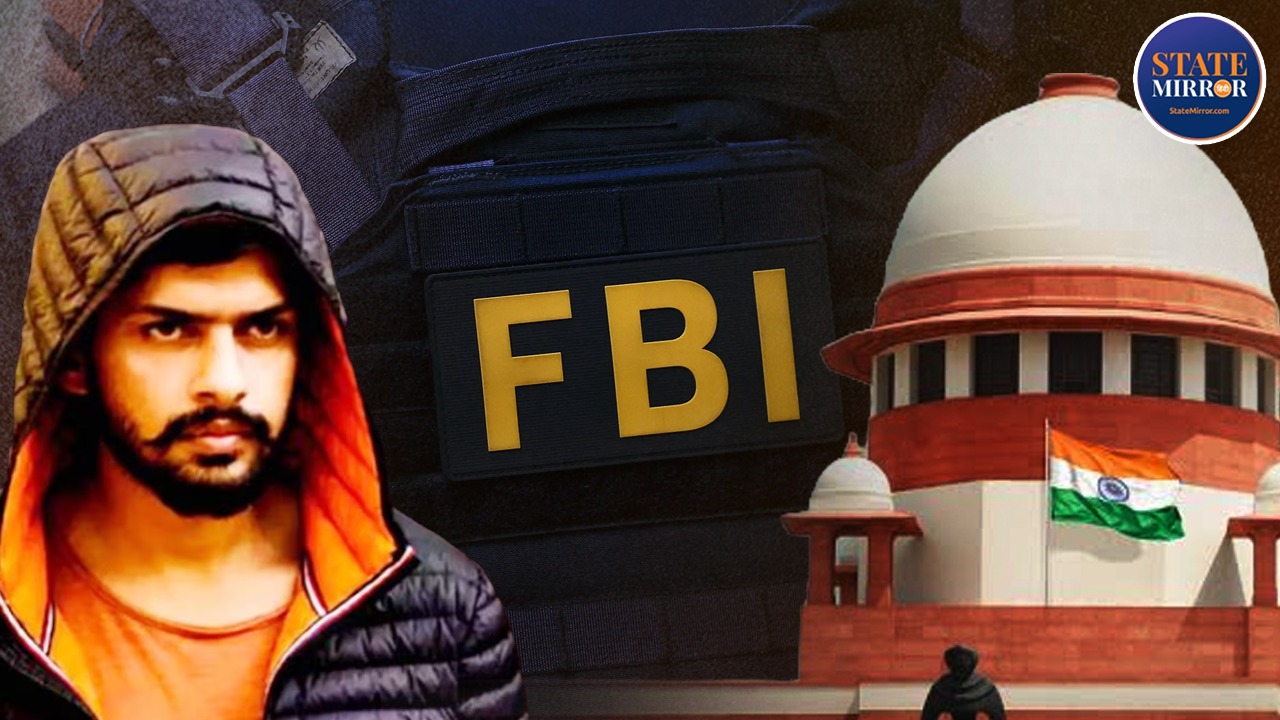
Lawrence Bishnoi Extradition: FBI investigation, India-US extradition treaty and law… Can America demand Lawrence?

Amidst the investigation of cases related to Khalistani activities in Canada and America, the name of gangster Lawrence Bishnoi is once again in the headlines at the international level. After the action of the US investigative agency FBI and the US Department of Justice (DOJ), questions are being raised that if America gathers enough evidence against Lawrence Bishnoi, will it be able to extradite him from India? extradition Can make a formal demand for extradition? Will it be legally mandatory for India to hand him over to the US or will the Indian courts and government have the final say? Let us understand the complete legal mathematics on the basis of India-US Extradition Treaty, Indian law and international rules.
Is the FBI investigation enough?
No. Mere initiation of investigation by the FBI or any other US investigative agency does not constitute grounds for extradition. America will first have to prove that a crime has been registered against the accused for which there is sufficient evidence. Usually, documents like indictment, arrest warrant issued by the court or judicial order are also required. That means investigation and extradition are two different legal processes. The report of the investigating agency does not automatically give the right to extradite any person from another country.
Can America demand?
Yes. If the US Justice Department believes that Lawrence Bishnoi has committed a serious crime under US law or has been involved in a conspiracy to commit a crime that impacts US jurisdiction, it can send a formal extradition request to the Government of India. America has also taken action against accused sitting abroad under laws like RICO Act in cases related to organized crime. But sending a request and its acceptance are two different things.
What does the treaty say?
Extradition treaty is in force between India and America. Under this treaty, both the countries can seek extradition of accused from each other in serious criminal cases. However, not every demand is automatically accepted. The crime for which extradition is being sought must be a crime under the laws of both countries. This is called the principle of Dual Criminality. This condition is generally fulfilled in cases like murder, conspiracy to murder, extortion, drug smuggling and organized crime.
Will India oblige?
no way. Having an extradition treaty does not mean that India is bound to accept every American request. India conducts legal review of each case. If there are serious cases pending against the accused in India, there are national security concerns or public interest is affected, India may defer or even reject extradition. The final decision depends on Indian law and the discretion of the government.
Who will have the final decision?
The extradition process in India runs under the Extradition Act, 1962. First of all the court sees whether the legal conditions necessary for extradition are fulfilled or not. Even if the court gives a favorable opinion, the final decision remains with the central government. After reviewing the entire case, the Ministry of External Affairs and the Ministry of Home Affairs decide whether the accused should be handed over to another country or not.
Impact of the case in India?
This is the most important aspect of the Lawrence Bishnoi case. He has been lodged in various high security prisons in India since 2015 and several cases are pending against him for murder, extortion, organized crime and other serious cases. According to Indian law, if there are serious criminal cases going on in the country against any accused, then India can complete its judicial process first. In many cases, extradition is considered only after completion of the sentence.
Can America interrogate India?
Yes. If the governments of both the countries agree, then India and America can cooperate in the investigation under Mutual Legal Assistance Treaty (MLAT). Through this system, documents, digital evidence, bank records and other investigation related information can be shared. If necessary, the investigation can proceed through interrogation or video conferencing in the presence of Indian agencies. Therefore, in every case it is not necessary for the accused to go to America.
Meaning of Red Corner Notice?
Interpol’s Red Corner Notice is not an order for extradition. It only alerts member countries to the location and arrest of an accused. Even after this, the process of law, court and government of the concerned country has to be completed. Therefore, issuance of Red Corner Notice does not mean that the accused will be immediately sent to another country.
Can America take it directly from jail?
No. No foreign agency has the right to take the accused directly from the Indian jail. This is not possible without India’s permission, court process and approval of the Central Government. Extradition is a purely legal and diplomatic process between two sovereign countries.
What are America’s allegations?
The US Department of Justice (DOJ) has taken action against Lawrence Bishnoi and his alleged network under charges related to organized crime, conspiracy to commit murder, drug trafficking and international criminal activities. Only if a formal indictment and judicial process proceed based on these allegations will the extradition request be considered legally sound.
Why can India stop?
India can stop extradition on many grounds. If the evidence is not sufficient, the crime does not fall within the terms of the treaty, there are cases pending against the accused in India, national security is affected or the request is not in accordance with the law, India can reject it. Apart from this, if India wishes, it can continue investigation related cooperation with America by prosecuting the accused in its own country.
Have extraditions taken place before?
Yes. There have been several extraditions between India and the US in the past, but each case has gone through a different legal process. In many cases, hearings went on in the courts for years, after which the government took the final decision. It is clear from this that extradition is not a quick administrative decision but a long judicial and diplomatic process.
Will Lawrence have to hand over?
At present it is too early to say so. Even if US agencies frame formal charges in the future and America demands the extradition of Lawrence Bishnoi from India, it will not be mandatory for India to hand him over. The final decision will be taken keeping in mind the India-US Extradition Treaty, Extradition Act 1962, available evidence, cases pending in Indian courts, national interest and diplomatic relations between the two countries. Therefore, assuming that Lawrence Bishnoi’s extradition is certain based only on the FBI investigation or US allegations would not be a legally correct conclusion.
Which criminals have been extradited between the two so far?
The Extradition Treaty (India–US Extradition Treaty) came into force between India and America in 1997, under which both the countries can extradite accused in serious criminal cases on each other’s request. However, this process does not happen automatically. In every case, the court, the laws of both the countries, the available evidence and the approval of the governments play an important role. In many cases this process continues for years.
Which accused did America hand over to India?
After the implementation of the 1997 extradition treaty between India and America, in many cases America has sent the accused to India on India’s request. According to the Ministry of External Affairs (MEA), between 2002 and 2018, the US extradited 11 fugitive accused on the request of India. These included those accused of terrorism, murder, financial fraud, child sexual abuse and other serious crimes.
One of the most famous cases includes the name of Tahawwur Hussain Rana, who was cleared for extradition to India after a long legal process on charges of conspiracy in the 26/11 Mumbai terror attacks. Apart from this, America also handed over many accused wanted in bank fraud, economic crimes and other cases to India from time to time.
US agencies had cooperated with Indian investigative agencies in the alleged human trafficking case involving Shamsher Singh (brother of singer Daler Mehndi). However, this case was not directly related to extradition but to investigation cooperation and immigration action.
At the same time, some popular requests of India could not be successful. America did not extradite David Coleman Headley to India due to its prosecution and Plea Agreement. Similarly, in the case of Warren Anderson (Bhopal gas tragedy), India could not get extradition.
According to the information given in Parliament, many extradition requests from India are still pending with America. Goldy Brar’s name has also been discussed in such cases in media reports.
Which accused did India extradite to America?
India has also handed over many accused to America under the India-US extradition treaty. These include those accused of international drug trafficking, cyber crime, money laundering, financial fraud and call center fraud involving American citizens.
In the famous cases, the name of Aman Vyas is taken, who was sent abroad after the completion of the legal process in the international murder case. Apart from this, the accused of several IRS call center scams and cyber fraud gangs targeting American citizens based in India were also extradited to America after the approval of the courts.
Many foreign and Indian accused involved in drug smuggling and money laundering were also handed over to US agencies after the approval of Indian courts and the central government.
Action also taken in drugs and money laundering cases
In cases related to international drug syndicate, money laundering and organized crime, India has also sent the accused to America after completion of the legal process on American requests. In these cases the court ensures that all the terms of the treaty are fulfilled and the rights of the accused are also protected.
Is every extradition request accepted?
No. Despite the India-US extradition treaty, not every request is accepted. The courts of both the countries first look at whether the crime is punishable under the law of both the countries, whether there is sufficient evidence and whether other conditions of the treaty are fulfilled or not. Even after this, the final decision remains with the concerned government. This is the reason why decisions in many extradition cases take years.

Comments are closed.