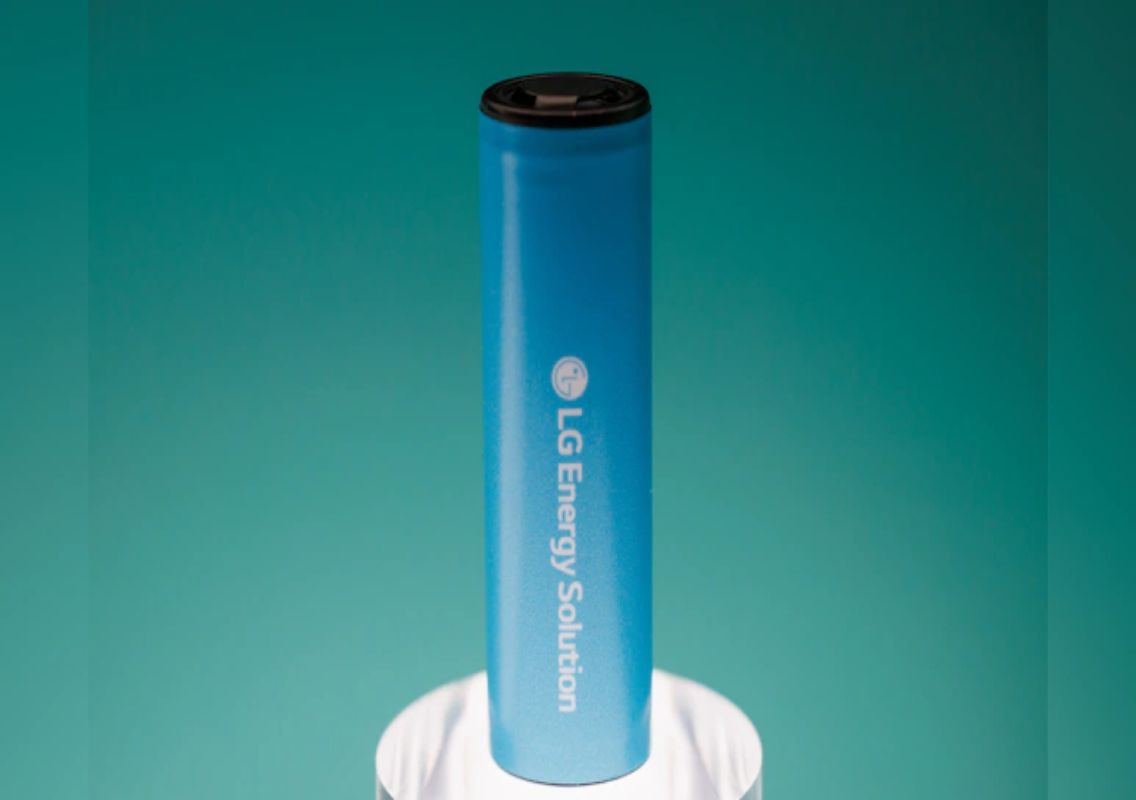
Seoul: LG Energy Solution Ltd. is exploring opportunities to supply batteries for US military drones and other unmanned weapons systems as the South Korean battery maker seeks new growth areas amid weaker-than-expected electric vehicle demand.
The company has received inquiries from several potential US government and defence-industry partners about supplying batteries for drones, according to Bob Lee, president of LG Energy Solution’s North American operations. While discussions remain at an early stage, the potential move could represent a major strategic shift for the LG group, which has historically avoided the defence sector.
The development comes as demand for military hardware and unmanned systems grows in the US, while the battery industry’s expectations for rapid electric vehicle adoption have been tempered. LG Energy Solution is consequently restructuring its North American manufacturing footprint, shifting capacity originally intended for EV batteries towards energy storage systems and potentially defence applications.
LG Energy sees opportunity in defence market
Lee said LG Energy Solution has received multiple enquiries regarding defence-related battery applications.
The company is approaching the opportunity cautiously, given its historical distance from the defence industry. However, Lee acknowledged that defence has become an increasingly important source of funding and business opportunities.
The potential expansion would allow LG Energy Solution to diversify beyond its traditional automotive customer base. Batteries are a critical component of modern unmanned systems, including drones, because they directly influence flight time, payload capacity and operational flexibility.
For LG, entering the market could also create an additional outlet for battery manufacturing capacity as automakers in North America reassess their EV strategies.
EV slowdown forces battery makers to adapt
The potential defence push comes against the backdrop of a significant change in the North American battery market.
Automakers had previously announced ambitious plans to increase EV production, prompting battery manufacturers to build large factories across the United States. However, slower-than-expected EV adoption has forced several companies to reconsider those investments.
LG Energy Solution has responded by shifting a substantial portion of its North American business towards energy storage systems.
According to Lee, energy storage has now become the majority of LG Energy Solution’s US business, while EV batteries remain dominant in markets outside the country.
The company has repurposed five of its eight North American plants that were initially developed primarily for EV battery production. Those facilities are being adapted to manufacture batteries for stationary energy storage.
AI data centres create new battery demand
One of the major drivers behind LG’s energy storage expansion is the rapid growth of artificial intelligence infrastructure.
AI data centres require enormous amounts of electricity and are increasing demand for new power-generation and grid infrastructure. Energy storage systems can help utilities and businesses manage fluctuations in electricity supply and demand while supporting increasingly complex power networks.
LG Energy Solution therefore sees stationary energy storage as a major growth opportunity.
Lee expects the company’s energy storage business in the US to become profitable by the end of the year.
The shift could help LG make better use of factories that might otherwise have faced lower utilisation because of weaker EV demand.
Lansing plant gets major Tesla order
LG Energy Solution is also expanding its presence in the US energy storage market through its Lansing, Michigan, facility.
The company recently held a ceremony marking the opening of the plant, which was developed through a partnership with General Motors.
The Lansing facility is expected to supply around $4.3 billion worth of lithium-iron-phosphate battery cells for Tesla’s Megapack energy storage systems beginning in 2027.
The contract represents a major step for LG in the stationary energy storage market.
The plant is expected to reach annual production capacity of approximately 35 gigawatt-hours by the end of next year.
The factory will also produce nickel-based battery cells for Toyota vehicles.
Production reshuffle highlights changing US market
LG Energy Solution is simultaneously reorganising production between its American facilities.
The company has transferred a $1.5 billion Toyota order from another facility in Holland, Michigan, to the Lansing plant.
The Holland site will subsequently manufacture energy storage cells for Michigan utility DTE Energy.
The reshuffling demonstrates how battery manufacturers are trying to match factory output with changing demand.
Rather than abandoning plants built during the EV boom, manufacturers are increasingly adapting them to alternative applications.
This approach could reduce the financial pressure created by lower-than-expected EV battery demand while allowing companies to benefit from the rapid expansion of energy storage.
US drone tariffs could accelerate domestic supply
The potential move into defence batteries also comes as the US seeks to reduce dependence on overseas drone supply chains.
The Trump administration has announced tariffs of up to 100% on imported drones and their components.
The measures could encourage greater domestic production of drones and their key components, including batteries.
That creates a potential opportunity for manufacturers such as LG Energy Solution, particularly if American defence contractors and government agencies seek locally produced battery technology.
The shift also reflects growing concerns in Washington over China’s dominance of the global drone and battery supply chains.
China remains a major battery competitor
China is a significant competitor in both the battery and energy storage industries.
LG Energy Solution is particularly concerned about Chinese companies’ access to the US energy storage market, where restrictions are currently less extensive than in the EV battery sector.
Lee said he raised the issue with US Interior Secretary Doug Burgum, who attended the Lansing plant ceremony.
According to Lee, greater scrutiny of Chinese batteries used in energy storage systems is justified because of national security considerations.
He argued that the US should reduce its reliance on overseas battery suppliers and develop a more self-reliant domestic supply chain.
The issue is becoming increasingly important as energy storage becomes more closely connected to critical infrastructure and electricity networks.
South Korean battery companies repurpose factories
LG Energy Solution is not alone in adapting its US manufacturing strategy.
Other South Korean battery manufacturers are also changing production plans following weaker EV demand.
Samsung SDI is acquiring General Motors’ stake in an Indiana battery venture and converting the facility towards energy storage production.
SK On, the battery division of SK Innovation, is also preparing a Tennessee plant for stationary battery production. The facility had originally been developed through a partnership with Ford that has since been discontinued.
These changes demonstrate how rapidly the battery industry’s priorities are shifting.
The EV market remains important, but manufacturers are increasingly looking towards energy storage to balance demand.
Defence expansion could open another market
For LG Energy Solution, defence batteries could eventually become another diversification opportunity.
Drones are increasingly being used for surveillance, reconnaissance, logistics and military operations. Battery performance is particularly important for electric unmanned aircraft because improvements in energy density can extend operating time and increase mission flexibility.
However, LG’s potential involvement remains preliminary.
The company has not announced a confirmed defence contract, and discussions with potential US partners are still in their early stages.
Any expansion into defence would also require LG to navigate government procurement requirements, security considerations and the political sensitivity associated with supplying military equipment.
LG shares rise despite broader market weakness
Investors appeared to respond positively to the company’s diversification strategy.
LG Energy Solution shares rose 1.9% in Seoul, even as South Korea’s benchmark Kospi index recorded its sharpest decline of the month.
The market reaction indicates that investors may view the company’s expansion into energy storage and potentially defence as a way to reduce its dependence on the increasingly uncertain EV battery market.
The success of that strategy, however, will depend on how quickly new businesses can become profitable and whether demand for energy storage remains strong.
US-South Korea tensions add complexity
LG’s expansion in the United States is taking place against a complicated backdrop in US-South Korea relations.
Trade and security issues have created tensions between Washington and Seoul, even as Korean companies continue to receive major orders from American customers.
The US administration has also pressed South Korea over its investment commitments in America.
Despite those tensions, Korean industrial companies remain important suppliers to the US market.
The defence sector provides another example. Hanwha Aerospace has been selected by the US Army to supply its new Mobile Tactical Cannon under a deal worth up to $262 million, with the agreement potentially developing into a larger programme to replace the Army’s ageing M777 towed howitzers.
Battery oversupply concerns remain limited
Despite the rapid expansion of battery manufacturing capacity, analysts do not currently expect significant long-term oversupply in the US market.
Michael Sanders, senior adviser at research firm Avicenne Energy, said there is a very limited chance of excess battery capacity in the US through 2035 or 2040.
The key uncertainty, he said, is the duration of the current data centre investment boom.
Even if demand from AI infrastructure eventually slows, Sanders believes the combination of energy storage and EV demand should continue supporting battery manufacturing.
That outlook provides some reassurance for companies such as LG Energy Solution, which are investing heavily in US production.
A broader strategic transformation
LG Energy Solution’s potential move into defence batteries is part of a much larger transformation within the global battery industry.
The sector was built largely around the expectation that EV adoption would accelerate rapidly. While EVs remain a major long-term market, slower adoption in some regions has forced manufacturers to rethink their expansion plans.
Energy storage has emerged as one of the most attractive alternatives.
Defence applications could provide another specialised market, particularly in the US, where policymakers are increasingly focused on securing domestic supply chains for strategically important technologies.
For LG Energy Solution, the combination of EV batteries, energy storage and potentially defence applications could create a more diversified business model.
Conclusion
LG Energy Solution is exploring supplying batteries for US drones and other unmanned defence systems as it looks for new growth opportunities amid weaker-than-expected EV demand.
The discussions are still at an early stage, and no major defence contract has been confirmed. However, the company’s interest marks a notable change for an LG group that has historically avoided the defence industry.
At the same time, LG is aggressively expanding its energy storage business. Five of its eight North American plants originally built for EV battery production have been repurposed for energy storage, while the Lansing facility is preparing to supply approximately $4.3 billion worth of battery cells for Tesla’s Megapack systems from 2027.
The US push for stronger domestic drone and battery supply chains could provide another opportunity for LG. With tariffs on imported drones reaching as high as 100% and concerns about China’s role in strategic supply chains increasing, American demand for locally manufactured battery technology could grow.
For LG Energy Solution, the emerging defence opportunity is therefore less about abandoning its EV business and more about building a diversified battery portfolio that can withstand changing demand across transportation, energy infrastructure and potentially military applications.