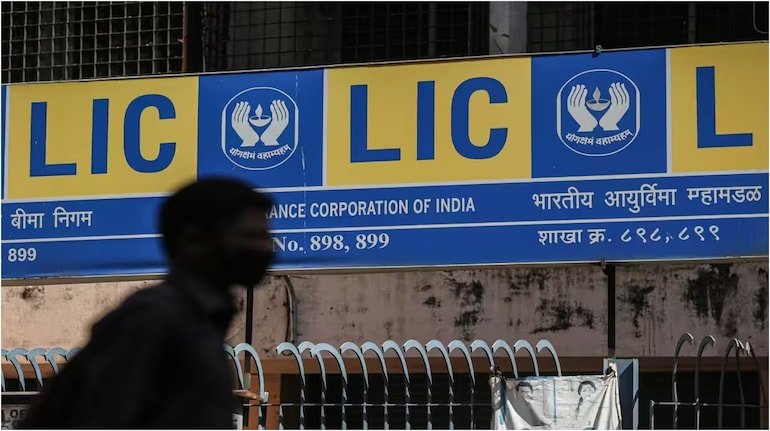
A major development came to light in the country's financial and banking world on Saturday, when the Reserve Bank of India (RBI) gave formal approval to the country's largest life insurance company Life Insurance Corporation of India (LIC) to increase its total stake in the second largest private sector lender ICICI Bank to 9.99 percent. ICICI Bank has confirmed this important decision in an official regulatory filing sent to the stock exchanges under Rule 30 of the 'Listing Obligations and Disclosure Requirements' (LODR) Regulations, 2015 of the Securities and Exchange Board of India (SEBI). According to the bank, this official letter from the Central Bank was received on 4 September 2026. Under this approval, LIC is now authorized to acquire up to 9.99 percent of the paid-up share capital or voting rights of ICICI Bank through open market or other legal means. As per the shareholding pattern for the quarter ended June 2026, LIC's current stake in ICICI Bank is 4.35 per cent, which is valued at around Rs 45,447 crore as per the current market valuation. After getting this green signal from RBI, the way is now completely clear for the government insurance giant to more than double its stake in the private bank. Fixed deadline of 1 year: The process of stake purchase will have to be completed by September 4, 2027. In the approval letter issued by RBI, a very strict deadline and some statutory conditions have also been set for this process of increasing the stake. According to the guidelines of the Central Bank, this permission is not for indefinite period, but LIC will have to complete the entire process of stake acquisition within exactly one year from the date of issue of RBI letter i.e. by 4 September 2027. If LIC is unable to acquire shares up to 9.99 per cent within this stipulated 12 month time frame or is unable to complete the process, then this in-principle approval given by the Reserve Bank will automatically stand cancelled. Further, both the Bank and LIC will have to ensure that the proportion of LIC's total paid-up capital or voting rights in the Bank does not at any time violate the upper limit of 9.99 per cent. Market experts also clearly say that this approval of RBI is an 'enabling provision'; This does not at all mean that LIC will immediately buy all the shares as soon as the market opens on Monday. LIC will decide to increase its stake gradually in a phased manner, keeping in mind its internal investment board, valuation and market fluctuations. Big bet on ICICI Bank after HDFC Bank: LIC's increasing confidence in private banking giants This is not the first time that the country's government insurance company has made a strategy to take its shareholding in a top private bank to close to 10 percent. Just a few weeks ago, in August 2026 itself, the Reserve Bank had given special permission to LIC to increase its stake in the country's largest private bank HDFC Bank to 9.99 percent. At that time LIC held about 4.11 percent of the total share capital of HDFC Bank. Now, soon after HDFC Bank, getting approval to increase stake in ICICI Bank from 4.35 percent to 9.99 percent is a clear indication that the government insurance company is continuously strengthening its trust in India's strong and fast growth private banking giants. Corporate analysts believe that in view of the expansion of the Indian economy and increasing market share of private banks in credit growth, LIC wants to deploy its huge premium funds in safe and high dividend yielding blue chip banking stocks. ICICI Bank's recent financial performance, improving asset quality and strong return on equity (RoE) make it a very attractive option for LIC's long-term portfolio. What are the shareholding rules of RBI? Why is Central Bank's permission required on 5% and 10%? Under the banking regulation rules of India, very strict guidelines have been set regarding ownership and control of shares in any Scheduled Commercial Bank. As per the existing shareholding and voting rights rules of the Reserve Bank of India, if any single investor, institution, corporate house or financial institution wishes to acquire 5 per cent or more of the paid-up share capital or voting rights in a private bank, it is mandatory to obtain prior approval from the central bank under the Banking Regulation Act. This maximum limit for general financial investors in the non-promoter category is generally set at 10 percent, while in some special cases, large institutional investors are allowed up to 15 percent. Since LIC already held a majority stake of 4.35 per cent in ICICI Bank, LIC had to make a formal application to the RBI to cross the 5 per cent limit and get closer to the regulatory ceiling cap of 10 per cent. The central bank grants such sensitive permissions only after examining the investor's financial credentials, corporate governance and banking stability standards. LIC's huge portfolio in the banking sector: Heavy investment in SBI, PNB and Axis Bank too. Life Insurance Corporation of India is the largest domestic institutional investor (DII) in the country's stock market. There is hardly any major government or private bank in the country's banking sector in which LIC does not have a major stake. According to Prime Database data, LIC holds a strong 8.47 percent stake in State Bank of India (SBI), the country's largest public sector bank. Apart from this, LIC's stake in Punjab National Bank (PNB) is at the level of 8.83 percent, which is very close to the regulatory limit. Whereas LIC has under its control 7.87 percent shareholding in other major private sector banks, Axis Bank and about 7.83 percent shareholding in Bank of India. LIC has been established as the largest promoter and shareholder in IDBI Bank for years. Now, by securing in-principle approval for 9.99 per cent stake each in the country's two largest private giants HDFC Bank and ICICI Bank, LIC is further strengthening its position as the most influential institutional investor in the entire banking landscape of India. What will be the impact on investors and stock market? How could the shares move on Monday? The impact of the news of this big regulatory approval can be clearly visible in the initial trading of the stock market on the first day of the coming trading week i.e. on Monday. In the last trading session i.e. on Friday, the shares of ICICI Bank had closed at the level of ₹ 1,423.20 with minor fluctuations. Whereas LIC shares closed at ₹ 415.35. Market experts believe that the possibility of increasing stake by LIC will provide strong institutional support to ICICI Bank's stock, due to which the stock may see a new flow of institutional buying in the coming days. When the country's largest insurance company increases its exposure to a bank, it sends a positive message to retail and foreign investors (FIIs) about the bank's financial health and future earnings prospects. However, before making any new investment in the stock market, investors must assess the bank's fundamentals, valuations and their personal financial risk appetite.