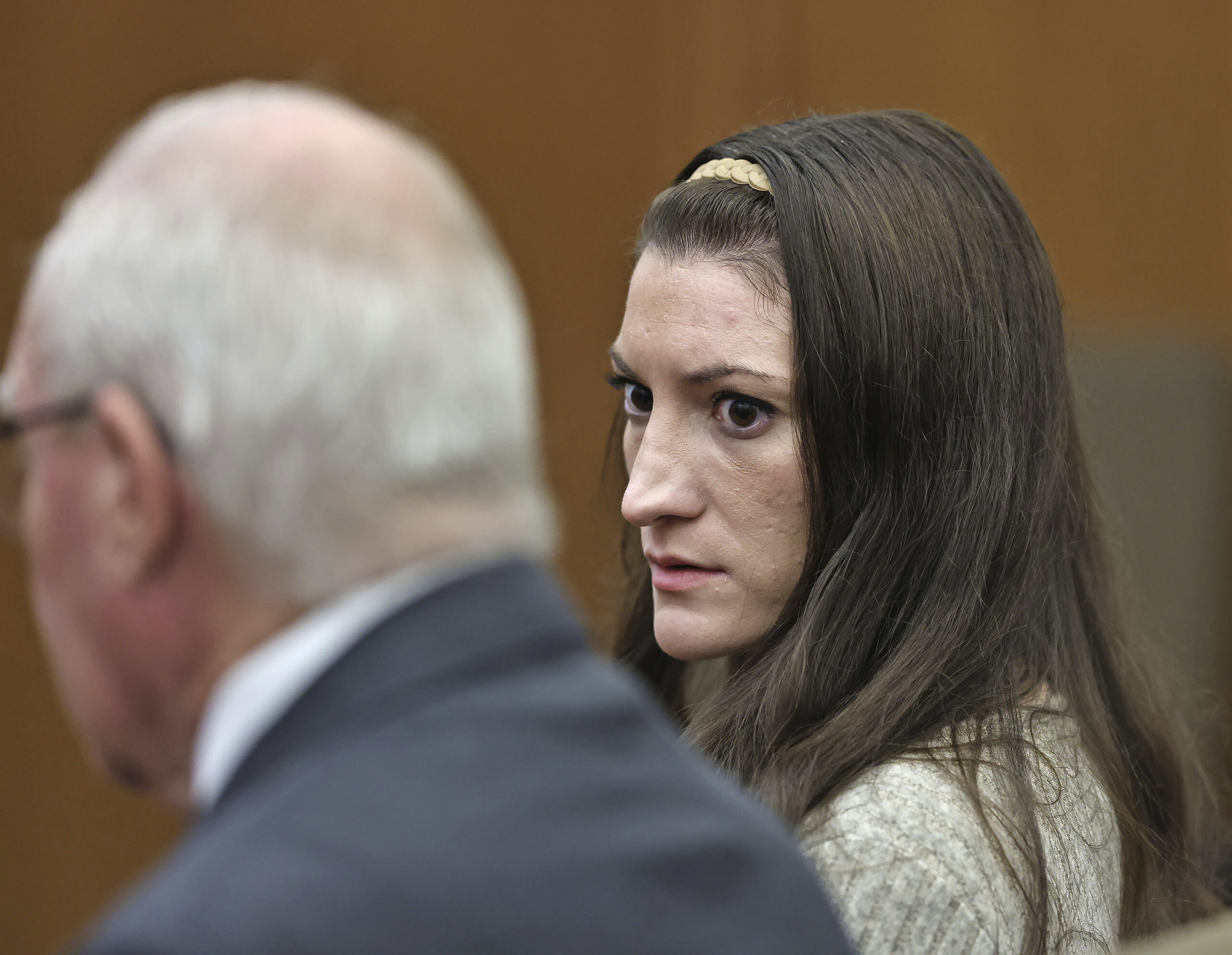
Lindsay Clancy Jurors Unable to Reach Unanimous Verdict, Deliberations Continue/ TezzBuzz/ WASHINGTON/ J. Mansour/ Jurors said they could not reach a unanimous decision on whether Lindsay Clancy was criminally responsible for killing her three children. The judge instructed the panel to continue deliberating after more than three full days of discussions. Clancy’s defense cites postpartum psychosis, while prosecutors argue that she understood her actions and consciously chose to kill the children.

Quick Look
- The jury reported its first apparent impasse Tuesday.
- Judge William Sullivan directed jurors to continue deliberating.
- The panel began deliberations Thursday afternoon.
- Clancy has pleaded not guilty by reason of lack of criminal responsibility.
- She does not dispute killing her three children in January 2023.
- The defense says postpartum psychosis caused her to lose contact with reality.
- Prosecutors argue that she understood her conduct and knew it was wrong.
- Jurors could return verdicts including murder, manslaughter or acquittal based on lack of criminal responsibility.
- A murder conviction could result in life imprisonment.
- An acquittal could still lead to confinement in a mental health facility following an evaluation.
- The trial included more than 80 witnesses and 300 exhibits.


Deep Look
Editor’s note
This story includes discussion of suicide. Anyone in the United States who needs immediate support can call or text the Suicide and Crisis Lifeline at 988.
Jury reports it cannot reach unanimous decision
Jurors in Lindsay Clancy’s murder trial told the court Tuesday that they had been unable to reach a unanimous decision on whether the Massachusetts mother was criminally responsible for killing her three young children.
It was the first time the jury indicated that deliberations had reached an impasse. The panel had been considering the case for more than three full days.
Clancy stared straight ahead when the jurors entered the courtroom and then looked toward them as Judge William Sullivan addressed the panel.
“I know that this was a long trial, all right,” Sullivan said. “I know there were over 80 witnesses. There were over 300 exhibits. But because of that, I’m going to ask you to go back out.”
The jurors then returned to their deliberations.
Criminal responsibility remains central issue
Clancy, a 36-year-old former labor and delivery nurse, does not deny killing Cora, Dawson and Callan Clancy at the family’s home in Duxbury, Massachusetts, in January 2023.
She has pleaded not guilty by reason of lack of criminal responsibility.
Her attorneys contend that postpartum psychosis caused her to lose contact with reality and prevented her from understanding the wrongfulness of killing her children.
Prosecutors argue that Clancy was depressed and suicidal but remained capable of understanding her actions. They say she made a conscious decision to kill the children before attempting to take her own life.
Jury considering several possible outcomes
Jurors could convict Clancy of murder or manslaughter. They could also find her not guilty because she lacked criminal responsibility at the time of the killings.
A murder conviction could result in a life prison sentence.
If Clancy is acquitted because of a lack of criminal responsibility, she would not necessarily be released. A judge could order her confined to a state mental health facility if an evaluation determines that she remains a danger to herself or the public.
Limited signs from deliberations
The jury began deliberating Thursday afternoon and offered little public indication of its discussions before reporting the impasse Tuesday.
On Friday, jurors asked to examine a knife Clancy used to cut herself and bags containing empty prescription bottles that investigators found in the home.
The requests did not reveal how jurors were evaluating the competing arguments about Clancy’s mental state or whether they were divided over the appropriate verdict.
Defense says Clancy lost touch with reality
Clancy’s lawyer argued that she had been a loving mother before her mental condition deteriorated after the birth of her third child.
The defense contends that postpartum psychosis caused Clancy to lose her grip on reality and on her sense of self.
In the months before the killings, Clancy sought help from several medical providers. She also admitted herself to a psychiatric hospital as her condition worsened.
Her mother and sister testified that Clancy became anxious, paranoid and suicidal.
A defense psychologist testified that Clancy did not recognize the “wrongfulness” of killing her children because of her mental illness.
Prosecutors argue killings were deliberate
Prosecutors presented a different interpretation of Clancy’s mental state.
They argued that she was depressed, exhausted and tired of living but understood what she was doing. The state contends that she chose to kill her children before attempting suicide because she did not want to leave them behind.
A forensic psychologist testifying for the prosecution said he reached that conclusion after reviewing the evidence.
Over more than four weeks, jurors heard conflicting assessments from medical experts about Clancy’s condition following the birth of her youngest child and whether she could be held legally responsible.
Three children killed inside family home
Less than three weeks after leaving the psychiatric hospital, Clancy sent her husband on an errand.
She then strangled Cora, 5, Dawson, 3, and Callan, 8 months, with exercise bands in the basement of the family’s home south of Boston.
Clancy subsequently jumped from a second-floor window. She survived but remains paralyzed from the waist down.
Clancy did not testify during the trial. She watched from the defense table and occasionally wept, including when prosecutors showed jurors autopsy photographs of the children.
Patrick Clancy testifies about discovering children
Jurors spent two days hearing testimony from Clancy’s former husband, Patrick Clancy.
They also listened to his anguished 911 call. He remained on the phone when he discovered the children’s bodies, minutes after finding Lindsay Clancy seriously injured outside the home.
The trial was the first time Patrick and Lindsay Clancy had seen each other since the killings.
Patrick Clancy has said in interviews that he forgives his former wife and views her as ill rather than evil.
Case highlights postpartum mental health
The closely watched trial has intensified public discussion about postpartum mental health and criminal responsibility.
Postpartum psychosis is rarer and more severe than postpartum depression. Researchers estimate that it affects approximately one or two women out of every 1,000 following childbirth.
Most women who develop the condition do not harm their children. In severe cases, however, patients may face an increased risk of harming themselves or others.
The jury must determine not merely whether Clancy had a mental illness, but whether her condition met the legal standard for lack of criminal responsibility when she killed the children.
More on US News